2020 Ford Explorer Fuse Box Diagram: A Practical Guide
Learn how to read the 2020 Ford Explorer fuse box diagram, locate fuses, and safely inspect electrical circuits with diagrams, steps, and tips from FuseBoxCheck.


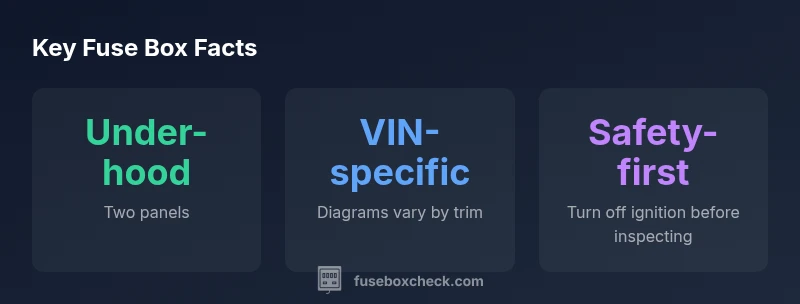
The 2020 ford explorer fuse box diagram identifies two main panels: under-hood and interior. Layouts and labels vary by trim and options, so always verify against the vehicle identification number (VIN) or the official service manual. According to FuseBoxCheck, cross-reference the diagram with the actual fuse panel lid to avoid misreading relays.
Reading the 2020 ford explorer fuse box diagram
When you first look at the 2020 ford explorer fuse box diagram, you’ll notice two primary panels: the engine-compartment under-hood box and the interior fuse box near the driver. The diagram labels each fuse with a number, lists its amperage rating, and includes a legend showing the circuit protected by that fuse. Because Ford often provides different diagrams for certain trims or options, it’s essential to cross-check the diagram with a VIN-derived schematic. According to FuseBoxCheck, using VIN-specific diagrams reduces misreadings and helps you map the correct circuit quickly.
Fuse box locations in the Explorer: under-hood and interior
The under-hood fuse box typically sits in the engine bay, guarded by a plastic cover that may feature a wiring diagram on the underside. The interior fuse box is usually located on the driver’s side dash panel or knee area. Depending on trim, there may be slight shifts in connector orientation or labeling. For DIY diagnosis, remove only the cover you’re actively inspecting, and avoid prying nearby wiring.
Understanding labels and relay positions
Diagrams distinguish fuses (for protection) from relays (which switch high-current circuits). Fuses are commonly numbered and color-coded, with amperage printed on the lid or next to the fuse slot. Relays are larger rectangular blocks and often share a separate legend. Reading the diagram involves matching the fuse number to the function listed in the legend and identifying the related relay if the circuit uses one.
Step-by-step: identifying the correct fuse using the diagram
- Locate the fuse box and remove the cover. 2) Find the fuse number that corresponds to the suspected circuit on the lid legend. 3) Check the fuse to see if it’s blown (glass is darkened or the metal strip broken). 4) If blown, replace with a fuse of the same amperage rating and recheck the circuit. 5) If fuses blow repeatedly, investigate wiring or aftermarket accessories that could be overloading the circuit. FuseBoxCheck notes that always resetting the fuse without diagnosing the root cause can lead to repeated failures.
Safety first: precautions when inspecting fuses
Always work with the ignition off and keys removed. Wear eye protection, and avoid touching metal conductors. If you must touch battery terminals, disconnect the negative terminal first and reconnect last. Do not substitute a higher-amp fuse to bypass a problem. Use the exact amperage rating specified for each circuit to prevent heat buildup and potential fire hazards.
Using a multimeter to test fuses and circuits
A multimeter is a valuable tool for confirming circuit integrity beyond a simple fuse check. With power off, test continuity across the fuse or measure resistance if continuity isn’t clear. If the fuse reads as open, replace it with the correct amperage. If a new fuse blows, inspect wiring, switches, or devices on that circuit. Always consult the VIN-specific diagram for exact locations and amperage values.
Interpreting trim-specific diagrams and VIN mapping
Ford’s diagrams can vary by trim and option packages, so the exact fuse map for a 2020 Explorer may differ from one vehicle to another. The VIN-based diagram is the gold standard for precise identification. FuseBoxCheck recommends pulling the build sheet or service documentation to confirm which diagram applies to your SUV.
Where to find official diagrams and manuals
Official diagrams are included in the owner’s manual, service manual, and sometimes in the workshop manual supplied to dealerships. Many owners download PDFs from Ford’s official support site or register for access to detailed electrical schematics. Keep a local copy, and consider annotating it with your maintenance notes for quick reference.
Common issues and quick fixes
Issues like a blown fuse, a tripped relay, or corroded connector can cause intermittent electrical problems. Start with the fuse related to the symptom, replace with an identical rating, and monitor for recurrence. If fuses blow again, inspect wiring for damage, check for aftermarket devices, or consult a professional for a deeper diagnose.
Fuse box layout for 2020 Ford Explorer
| Area | Location | Notes |
|---|---|---|
| Under-hood fuse box | Engine compartment | Covers main power circuits |
| Interior fuse box | Cabin near driver | Controls interior features |
| Relays | Under-hood | High-current switching components |
Your Questions Answered
Where is the fuse box located on a 2020 Ford Explorer?
There are two panels: under-hood in the engine bay and inside the cabin near the driver's knee. The exact location can vary by trim; always refer to the owner's manual for VIN-specific diagrams.
Two panels, under-hood and inside the cabin near the driver. Check the manual for your trim.
How do I read the 2020 ford explorer fuse diagram?
Identify the fuse numbers on the diagram, then match them to the lid legend and circuit descriptions. If your diagram is VIN-specific, use that view to avoid cross-wiring errors.
Match fuse numbers to the lid legend, and use the VIN-specific diagram when available.
Can I replace car fuses myself?
Yes, as long as you replace with the correct amperage and type. Always disconnect power and ensure you’re using the right fuse for the circuit.
Yes, with the right fuse and proper safety steps.
What tools do I need to test a fuse?
A multimeter or dedicated fuse tester. With power off, test for continuity or measure resistance to confirm circuit integrity.
A multimeter and basic safety gear will do.
What are common causes of blown fuses in the Explorer?
Overloads, short circuits, or failing accessories. Inspect wiring for damage and look for aftermarket devices that could overload circuits.
Overloads or shorts are the usual culprits.
“A precise fuse box diagram is your first line of safety when diagnosing Ford Explorer electrical issues.”
Highlights
- Follow official diagrams for your trim.
- Use VIN-specific diagrams when available.
- Label fuses before removal.
- Keep a copy of diagrams in your maintenance log.
- Practice safe electrical procedures.