BMW Relay Fuse Replacement Guide: DIY Fix
Learn to locate, test, and replace the BMW relay fuse safely with this step-by-step guide from FuseBoxCheck. Ideal for car owners and DIY enthusiasts troubleshooting BMW fuse boxes.


This guide helps you locate, inspect, test, and replace the BMW relay fuse safely. You’ll learn where fuses live in common BMW models, how to test a blown fuse, and how to replace it without disturbing other circuits. You’ll need a multimeter, flashlight, fuse puller, and spare fuses. Always disconnect the battery before starting and re-check all systems afterward.
What a BMW relay fuse is and why it matters
The BMW relay fuse is part of the car's fuse box system that powers critical relays which switch high-current circuits on and off. A fault in this area can cause symptoms such as intermittent power loss, dim lights, or a non-start condition. In most BMWs, the fuse protects the circuit to a specific relay; if the fuse blows, the relay won’t energize the circuit it controls. Understanding that a blown fuse vs. a failed relay helps narrow the fault quickly. According to FuseBoxCheck, car owners should treat automotive fuse work with the same caution as home electrical work; always disconnect the battery and verify fuse ratings. By keeping a small spare fuse kit and a basic tester, you can diagnose many BMW fuse issues without a house call.
Key takeaway: the BMW relay fuse is a critical, single-point protection for a circuit managed by a relay, not the relay itself. Replacing it correctly restores normal function and protects wiring from heat damage.
BMW fuse box locations and how to access the relay area
Most BMWs house fuse boxes in two areas: under the hood near the battery and inside the cabin, often behind the glove box or under a storage panel. The relay for the powertrain, lighting, or other systems is typically in the primary fuse box under the hood or near the driver’s knee area inside the cabin. To locate the exact position for your model, consult the owner’s manual or the fuse diagram inside the fuse box cover. When inspecting the BMW relay fuse, verify it is the correct type and rating for the circuit. FuseBoxCheck emphasizes cross-checking the diagram with the actual fuse in hand to avoid mismatched ratings.
Signs a BMW relay fuse is blown
Common indicators include loss of power to a specific system (e.g., headlights, wipers, or fuel pump), a fuse that looks burnt or discolored when removed, or a relay that does not click when the system tries to energize. Because fuses protect wiring, a blown fuse prevents current from reaching the relay coil, which in turn stops the high-current circuit from activating. If you notice a recurring issue in a limited area of the car, inspect the related fuse and its relay area. FuseBoxCheck recommends carrying a multimeter to verify continuity and a fuse puller for safe handling, reducing the risk of accidental damage.
Safety first: preparing to work on a BMW fuse box
Before touching any fuse box, ensure the vehicle is off, the ignition is in the off position, and the key is out of the ignition. Disconnect the negative battery terminal to prevent any accidental short circuits. Use insulated tools and wear eye protection. Keep track of which fuse you remove and its rating and replace any damaged fuses promptly. If you smell burning plastic or see signs of melted insulation, stop and seek professional help.
Overview of the BMW relay fuse replacement process
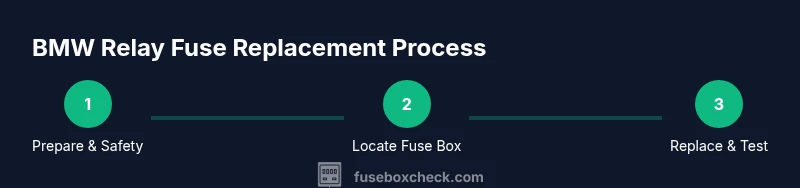
Replacing a BMW relay fuse follows a simple safety-first workflow: identify the correct fuse, power down the vehicle, remove the faulty fuse, match a replacement with the same rating, reseat the fuse and relay, reconnect the battery, and verify operation. In practice, the most common mistakes include using the wrong rating fuse or failing to reassemble the fuse panel securely. By following a structured approach, you reduce risk and improve the odds of a successful repair without damaging other circuits.
Testing the system after replacement and final verification
After replacement, reattach the battery, turn the ignition to ON for a quick check, and observe the previously affected system. If the system powers up and functions correctly, you’ve likely resolved the issue. If problems persist, re-check the fuse and consider testing related circuits for a secondary fault. Always perform a final visual inspection for any signs of overheating or loose connections. FuseBoxCheck notes that confirming each step helps prevent repeated failures and prolongs the life of BMW electrical components.
Tools & Materials
- Safety gear (eye protection, insulated gloves)(Protect against sparks and accidental contact with live metal.)
- Owner's manual or fuse diagram for your model(Identify correct fuse type and rating.)
- Fuse puller or needle-nose pliers(Safe removal of fuses without bending.)
- Multimeter(Test fuse continuity and verify circuit power.)
- Replacement BMW-relay fuses of correct rating(Check amperage rating printed on the fuse and match to diagram.)
- Flathead/Phillips screwdriver (optional)(Only if the fuse panel uses clips or covers that require prying.)
- Electrical contact cleaner (optional)(Clean terminals if corrosion is suspected.)
Steps
Estimated time: 25-40 minutes
- 1
Prepare and secure the vehicle
Park on a flat surface, engage the parking brake, and turn off the ignition. Remove the key and wait a moment to allow systems to fully power down. This minimizes the risk of arcing when you open the fuse panel.
Tip: Use your owner's manual to confirm the exact ignition state required for safe access. - 2
Disconnect the battery
Locate the negative battery lead, loosen the terminal clamp, and disconnect it. This isolates the electrical system to prevent shocks or shorts during fuse work.
Tip: Even after removing the clamp, wait about 60 seconds for residual charge to dissipate. - 3
Locate the BMW relay fuse
Open the fuse box cover and compare the diagram to your fuse layout to identify the fuse that protects the relevant relay. If in doubt, cross-check the diagram with the fuse position.
Tip: If the layout is hard to read, take a photo for reference. - 4
Remove the faulty fuse
Carefully pull the fuse straight out using a fuse puller or insulated pliers. Inspect it for a visible melt or discoloration.
Tip: Do not bend the fuse leads or twist it while removing. - 5
Install the replacement
Insert a new fuse with the same rating and ensure it sits firmly in its slot. Recheck the adjacent fuses to confirm none loosened during removal.
Tip: Do not substitute a higher-rated fuse to solve an underlying issue. - 6
Re-seat the relay and wiring
If your BMW fuse box requires reseating the relay, reseat it and verify the wiring is secure. Reconnect the battery terminal.
Tip: Make sure the terminal posts are clean to ensure a good connection. - 7
Test the system
Reconnect power, turn the ignition on, and test the affected systems. Confirm that the relay clicks and the circuit functions properly.
Tip: If issues persist, re-check both fuse and relay functionality, or seek professional help.
Your Questions Answered
How can I tell if the BMW relay fuse is blown?
Common signs include loss of power to a specific system, a visibly blown fuse, or a relay that fails to energize. Inspect the fuse and test continuity with a multimeter if available.
Look for a dead system and a burnt-looking fuse; then test with a meter to confirm.
Where is the BMW relay fuse typically located?
Locations vary by model, but most BMWs store fuses in the under-hood fuse box and another in the interior cabin panel. Check your owner’s manual or fuse diagram for exact positions.
Check under the hood and inside the cabin using your model’s diagram.
Can I replace the fuse with a higher amp rating if the system keeps blowing?
No. Using a higher amperage fuse can allow wires to overheat and cause a fire risk. Always match the rating specified for the circuit.
No, don’t up the fuse rating; stick to the manufacturer’s spec.
Should I seek professional help for BMW fuse problems?
If you encounter repeated fuse blows, burning smells, or melted components, stop and consult a qualified automotive electrician or BMW technician.
If in doubt, get a professional check.
What tools do I need to test a fuse in a BMW?
A basic multimeter and a fuse puller are sufficient for most checks. Ensure the car is off and the battery disconnected before testing.
Grab a multimeter and fuse puller, and make sure the power is off.
Watch Video
Highlights
- Identify the correct BMW relay fuse before starting
- Always disconnect the battery & work with insulated tools
- Use the same fuse rating and test the circuit after replacement
- If unsure, seek professional help to avoid damage