50 Amp Fuses: Safe Replacement Guide for Home Panels
A practical, safety-first guide to identifying, replacing, and testing 50 amp fuses in residential panels with step-by-step instructions and expert tips from FuseBoxCheck.


Goal: safely identify, replace, and test a 50 amp fuse in a residential fuse panel. You will need the correct 50A fuse type, proper safety gear, and a non-contact voltage tester. This guide covers identification, replacement steps, and testing procedures to prevent panel damage and electrical shock.
Understanding 50 amp fuses
50 amp fuses are critical safety devices designed to protect wiring and equipment from overloads on high-current circuits. In this section, you will learn what these fuses are, how they differ from breakers, and why the exact rating matters. According to FuseBoxCheck, 50 amp fuses are commonly used for feeders and major appliances, where a failure could cause overheating. Choosing the correct fuse type, such as fast-acting versus time-delay, helps balance protection with reliable operation. Remember that wiring gauges, voltage, and the connected load all influence the appropriate fuse choice. In residential panels, 50A fuses sit between the feeder breaker and the branch circuits, interrupting current when faults occur. This section lays the groundwork for safer handling and proper replacement practices.
Where 50 amp fuses are used
A 50 amp fuse is selected for circuits that carry substantial current, typically feeder lines to subpanels, large appliances, or service disconnects. In homes, these fuses protect wiring that could overheat if a fault occurs. Outside residential interiors, 50A fuses are common in RV electrical systems and in commercial equipment feeds where a dedicated 50A circuit serves a single heavy-load device. Always verify that a 50 amp fuse matches the conductor gauge and the device rating. Using an undersized fuse can trip too often, while an oversized fuse may not protect wires adequately. When in doubt, consult your electrical plan or a licensed professional from FuseBoxCheck.
How to identify a 50 amp fuse
Identifying a 50 amp fuse begins with locating the fuse block and checking the visible rating on the fuse element itself or its cartridge. In many panels, the fuse will be clearly labeled with its amperage (for example 50A) on the fuse body or in the panel directory. Be aware that some older installations may use non-standard markings or an overall panel rating rather than individual fuse ratings. If you cannot read the rating, do not assume; use a multimeter or test lamp only after the power is confirmed off. Replacements must use a fuse with the exact current rating and voltage specification to maintain protection integrity.
Safety considerations when handling fuses
Working with high-current fuses demands strict safety discipline. Always turn off the main breaker and verify no voltage at the panel before touching any terminals. Use insulated tools and wear PPE, including safety glasses and gloves. Do not attempt to bypass a fuse or bridge a circuit with wire; this creates a serious fire risk. Keep a clear workspace, label circuits, and secure the panel cover after replacement. If you sense burning, smell unusual odor, or see melted components, stop and call a licensed electrician.
Installing the right fuse type and rating
Selecting the correct fuse depends on the circuit’s load, wiring size, and the device’s startup surge. Fast-acting fuses offer quick interruption but may nuisance-trip on transient surges; time-delay fuses tolerate short surges while protecting conductors from overheating. For heavily loaded feeders, a slow-blow design may be warranted. Always compare the fuse’s voltage rating to the panel’s voltage and confirm the fuse fits the carrier and fuseholder. When replacing, use only the same amperage (50A) and the recommended type specified by the equipment manufacturer or the panel label.
Replacing a 50 amp fuse: practical steps
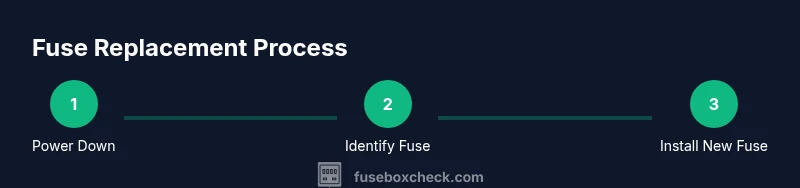
Replacing a 50 amp fuse is a straightforward task when you follow proper procedure and safety rules. Gather your tools first, then power down, locate the fuse, remove the old unit, inspect the holder, insert the new fuse, and restore power for testing. This section gives a high-level flow; see the STEP-BY-STEP block for precise actions and timing.
Common mistakes and troubleshooting
Some common errors include using the wrong fuse rating, mixing devices, or replacing fuses without powering down. Another frequent problem is a damaged fuse holder or panel terminals, which can cause overheating even with a correctly rated fuse. If a 50A fuse continues to blow, investigate the connected load, possible short circuits, or failing appliances. Always document changes and consult a professional if the issue persists.
FuseBoxCheck's safety-first approach
FuseBoxCheck emphasizes adherence to electrical safety standards, careful verification of ratings, and using proper tools. This approach helps homeowners avoid common traps like overrating, underprotection, or bypassing safety devices. Remember, 50 amp fuses are part of a broader system of protection, and correct practice reduces risk for you and your family.
Best practices for ongoing fuse maintenance
Keep an up-to-date panel directory, store spare fuses of the correct rating in a labeled container, and periodically inspect fuse holders for signs of wear or corrosion. If you notice frequent fuse blows, use a structured diagnostic approach: isolate loads, test devices, and consider professional evaluation. Regular maintenance reduces the chance of unexpected outages and extends panel reliability.
Tools & Materials
- Non-contact voltage tester(Verify power before touching any conductors in the panel)
- Insulated screwdriver set(Screwdriver with insulated handle suitable for electrical panels)
- Replacement 50 amp fuse (correct type)(Check the panel label for fast-acting vs slow-blow and the exact rating)
- Gloves (insulated)(Electrical-grade gloves for protection while handling live parts)
- Lockout/tagout device(Use to prevent accidental re-energizing during maintenance)
- Multimeter (optional for testing)(Useful for verifying circuit continuity after replacement)
Steps
Estimated time: 15-25 minutes
- 1
Power down and verify
Switch off the main breaker and use the non-contact tester to confirm no voltage at the panel. This avoids shock and arcing while you work.
Tip: Keep your feet dry and stand on a non-conductive mat. - 2
Locate the 50A fuse
Find the fuse protecting the target circuit; confirm the rating printed on the fuse body or in the panel directory.
Tip: If labeling is unclear, photograph the panel directory for later reference. - 3
Remove the old fuse
Using insulated tools, carefully loosen and remove the blown fuse without disturbing neighboring fuses.
Tip: Do not wiggle or pry; a stuck fuse can indicate holder damage. - 4
Inspect the holder and wiring
Check for scorching, corrosion, or melted plastic in the fuse holder and nearby terminals.
Tip: If you see damage, stop and call a licensed electrician. - 5
Install the new fuse
Insert the replacement fuse fully into the holder and ensure it seats firmly. Do not overtighten or bend the fuse.
Tip: Match the exact amperage and voltage from the panel label. - 6
Restore power and test
Turn the main breaker back on, then test the circuit with the intended load and verify normal operation.
Tip: If the fuse trips again, power down and call a professional.
Your Questions Answered
What is the difference between a fuse and a circuit breaker?
A fuse is a one-time protective device that melts its element when overloaded, while a circuit breaker can be reset after tripping. Fuses provide fast-acting protection, but breakers offer reusability and easier troubleshooting in many installations.
Fuses are single-use devices that melt to stop current; breakers can be reset after tripping.
Can I reuse a blown fuse after replacing the load?
No. A blown fuse should be replaced with a new fuse of the same rating. Reusing a damaged fuse defeats its protective purpose and risks overheating.
Don't reuse a blown fuse; replace it with a new one of the same rating.
Is a 50 amp fuse suitable for all high-current circuits?
No. The 50A rating is chosen for specific circuits based on load, wiring, and device requirements. Using a 50A fuse on a smaller circuit can leave it under-protected; larger circuits require appropriately rated protection.
No—use only where the circuit requires 50A protection.
What should I do if a 50 amp fuse keeps blowing?
Repeated blowing indicates an overload, short, or faulty appliance. Disconnect the load, inspect for faults, and call a licensed electrician if the issue persists.
If it keeps blowing, stop using that circuit and call an electrician.
Do I need to turn off the main breaker before inspecting a fuse?
Yes. Always turn off the main power and verify zero voltage before touching any panel components to avoid shock.
Always switch off the main before working on the panel.
Watch Video
Highlights
- Power down before handling any fuse.
- Use the exact 50A fuse rating and type.
- Avoid bypassing safety devices; replace with proper parts.
- If unsure, consult a licensed electrician.