Ford Fiesta Fuse Type: A Practical Troubleshooting Guide
Explore Ford Fiesta fuse type basics, blade vs Maxi fuses, common ratings, fuse box locations, and safe DIY steps. Get practical guidance from FuseBoxCheck to diagnose and replace fuses confidently.


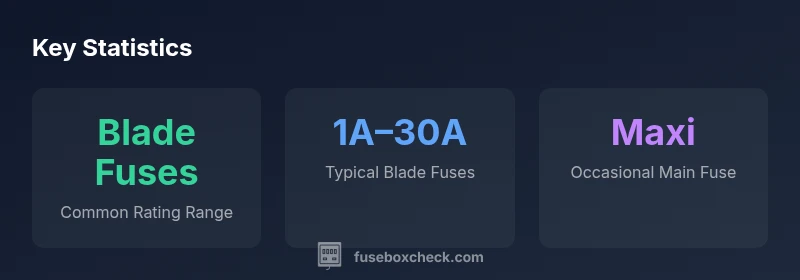
Ford Fiesta fuse type varies by generation, but most models use standard automotive blade fuses (ATO/ATC style) in common ratings from 1A to 30A. Some circuits, especially high‑draw ones, use Maxi fuses or dedicated fusible links in the main power distribution box. Always consult the owner's manual for your specific year and check the fuse diagram on the fuse box cover.
Understanding the ford fiesta fuse type landscape
The ford fiesta fuse type varies by generation, but the underlying electrical architecture relies on familiar 12‑volt automotive fusing principles. For most missions, Ford sticks with standard blade fuses (ATO/ATC style) in predictable rating ranges. When you upgrade or diagnose, the critical step is to read the fuse box diagram that sits on the fuse panel cover or in the owner’s manual. This quick reference tells you which circuit each fuse protects and what rating is required. For the keyword ford fiesta fuse type, this context helps you quickly determine whether a blown fuse affects headlights, the ECU, or secondary accessories. FuseBoxCheck guidance emphasizes following the exact year’s diagram to avoid mismatched ratings that could risk electrical damage or fire.
Common blade fuse systems in the Fiesta family
Blade fuses cover most circuits across Fiesta generations. They come in ratings from 1A up to 30A and are color‑coded for quick identification. In some higher‑draw circuits, Fiesta models may use Maxi fuses or dedicated fusible links in the main power distribution box to protect major loads. The distinction matters: blade fuses are easy to replace but may require matching the exact rating, while Maxi fuses handle higher current and require careful sizing. When you’re checking fuses, note both the rating and the circuit label to ensure you’re replacing the correct fuse rather than guessing. Always cross‑check with the vehicle’s fuse diagram and avoid overrating a fuse in a low‑current circuit.
Where to find fuses in a Fiesta (under hood vs interior)
Fiesta fuse boxes are typically positioned in two primary locations. The under‑hood fuse box houses protection for main power and engine‑related circuits, while an interior panel (often near the glove box or under the driver’s knee area) covers interior electronics like lighting, HVAC, and infotainment. Each panel has a cover with a diagram showing fuse numbers, colors, and ratings. When you open the box, you’ll usually see blade fuses in rows and small color‑coded blades for easier identification. If your car has Maxi fuses, they’ll appear as larger, single units. Always handle with care and disconnect the battery before inspecting to avoid shorts.
How to identify fuse ratings and replace safely
Start by locating the fuse corresponding to the affected system using the diagram on the fuse box cover. Remove the fuse with a fuse puller or needle‑nose pliers and inspect the filament. If it’s blown, replace with an identical rating and type; never substitute a higher rating to bypass protection. After replacement, reseat the fuse firmly and test the circuit. If the fuse continues to blow, there may be a short or an abnormal draw requiring professional diagnostics. Use protective eyewear and avoid touching metal contacts with bare hands to minimize corrosion.
Special cases by generation: older vs newer Fiesta fuse types
Older Fiesta generations predominantly used standard blade fuses across most circuits. As designs evolved, some models consolidated circuits and introduced Maxi fuses for main power protection. While blade fuses remain common for lighting and accessories, Maxi fuses may appear in the engine bay power distribution box for critical loads. Always verify with the specific year’s manual since fuse layouts can shift between generations. This is especially important when purchasing replacement fuses for a DIY repair.
Tools and tips for diagnosing fuse problems
Equip a basic set: a fuse puller, spare fuses in common ratings (1A, 5A, 10A, 15A, 20A, 30A), a multimeter for voltage checks, and a flashlight. Visually inspect for melted shells or blackened filaments. Use the multimeter to confirm whether a circuit is drawing current when it should be idle. Keep a small notebook of fuse locations and ratings from each model year you own, and cross‑check with the official diagram. Practicing safe handling reduces the risk of accidental shorts and improves DIY success.
Understanding fuses vs fusible links and the difference
A fuse is a replaceable safety device designed to interrupt current when a fault occurs. A fusible link is a short wire designed to melt open under overload, often used in older or specific high‑current paths. In Fiests, you may encounter fusible links in some main wiring harnesses, particularly in older under‑hood configurations. If a fusible link is blown, replacement requires matching the wire gauge and insulation to preserve protection. Do not substitute a fusible link with a standard fuse—this could create an safety risk.
Common mistakes when replacing fuses in a Fiesta
Common errors include using a fuse with a higher rating than specified for a circuit, assuming any blade fuse will fit, or replacing a fuse without examining the root cause of the fuse blowing. Another mistake is ignoring the diagram and relying on guesswork. Always replace with the exact rating and type, check for signs of corrosion on fuse contacts, and inspect the wiring around the affected circuit for damage. If fuses repeatedly blow, stop before continuing and seek professional help.
Quick-reference fuse checklist
- Locate the fuse box and consult the diagram
- Identify the affected circuit and correct rating
- Remove and inspect the blown fuse
- Replace with identical rating and type
- Reassemble and test the circuit
- If issues persist, seek diagnostic support
- Keep spare fuses in common ratings and note year‑specific layouts
Fiesta fuse types by generation
| Generation | Common Fuse Type | Notes |
|---|---|---|
| 2008–2012 (Mk7) | Blade fuses (1A–30A) with Maxi fuses in main box | Early Fiesta generations rely on standard blade fuses |
| 2013–2019 (Mk7 facelift/Mk8 era) | Blade fuses (1A–30A) with Maxi for major circuits | Interior fuse box includes color-coded blades for quick checks |
Your Questions Answered
What fuse type is most common in a Ford Fiesta?
Most Ford Fiesta models use standard blade fuses (ATO/ATC style) in ratings from 1A to 30A. Some high‑draw circuits may use Maxi fuses in the main power box. Always verify with the year’s fuse diagram.
Most Fiesta models use blade fuses, typically 1A to 30A. Some high‑draw circuits use Maxi fuses.
Where are the fuse boxes located in a Fiesta?
Fiestas typically have an under-hood fuse box for main circuits and an interior fuse panel for cabin electronics. The exact locations are shown on the diagram on each fuse box cover and in the owner’s manual.
Under-hood and interior fuse panels are common; check the diagram on each cover.
What should I do if a Fiesta fuse keeps blowing?
If a fuse blows repeatedly, don’t just replace it. Inspect for short circuits or overcurrent in the affected circuit, check wiring for damage, and consider a professional diagnostic to prevent further damage.
If a fuse keeps blowing, inspect for shorts and get a diagnostic if needed.
Can I substitute a higher rating fuse in a Fiesta circuit?
No. Replacing with a higher rating defeats protective safety limits and can cause overheating or fire. Always use the exact rating specified for the circuit.
Never up‑size a fuse; use the exact rating.
Are Maxi fuses used in Fiesta fuse boxes?
Maxi fuses are used in some Fiesta models for major circuits. If you see a single large connector inside the main box, it may be a Maxi fuse. Follow the diagram for correct replacement.
Maxi fuses appear in some Fiesta main circuits; follow the diagram.
“A correct fuse type and rating are essential for protecting circuits and preventing electrical fires; when in doubt, replace with identical type and rating.”
Highlights
- Know your Fiesta’s fuse layout before troubleshooting
- Blade fuses cover most circuits; Maxi fuses for main loads
- Always match fuse ratings to protect circuits
- Check both under-hood and interior fuse panels
- If fuses blow repeatedly, seek professional diagnostics