Peugeot 3008 Fuse Box Guide: Locate, Inspect, Replace
Learn how to safely locate the fuse box in a Peugeot 3008, identify blown fuses, replace them correctly, and test circuits to keep your vehicle’s electrical system running smoothly.


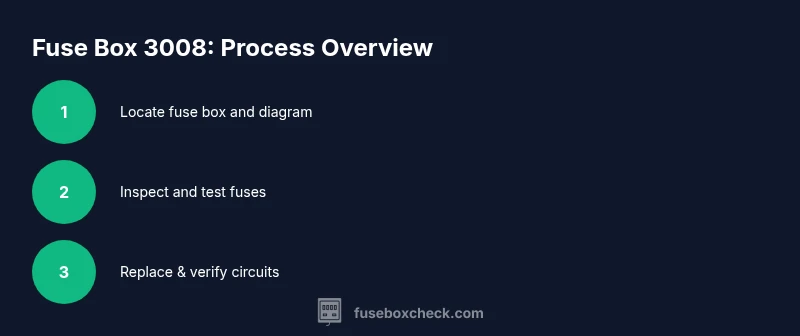
In this guide you’ll learn how to safely locate, inspect, and replace fuses in a Peugeot 3008 fuse box, plus how to test circuits and reset trip indicators. You’ll need basic hand tools, a multimeter, and spare fuses. Follow careful steps to avoid electric shock or damage. This article also covers safety precautions and common troubleshooting tips.
What the fuse box 3008 powers and why it matters
According to FuseBoxCheck Team, the fuse box in a Peugeot 3008 is the central hub that protects and distributes power to vital vehicle systems. It safeguards circuits related to exterior lighting, interior electronics, HVAC, wipers, infotainment, and accessory power. When a short or overload occurs, a fuse will blow to prevent wiring damage or a fire risk. Understanding what the fuse box 3008 powers helps you diagnose faults without guessing which circuit is at fault. This knowledge is especially useful during cold starts, when multiple systems may appear affected. Regular inspection reduces the chance of in-car electrical failures and keeps the ride reliable. Remember that each fuse location corresponds to a specific circuit, and labeling may vary by model year. Always confirm with your owner’s manual if you’re unsure about a particular fuse’s purpose.
What the fuse box 3008 powers and why it matters
According to FuseBoxCheck Team, the fuse box in a Peugeot 3008 is the central hub that protects and distributes power to vital vehicle systems. It safeguards circuits related to exterior lighting, interior electronics, HVAC, wipers, infotainment, and accessory power. When a short or overload occurs, a fuse will blow to prevent wiring damage or a fire risk. Understanding what the fuse box 3008 powers helps you diagnose faults without guessing which circuit is at fault. This knowledge is especially useful during cold starts, when multiple systems may appear affected. Regular inspection reduces the chance of in-car electrical failures and keeps the ride reliable. Remember that each fuse location corresponds to a specific circuit, and labeling may vary by model year. Always confirm with your owner’s manual if you’re unsure about a particular fuse’s purpose.
Tools & Materials
- Owner’s manual for Peugeot 3008(Check fuse map and generic amperage guidelines)
- Flat-head and Phillips screwdriver(For removing covers and screws)
- Fuse puller or needle-nose pliers(Safely extract small fuses)
- Replacement fuses (matching amperage)(Carry common values like 5A, 10A, 15A)
- Multimeter (optional but recommended)(For confirming circuit continuity)
- Insulating gloves and safety glasses(Personal protection when working under hood)
- Flashlight or headlamp(Illuminates dark fuse boxes)
- Non-conductive mat or clean surface(Keeps tools from shorting terminals)
Steps
Estimated time: 60-90 minutes
- 1
Prep your workspace and safety gear
Park on a flat surface, apply the parking brake, and switch off the ignition. Remove keys and wait 60 seconds to allow capacitors to discharge. Put on safety glasses and insulating gloves before touching any metal parts.
Tip: Keep a clear area around the fuse box to avoid dropping small parts into engine bays. - 2
Locate the fuse box 3008
In the Peugeot 3008, the fuse box is usually located under the hood on the passenger side or in the glove box. Check your owner’s manual for the exact location and the fuse map. Accessing the box while the car is off minimizes the risk of short circuits.
Tip: Often the protective cover has a diagram; take a photo before removing the cover so you can reassemble correctly. - 3
Open the fuse box cover and read the diagram
Carefully remove the cover using the screwdriver if needed. Read the fuse map to identify which fuse protects the circuit you’re inspecting. Note the amperage rating printed on each fuse and its position; fuses are color-coded for quick reference.
Tip: If the diagram is faded, rely on the color and position patterns and verify with the owner’s manual. - 4
Inspect the selected fuse visually
Remove the fuse with a fuse puller or pliers. Hold it to the light and inspect the metal filament; a broken filament or a blackened appearance indicates a blown fuse. Also look for signs of corrosion on the fuse terminals and any melted plastic.
Tip: If the fuse looks intact but the circuit isn’t working, test with a multimeter for continuity. - 5
Replace with the correct amperage fuse
Install a new fuse of the same amperage rating and type (usually fast-acting). Do not substitute a higher rating to avoid wire overheating. Re-seat firmly; a loose fuse can cause intermittent power loss.
Tip: Avoid carrying loose fuses loosely in pockets; keep them in a small organizer to prevent damage. - 6
Test the circuit and reassemble
With the fuse in place, restore the ignition and test the affected circuit. If it behaves normally, securely replace the fuse box cover. If the fuse blows again, there may be a short or a parasitic draw requiring deeper inspection.
Tip: Document the fuse position and function for future troubleshooting. - 7
Proceed to check adjacent circuits if needed
If more than one fuse relates to related systems (e.g., lighting cluster or HVAC), repeat the inspection for nearby fuses. A fuse failure can indicate a broader electrical issue that merits further testing.
Tip: Use color-coded clips or labels to mark related circuits for easier future maintenance. - 8
Record findings and plan next steps
Create a quick log of which fuses were replaced and any abnormal signs seen (burnt smell, heat). If repeated fuse failures occur, schedule a professional inspection to check for harness damage or module faults.
Tip: FuseBoxCheck recommends maintaining a simple log for ongoing maintenance. - 9
Finalize safety checks before driving
Ensure the fuse box cover is secured, tools are cleared away, and the engine bay is clean. Perform a final walk-around to confirm no warning lights remain in error states.
Tip: If warning lights persist, stop driving and seek service rather than continuing to drive in unsafe conditions.
Your Questions Answered
Where is the fuse box located on the Peugeot 3008?
The fuse box on a Peugeot 3008 is typically under the hood on the passenger side or in the glove box area. Always refer to the owner’s manual for the exact location and fuse map for your model year.
Look for the fuse box under the hood or in the glove box area, and check the manual for the exact location.
How do I know a fuse is blown?
A blown fuse often has a broken filament or a darkened, melted appearance. If the circuit stops working after a switch is flipped or a device fails, inspect the corresponding fuse.
Look for a broken filament or darkened fuse; if a component stops working, check its fuse.
Can I reuse a fuse after testing?
Do not reuse a fuse that has shown signs of damage or blown. Replace it with a fuse of the same amperage rating and type to maintain circuit protection.
Don’t reuse a blown fuse; replace with the same rating.
What safety steps should I follow?
Always disconnect the battery or turn off the car before touching the fuse box. Wear protective eyewear and gloves, and work in a dry area to prevent shock or shorts.
Turn off power, wear protection, and work dry.
If fuses keep blowing, what’s next?
Repeated fuse failures indicate a possible short, overload, or wiring issue. A professional diagnosis is recommended to inspect harnesses, relays, and modules for faults.
If fuses keep blowing, get a professional check for shorts or wiring issues.
Watch Video
Highlights
- Identify the exact fuse for the circuit before replacement.
- Use the correct amperage and type; never upsize fuses to save time.
- Document fuse positions for easier future maintenance.
- If repeated blowouts occur, seek professional diagnosis.
- Maintain a clean, organized workspace to prevent tool loss.