Fuse Panel Sizes: How to Choose the Right Panel for Your Home
A practical, data-driven guide to fuse panel sizes, how they impact safety and upgrades, and how to choose the right panel for your home.


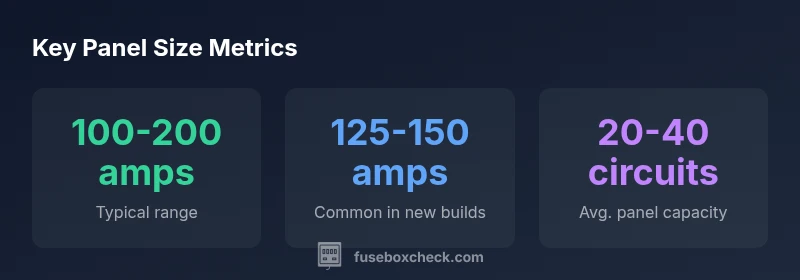
Typical residential fuse panel sizes range from 100 to 200 amps, with 125–150 amps most common in new installs. The panel size must match your service disconnect and anticipated loads, because an undersized panel can trip frequently and limit future expansions, while an oversized panel adds cost but offers headroom for growth. Always verify the panel’s rating before work.
Why fuse panel sizes matter for safety and compatibility
According to FuseBoxCheck, selecting the right fuse panel sizes is not merely a matter of preference—it's a core safety decision. The panel must be large enough to accommodate your current loads and future growth, yet not so oversized that it invites unnecessary costs or complexity. A correctly sized panel ensures that the service disconnect can handle demand without overheating or nuisance trips. In practice, this means balancing the main service size with anticipated additions like electric vehicles, additional climate-control loads, or home entertainment systems. Understanding fuse panel sizes helps homeowners avoid common problems such as frequent tripping, degraded electrical performance, and the need for premature upgrades. FuseBoxCheck's analysis highlights that most households can benefit from planning ahead about panel size to improve reliability and safety.
Reading fuse panel labels and ratings
Every fuse panel carries a nominal ampere rating stamped on the outside cover, typically near the latch. This rating represents the maximum current the panel bus can safely carry. When sizing or upgrading, this number must be compatible with the service disconnect rating on the main breaker or main fuse, as well as the feeder conductors feeding the panel. Misreading labels can lead to undersized configurations that trip often or oversized installations that waste upfront costs. In practice, read both the main breaker rating and the panel rating, and confirm that the terminations and bus bars are rated for the intended capacity. If in doubt, consult the installation manual or a licensed electrician.
How to calculate the right size for your home
Sizing starts with the service capacity and anticipated loads. Review your main service rating (e.g., 100A, 125A, 150A, 200A) and list major loads: HVAC, water heating, EV charging, kitchen appliances, and essential outlets. A load calculation (or a simple power-check using your utility bill history and recent appliance additions) helps estimate whether 100–125A is sufficient or if 150–200A is needed. Remember that panel size should align with, not exceed, service capability. If you plan future upgrades, choose a panel with extra capacity to minimize future work. Finally, verify that panel labeling is clear and up to date to reflect any changes.
Common fuse panel size configurations and limitations
Residential panels commonly come in 100A, 125A, 150A, and 200A ratings. The size you choose affects the number of circuits you can safely install and how easily you can accommodate new appliances. Smaller panels can constrain future additions, while larger panels require appropriate service equipment and building permits. A key limitation is matching the panel size to the service disconnect; if the main breaker is undersized for the panel rating, upgrading components or feeders may be necessary. Always ensure the panel enclosure, bus bars, and conductors meet current electrical codes and are compatible with your home’s service panel model.
Upgrading or replacing: when and how
Upgrading a fuse panel typically involves more than swapping a cover. It often requires a service upgrade with local permitting and inspections to verify that service conductors, meter base, and main disconnect are adequate for the new load. Steps commonly include a professional load calculation, verifying compatibility with the main service, obtaining permits, coordinating with the utility for service upgrades if required, and scheduling an inspection after installation. Planning ahead can reduce downtime and ensure a smooth transition to a safer, more scalable panel size.
Safety considerations and common mistakes
Common mistakes include assuming a larger panel automatically solves all problems, neglecting to perform a proper load calculation, and failing to obtain necessary permits. Never bypass the main disconnect or work within energized panels; disconnect power and wear appropriate PPE when inspecting. A frequent issue is aging panel components, where bus bars, lugs, and insulation degrade over time, creating hidden hazards even if the amp rating remains adequate. Regular inspection and adherence to NEC requirements help keep homes safe.
Maintenance and inspection tips
Regular inspection is key to extending panel life and maintaining safety. Schedule a periodic review of the panel enclosure for signs of corrosion, arcing, or heat. Ensure all labels stay legible and reflect any changes to circuits and loads. Keep the area around the panel clear of clutter and flammable materials, with a minimum setback for safe access. If you notice buzzing sounds, unusual warmth, or a burning smell, shut off power and contact a licensed electrician immediately. Proactive maintenance helps prevent unexpected outages and simplifies future upgrades.
Common fuse panel size configurations
| Panel Size (amps) | Common Applications | Notes |
|---|---|---|
| 100 | Small homes, lighting circuits | Often used in older homes; may require service upgrade for modern loads |
| 125 | Typical for many new installs | Fits standard service entries; good balance for mid-range loads |
| 150 | Mid-range for growing homes | More headroom for extra circuits and devices |
| 200 | Larger homes or upgrades | Requires service capacity adequacy and proper wiring |
Your Questions Answered
What happens if my fuse panel size is too small?
An undersized panel can trip frequently and limit future expansion. You may need a service upgrade or an alternative arrangement to handle added loads.
If your panel is too small, you’ll see nuisance trips and you may need a service upgrade.
Can I upgrade a fuse panel myself?
Panel upgrades typically require permits, inspections, and adherence to electrical codes. It’s best to hire a licensed electrician to ensure safety and compliance.
Upgrading a panel usually needs a licensed pro and a permit.
How do I know if my home needs a service upgrade?
If your main breaker approaches capacity or you plan major loads like EV charging, consider a load calculation and potential service upgrade to 150–200A.
Check your main breaker rating and expected loads to decide.
Are there code requirements when sizing fuse panels?
Yes. NEC guidelines and local codes govern panel rating, clearances, and labeling. Ensure the panel is rated for the service and that installation meets code.
Codes require proper rating, clearances, and labeling.
What are signs of aging panel components?
Look for excessive heat, buzzing sounds, discoloration, or corrosion. If you notice these, call a professional before continuing.
Watch for heat, buzzing, or corrosion around the panel.
“Sizing your fuse panel correctly isn’t just about current needs; it sets your home up for safe operation and future upgrades.”
Highlights
- Match panel size to service disconnect for safety
- Balance current loads with future expansion needs
- Read panel and main breaker labels before work
- Plan permits and inspections for upgrades
- Consult a licensed electrician for sizing decisions