How a Fuse Box Works: A Homeowner's Guide
Learn how a fuse box distributes power, protects circuits with fuses or breakers, and safe DIY steps for basic inspection. FuseBoxCheck explains fuse box operation and practical tips for homeowners.


This guide teaches you how to fuse box work by explaining power flow from the main service to branch circuits, and how protection devices shut off power when faults occur. You’ll learn about main disconnect, fuses versus circuit breakers, labeling, and safe DIY checks. FuseBoxCheck’s practical tips help you approach basic maintenance with confidence.
What a Fuse Box Does for Your Home
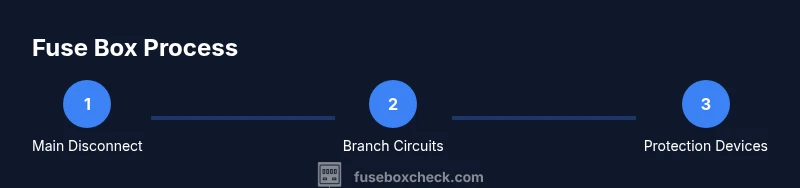
A fuse box, also called an electrical panel, is the nerve center that distributes power from the utility line to the various circuits in your home. The phrase how to fuse box work can seem abstract until you visualize the flow: the service entrance brings in power, the main disconnect gates the entire panel, and from there separate fuses or circuit breakers guard each branch circuit. According to FuseBoxCheck, understanding how to fuse box work helps homeowners stay safe and identify when to call a professional. In practice, the panel organizes voltage, neutral, and ground paths in a compact frame. Fuses are simple metal links that melt when excessive current passes; circuit breakers are switches that trip on overload or detect short circuits. The protection function is essential because it limits heat buildup, arcing, and the risk of fire. When everything is labeled and properly sized, you can quickly determine which room or appliance is linked to each slot in the panel. That labeling matters not just for maintenance, but for future upgrades or repairs. This section lays the groundwork for a confident but cautious DIY approach.
Key Components Inside a Fuse Box
Inside the panel you’ll find several core parts that work together to keep circuits safe. The main disconnect is the entry point that holds back power from the service until you authorize its release. Bus bars carry live electricity to each branch circuit. Individual protective devices—fuses or circuit breakers—sit in line with the wires they protect. Neutral bars provide a return path for current, and ground bars bond exposed metal parts to earth for safety. The panel enclosure also has a cover with labeling and clear warnings. When you compare fuse boxes to modern panels, the switch-based protection of breakers reduces the risk of a blown fuse causing a fire. If your home uses fuses, you’ll see a replaceable metal element that must match the circuit rating; with breakers, you’ll flip a switch to restore power once the fault is cleared. The panel’s design prioritizes safety, readability, and ease of upgrades. This knowledge helps you plan safe upgrades or routine checks.
How Power Flows: From Service Entrance to Branch Circuits
Power enters through a service drop, travels to the meter, and then to the main panel via service conductors. The main disconnect, either inside the panel or near it, is the first line of defense. From there, voltage fans out through a bus system to individual circuits. Each circuit uses a protective device set to a specific amperage. A kitchen circuit might be protected at 20A, while lighting circuits often run at 15A; these sizes are chosen to prevent overheating of wires and outlets. The neutral path completes the circuit, and grounding provides a safe path to earth in case of a fault. Understanding this flow helps you diagnose problems: if a single area loses power, it could be a tripped breaker; if several circuits go dark, the main disconnect or service may be compromised. This knowledge also supports safer DIY checks, such as turning off the correct breaker before working on a specific outlet or appliance. Remember: always approach power with caution and verify zero voltage before touching any components.
Fuses vs Breakers: How They Protect Your Circuits
Fuses and circuit breakers share a mission but operate differently. A fuse contains a metal link that melts when current exceeds its rating, permanently opening the circuit until a new fuse is installed. Breakers use an internal switch that trips when heat, current, or impedance indicates a fault; they can be reset after the fault is resolved. In older homes, you’ll find fuses; newer panels use breakers, which reduce the risk of fire and allow easier recovery after a fault. Both devices rely on correctly sized ratings matching wire gauges and loads in each circuit. Mismatched fuses, worn breakers, or undersized wiring can lead to nuisance trips or dangerous overheating. It’s essential to understand which protection type your home uses and avoid substituting components with incorrect ratings. This knowledge supports safer DIY work and clarifies when a professional should be called for wiring upgrades or repeated trips. Note: FuseBoxCheck Analysis, 2026 notes that many households underestimate the role of modern protection devices and labeling in preventing faults.
Reading Labels and Planning Your Circuits
Most panels include a door-labeled schedule listing circuits. Local codes require labeling with room names or appliance descriptions. The labeling should be clear enough for anyone in the home to identify what each breaker or fuse controls. When planning upgrades or repairs, start by mapping the label to actual rooms and heavy loads (kitchen, laundry, HVAC). If a circuit serves multiple outlets or devices, consider whether its amperage rating is appropriate for the expected load. Keep a log of any changes and regularly review the schedule for accuracy. This practice reduces guesswork during outages and makes troubleshooting faster. For DIY enthusiasts, maintaining an up-to-date map helps prevent accidental disconnections and ensures you never trip a circuit you're actively testing.
Common Fault Scenarios and What They Mean
A circuit trip or a blown fuse is a warning sign, not a failure of the entire home. Trips usually indicate overloads, short circuits, or a fault in one branch. If one area goes dark, start by identifying the circuit via the panel label and resetting the corresponding breaker. If the breaker trips again, unplug or turn off devices on that circuit before resetting, as a persistent trip can indicate a more serious fault. A buzzing panel, warm panel walls, or a burning smell means immediate action is required—shut off power at the main disconnect and call a licensed electrician. Regular maintenance—such as tightening loose connections and replacing worn breakers—helps prevent heat buildup and arcing. Remember that safety margins are appliance- and wire-dependent; never force a breaker back to the on position if it won’t stay on.
Safe DIY Bounds: What You Can and Can't Do
Homeowners can perform basic safety checks like turning off power at the main disconnect, testing outlets with a non-contact tester, and inspecting for loose wires or signs of overheating. What you should not do: open a live panel, bypass protective devices, or modify wiring beyond simple labeling and testing. Upgrading a panel or replacing main components is a job for a licensed electrician, especially if your home is older or you plan major renovations. Respect local codes and never work in damp areas or with wet hands. Keeping children and pets away from an active panel is also essential for safety. With the right precautions, you can manage routine checks without creating new hazards. Always have a plan and an exit route if you encounter heat, sparks, or strong odors.
Quick Troubleshooting Steps When a Circuit Trips
If a circuit trips, first switch off all devices on that circuit, then reset the breaker. If it stays on, turn devices back on one by one to identify the culprit. If the breaker trips again, unplug the suspect appliance and check the circuit wiring for damage. For fuse-based panels, replace with a fuse of the correct rating only after confirming power is shut off. If you notice frequent trips, buzzing, or warm panels, stop and contact an electrician promptly. Document what happened, including time and loads, to aid professional diagnosis.
Tools & Materials
- Non-contact voltage tester(Essential for confirming power is off before touching any components)
- Insulated screwdrivers (Phillips and flathead)(Use insulated handles and avoid metal jewelry while testing)
- Voltage tester/Multimeter(Helpful for confirming circuit status and load values)
- Flashlight(Dry, non-dazzling light to inspect inside panel safely)
- Gloves rated for electrical work(Wear when handling live components (only with power off as precaution))
- Replacement fuses or breakers of correct rating(Only if you know the proper rating from the circuit load)
- Notepad and pen(For labeling and mapping circuits)
Steps
Estimated time: 45-60 minutes
- 1
Turn off main power and verify
Locate the main disconnect and switch it to the OFF position. Use a non-contact tester to verify there is no voltage at the panel before you touch any conductors.
Tip: Double-check with a tester to avoid residual voltage. - 2
Check labels and identify circuits
Open the panel and read the label inside the door. Map each breaker or fuse to its corresponding room or appliance so you can target the right circuit during tests.
Tip: If the label is faded, create a fresh map on paper. - 3
Inspect for obvious signs of damage
Look for scorch marks, melted insulation, or warm components. Do not touch touched or burnt areas; these indicate a serious fault requiring professional attention.
Tip: If you see damage, stop and call an electrician immediately. - 4
Reset a tripped breaker
With power still off, flip the breaker fully to OFF, then back to ON to reset. If a fuse-based panel, replace the blown fuse with the correct rating.
Tip: If it immediately trips again, do not reuse; seek professional help. - 5
Test circuits after restoration
Return power to the panel and test outlets or lights on the circuit. If problems recur, document loads and contact a licensed electrician.
Tip: Keep a log of which devices were on and when the issue occurred. - 6
Update labels after changes
Update the panel label or map to reflect any repairs, replacements, or circuit reassignments for future maintenance.
Tip: Clear labeling reduces future confusion and safety risks.
Your Questions Answered
What is a fuse box and what does it do?
A fuse box distributes power to branch circuits and uses fuses or circuit breakers to protect each circuit from overloads. The main disconnect controls power to the entire panel, and proper labeling helps you identify which circuit serves which area.
A fuse box manages power to your home and uses protective devices to stop faults from causing fires. It’s important to know which circuit serves what area by reading the labels.
How do fuses differ from circuit breakers?
Fuses contain a metal link that melts when overloaded, permanently opening the circuit. Circuit breakers trip and can be reset after the fault is resolved. Breakers are generally safer and easier to restore, while fuses require replacement.
Fuses melt and need replacing; breakers trip and can be reset. Breakers are easier to reuse, but both protect circuits when properly rated.
Can I replace a blown fuse myself?
Only if you can confirm the correct rating and power is fully off. Replacing with an incorrect rating can cause overheating or fire. If you’re unsure, call a licensed electrician.
If you’re sure about the right rating and the power is off, you can replace a fuse. If not, contact an electrician.
What should I do if a fuse keeps blowing or a breaker keeps tripping?
Persistent trips indicate a possible overload or fault. Unplug devices on the circuit, reset the breaker, and if it trips again, avoid using that circuit and seek professional diagnosis.
If it keeps tripping, unplug loads, reset, and call a professional if it repeats.
How do I read the panel label?
The label maps each breaker or fuse to a room or appliance. If it’s unclear, create a map by testing with caution and noting which area loses power when a breaker is switched.
Read the label to find which breaker controls each area, and test safely if needed.
Is it safe to DIY fuse box work?
Basic labeling and inspection can be safe with the power off. Complex tasks, upgrades, or wiring changes require a licensed electrician to meet code and safety standards.
DIY is okay for simple checks when powered off, but for any upgrades, call a licensed electrician.
Watch Video
Highlights
- Identify main disconnect and read labels before touching.
- Know whether your panel uses fuses or breakers.
- Never bypass safety devices or overload limits.
- Document circuits to ease future maintenance.
- Consult a licensed electrician for complex problems.