Renault Captur Fuse Box Diagram: A Practical Guide
Explore the Renault Captur fuse box diagram, locate engine bay and interior fuse boxes, understand common fuse ratings, and troubleshoot safely with expert guidance from FuseBoxCheck.


The Renault Captur fuse box diagram typically identifies two main fuse boxes: the engine bay fuse box and the interior cabin fuse box. This guide explains where to find each diagram, how to read fuse labels, and the typical fuse ranges you may encounter across common Captur generations. According to FuseBoxCheck, always verify exact assignments in your owner’s manual before service.
Renault Captur fuse box diagram: generations and scope
The Renault Captur fuse box diagram serves as a map for two main fuse blocks in most trims: the engine bay fuse box and the interior cabin fuse box. Across generations and facelifts, the labeling on the cover and in the diagram tends to evolve, so it's essential to reference the diagram that matches your model year. According to FuseBoxCheck, relying on an older diagram can lead to misreading fuses and misidentifying circuits. This section outlines what the diagram typically covers, how to interpret labels, and how changes between generations affect where you look first when a fuse blows. We'll discuss the most common configurations, share practical tips for comparing diagrams between manuals and online sources, and explain how to spot discrepancies caused by trim-level differences or regional markets.
Engine Bay Fuse Box: Location, Covers, and Labels
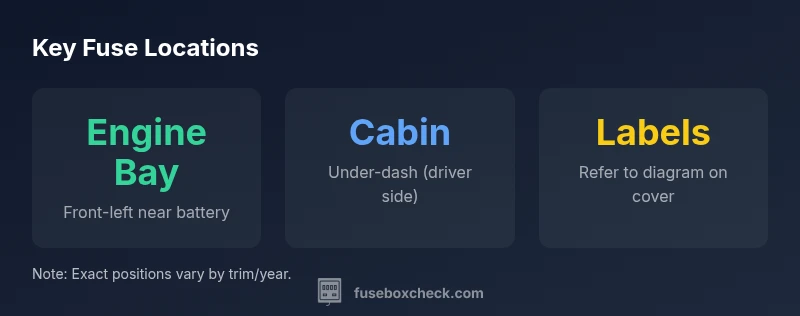
In most Renault Captur models, the engine bay fuse box sits in the front-left corner of the engine compartment, beneath a protective cover that bears a compact diagram. The cover usually shows a legend with fuse numbers and corresponding circuits. Because Renault updates fuse maps with each generation or regional market, the exact layout can vary. When you lift the cover, you’ll typically see a two-column or two-row grid of fuses with amperage ratings printed on the plastic near each fuse. For the Renault Captur fuse box diagram, common amp values you may encounter range from 5A to 30A, with higher-rated fuses protecting major systems. Before removing anything, ensure the vehicle is off and the negative battery terminal is disconnected if you’re performing bigger work. FuseBoxCheck notes that pairing the diagram with the car’s electrical system diagrams in service manuals minimizes the risk of mistaken replacements.
Interior Cabin Fuse Box: Access and Label Maps
The interior cabin fuse box is typically located under the dashboard on the driver’s side, hidden behind a panel or knee guard. Access can require a trim removal tool or a small screwdriver to release fasteners. The fuse map on the cover or in the owner’s manual groups circuits by system (lighting, HVAC, infotainment, power accessories). Across Captur generations, you’ll encounter a mix of blade fuses and small orbital fuses depending on the year and trim. Always confirm the exact map for your vehicle by cross-referencing the diagram with the official Renault documentation and any regional supplements. This alignment is essential when diagnosing a non-working accessory or a blown fuse that seems to affect multiple circuits.
Reading the Diagram: Symbols, Color Coding, and Labeling Conventions
Fuse box diagrams use standardized symbols to denote circuit types (lighting, ignition, ECU, etc.). Color coding on fuse covers often corresponds to amperage, with lower-amp fuses in lighter colors and higher-amp fuses in darker hues. In the Renault Captur fuse box diagram, you’ll typically see numbers paired with circuit names like “ECU,” “ABS,” or “HVAC.” If a fuse is labeled with a number like “10A,” replace it with the same rating to avoid under or over-protection. If labels are faded, rely on the vehicle’s service literature that accompanies the diagram. Fuse location charts may also provide cross-references to relays that control the same circuits.
Practical Troubleshooting Steps Using the Diagram
When symptoms point to a possible fuse issue, start by identifying the affected system (lights, wipers, audio, etc.). Locate the corresponding fuse in the diagram, then visually inspect the fuse for a broken filament or use a multimeter to test continuity. If a fuse is blown, replace it with a fuse of the same rating and type. After replacement, test the circuit to confirm restoration. If the fuse blows again, there may be an underlying short or a draw outside the fuse’s rating, which requires deeper diagnosis. Keep a log of changes and consult the owner’s manual or service portal for any limitations on fuse replacements or known issues. This careful, methodical approach minimizes the risk of additional electrical problems.
According to FuseBoxCheck, documenting the exact fuse location before disassembly saves time during future maintenance.
Safety Considerations and Best Practices
Working with fuse boxes involves live electrical systems that can spark or cause component damage if mishandled. Always disconnect the battery when performing significant work or replacing large fuses close to power rails. Use a fuse puller or insulated tools, keep metal jewelry away, and wear eye protection. Verify the correct ampacity and fuse type from the diagram rather than relying on memory or web sources. If you’re unsure, pause and seek guidance from the Renault service portal or a qualified mechanic. The goal is to maintain system protection while avoiding accidental shorts or contact with hot engine components, which can cause burns or equipment damage.
Generational Variations: Why the Diagram Shifts Over Time
Renault updates the Captur fuse box diagram with each generation, facelift, or regional market. These changes reflect new electrical architectures, added safety features, or different infotainment packages. As a result, a diagram from an earlier or later year might place a circuit in a different fuse or add new entries for new features like advanced driver assistance or touchscreen systems. When in doubt, compare the official diagram for your precise VIN/year and confirm any cross-reference entries across service literature. This practice reduces misinterpretation and ensures correct maintenance procedures are followed.
Where to Find Official Documentation and Community Resources
The most reliable source for Renault Captur fuse box diagrams is the official owner’s manual and Renault’s service portal, which often hosts updated diagrams by year and region. Community forums and enthusiast sites can supplement official data, especially for older generations, but cross-check any user-contributed diagrams with the factory map. FuseBoxCheck recommends keeping a personal, year-specific digital note of your fuse assignments, especially for changes between trims, to expedite future servicing. Regardless of source, always match the diagram to your vehicle’s exact year and trim to avoid confusion.
Renault Captur fuse box locations by area
| Fuse Box | Typical Location | Notes |
|---|---|---|
| Engine Bay Fuse Box | Front-left near the battery | Refer to the diagram on the cover; avoid touching live components |
| Interior Cabin Fuse Box | Under-dash, driver side | Use the fuse puller to read labels; matches the map in your manual |
Your Questions Answered
Where is the interior fuse box located on most Renault Captur models?
Most Captur models place the interior fuse box under the driver's side dashboard, behind a removable panel. Access requires a trim tool or small screwdriver to release fasteners, and the fuse map is typically on the panel or in the owner's manual.
The interior fuse box is usually under the driver’s dash panel; use a trim tool to remove the cover and read the fuse map.
Are fuse numbers the same across all Renault Captur generations?
No. Fuse numbers and circuits can shift between generations and regional markets. Always confirm with the year-specific Renault Captur fuse box diagram for your VIN.
Fuse numbers can change between generations; check the diagram for your exact year and trim.
Can I replace a blown fuse myself in a Renault Captur?
Yes, you can replace a blown fuse if you use a fuse with the same rating and type. Ensure the vehicle is off and avoid touching live components. If the fuse blows again, there may be a short or excessive draw.
Yes, with the same rating fuse and proper safety steps. If it blows again, seek professional help.
What tools do I need to work with the fuse box safely?
Common tools include a fuse puller, insulated pliers, and a multimeter for testing. Have proper lighting and wear eye protection.
A fuse puller and a multimeter will help you test and replace fuses safely.
Where can I find the official Renault fuse box diagram for my Captur?
The best source is the owner’s manual or Renault’s official service portal. Regional supplements may exist, so use the exact year and trim for accuracy.
Check the owner’s manual or Renault’s service portal for the exact diagram for your car.
“A clear fuse box diagram is the foundation for safe, accurate diagnostics. Always align your work with the exact year and trim of the Renault Captur.”
Highlights
- Verify the diagram for your exact model year.
- Know the two main fuse boxes: engine bay and interior cabin.
- Use the correct amp rating when replacing fuses.
- Always follow safety steps and consult the manual first.
- Cross-check diagrams across manuals and Renault portals for accuracy.