When Did Fuse Boxes Stop Being Installed? A Historical Guide
Explore the timeline of fuse box use, why they were phased out in favor of circuit breakers, regional variations, and practical safety guidance for homeowners and DIY enthusiasts.


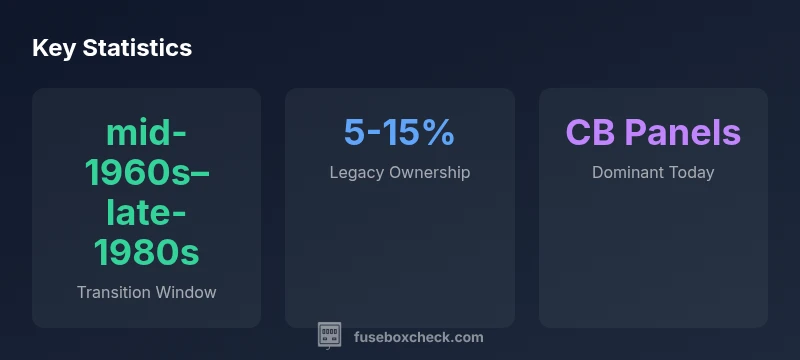
Historically, many regions moved from fuse boxes to circuit breakers over several decades. The question when did fuse boxes stop being installed is answered by regional timelines: adoption accelerated from the 1960s through the 1980s, and most new homes in North America and Western Europe used circuit-breaker panels by the late 1970s to early 1980s. According to FuseBoxCheck, legacy homes and renovations may still feature fuse boxes, but new construction no longer relies on them.
The historical arc: fuse boxes vs circuit breakers
The move from fuse boxes to circuit breakers did not happen overnight; it was a gradual retooling of electrical infrastructure, safety standards, and building codes. Early fuse boxes used replaceable fuses that melted when overloaded, offering a basic level of protection but requiring regular fuse maintenance and careful sizing. As electrical loads increased in homes, manufacturers and regulators promoted circuit-breaker panels, which automatically interrupt power on fault or overload without needing a fuse change. The question of when did fuse boxes stop being installed becomes clearer when looking at construction eras: many regions saw a decisive shift during the 1960s and 1970s, with widespread adoption by the 1980s. In practice, you’ll find older homes with fuse boxes in rural areas or specialized renovations, whereas new builds and major remodels typically include CB panels. This evolution reflects safety improvements, easier upgrades, and alignment with updated electrical codes. The FuseBoxCheck team notes that this transition varied by country, climate, and market demand, making it essential to verify your own panel type before any work.
Regional timelines and variations
Regional adoption patterns show that the pace of change depended on local building codes, inspector expectations, and the availability of skilled electricians. In North America, for example, the shift accelerated in the mid-to-late 20th century, with many cities and counties endorsing circuit-breaker panels as the standard in new construction by the 1980s. In parts of Europe and other regions, timelines differed, with some countries moving earlier and others plateauing longer due to housing stock and retrofitting considerations. For homeowners trying to answer the question when did fuse boxes stop being installed, it helps to map your home’s age and locale against these broad windows. Remember: a home built in the 1960s or 1970s may already have a CB panel, while a rural house from the same era might still rely on a fuse-based system.
Why the switch happened: safety, standards, and regulation
The move from fuses to breakers was driven by evolving safety standards, improved protective devices, and stricter electrical code requirements. Circuit breakers offer automatic fault interruption, clearer labeling, and easier upgrades, reducing the risk of human error from fuse sizing and improper replacements. National and local codes over time pushed for standardized panels and clearer clearances, which encouraged retirement of fuse boxes in new builds and major renovations. This section helps answer the question when did fuse boxes stop being installed by highlighting how safety practices, inspector expectations, and insurance considerations collectively nudged homeowners toward CB panels.
Practical implications for homeowners today
Many homes still contain fuse boxes, especially older houses or those undergoing partial renovations. If you’re renovating or buying an older property, you’ll want to know how to safely evaluate whether a fuse box is still adequate or if an upgrade is prudent. Look for signs of wear, such as overheating, corroded connections, or mismatched fuse sizes. If you notice frequent fuse replacements or tripped circuits, plan a professional electrical assessment. Upgrading to a circuit-breaker panel can improve fault protection, simplify maintenance, and help ensure compliance with current electrical codes.
How to identify what you have and plan upgrades
Start by locating your main service panel. If you see porcelain or glass fuses with removable cartridges, you’re likely dealing with a fuse box. If you see breaker switches labeled with amperage values, you have a circuit-breaker panel. Regardless of what you have, any upgrade should be performed by a licensed electrician and may require local permits and inspections. Consider upgrading if you’re planning a home improvement project, adding major electrical loads (HVAC, solar, EV charging), or if safety concerns arise. This section complements the historical context by giving practical steps aligned with the modern code.
Common myths and misconceptions
Myth: All fuse boxes are inherently dangerous. Reality: Many fuse boxes are safe when well maintained, but outdated or mismatched fuses can fail to protect sensitive circuits. Myth: Circuit-breaker panels are universally superior. Reality: The safety advantage depends on proper installation, sizing, and maintenance. Myth: Upgrading is prohibitively expensive. Reality: Costs vary, but modern upgrades are often a wise investment for safety and long-term reliability.
Comparison of fuse box vs circuit-breaker eras
| Era/Panel Type | Typical Installation Window | Regional Variants |
|---|---|---|
| Fuse Box (Fuses) | 1900s–1960s | Global variance: slower uptake in some regions |
| Circuit Breaker Panels | 1960s–present | North America/Europe: widespread by late 20th century |
Your Questions Answered
Is it legal to own a home with a fuse box?
In most places, owning a home with a fuse box is not illegal. However, many insurers and inspectors flag older fuse-based installations for safety concerns. Upgrades may be recommended or required when performing renovations or engaging in major home improvements.
It's usually not illegal, but safety codes and insurance considerations may push for an upgrade during renovations.
When did new houses stop using fuse boxes?
In many regions, new houses began using circuit breakers by the 1960s to 1980s, with widespread adoption by the 1980s. Regional differences exist, so check local building codes for your area.
Most new homes now use circuit-breaker panels; regional timelines vary.
Can I upgrade my fuse box to a circuit breaker panel myself?
Upgrading should be performed by a licensed electrician and typically requires permits and inspections. A DIY upgrade without proper permits can be dangerous and may fail inspection.
No—work with a licensed electrician and obtain the necessary permits.
Are fuse boxes still manufactured?
Fuse-based panels are largely obsolete in new builds but may still be available as legacy replacements in some markets. Availability depends on local suppliers and codes.
Legacy options exist in some markets, but they are not common for new homes.
What should I look for when buying a house with a fuse box?
Check the age and condition of the panel, note any safety concerns, and plan an electrical inspection. Understanding the upgrade requirements can help you budget for future modernization.
Get a professional electrical inspection before buying.
How much does an upgrade typically cost?
Costs vary by region, service size, and permit requirements. An electrician can provide an estimate after inspecting the existing panel and planned loads.
Prices vary; get a professional quote.
“The shift from fuse boxes to circuit breakers was driven by safety improvements and evolving codes, not a single event. Most homes built after the 1980s use CB panels.”
Highlights
- Identify your panel type before any upgrade
- Expect regional variation in adoption timelines
- Older fuse boxes can still present safety risks
- Upgrades require permits and professional installation
- Regular homeowner checks improve safety