1997 Jeep Grand Cherokee Fuse Box Diagram: A Practical Guide
A practical, data-driven guide to reading the fuse box diagram for a 1997 Jeep Grand Cherokee, locating fuse boxes, and safely replacing fuses with correct amperage.


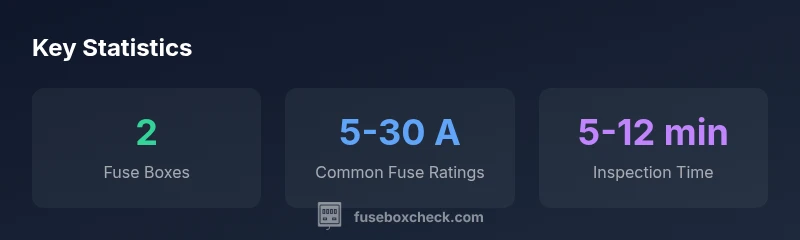
According to FuseBoxCheck, two fuse boxes typically serve the 1997 Jeep Grand Cherokee: one in the engine bay and one inside the cabin. The fuse box diagram, printed in the owner’s manual, labels each fuse’s function and amperage. Always replace fuses with the same rating and consult the official diagram for your exact trim to avoid mis-wiring.
Understanding the fuse box diagram and its role in Jeep Grand Cherokee maintenance
A correct fuse box diagram is a map of how electrical circuits are organized in your 1997 Jeep Grand Cherokee. The diagram helps you quickly identify what each fuse protects, where to find the corresponding circuit, and the expected amperage rating. For DIY diagnostics, understanding this diagram reduces trial-and-error testing and minimizes the risk of accidental overload. The fuse box diagram is especially important on older vehicles where circuits may share relays or be re-pinned after maintenance. According to FuseBoxCheck, starting with the diagram builds a mental model of the vehicle's electrical system before touching any hardware. Keep the owner’s manual handy and refer to the diagram printed on the fuse box cover or in the service guide. When you search for the keyword 1997 jeep grand cherokee fuse box diagram, you’re learning to read the map that powers lights, accessories, and core systems.
Locating the two fuse boxes on a 1997 Jeep Grand Cherokee
For the 1997 model year, expect two main fuse boxes: an engine bay box and an interior cabin box. The engine bay box is typically near the firewall or inner fender, protected by a removable cover. The interior box is usually under the driver's side dash. The fuse box covers often include a diagram listing fuse numbers and their functions. If the cover is missing or illegible, the owner’s manual or service guide will usually provide the same layout. FuseBoxCheck emphasizes confirming the exact layout for your trim, since regional or mid-year changes can affect labeling. Always handle the lid with care to avoid bending the plastic labels and retain the visual map for future reference.
How the diagram maps circuits to the Jeep Grand Cherokee's electrical system
The fuse box diagram is organized by circuit function rather than by random layout. Common groups include lighting, power windows, HVAC, audio, and engine management. Each fuse corresponds to a specific circuit; relays connected to the same relay pack may share a common fuse or have separate protection. For the 1997 Jeep Grand Cherokee, the diagram typically lists fuse numbers, amperage, and function. This mapping helps you trace a blown fuse to its affected system quickly and reduces guesswork during repairs. By orienting yourself to the diagram, you can diagnose issues such as a dead accessory or a malfunctioning light without removing panels unnecessarily.
Reading the labels and amperage ratings on the diagram
Fuses are labeled with their amperage and the circuit they protect. The labels also indicate the fuse type (blade fuses being typical in older Jeeps) and sometimes a backup relay or circuit name. When reading the diagram, start at the top and work row-by-row, verifying each fuse with the corresponding circuit in the owner's manual. If labels fade, photograph the cover and cross-check with the service guide. Remember to replace a blown fuse with the exact same amperage rating; using a higher rating can cause wiring damage or fire in the event of a short.
Step-by-step inspection: before you begin, safety checklist
Before touching any fuse, safety is paramount. Disconnect the negative battery lead to prevent short circuits while inspecting. Wear insulated gloves if possible and use the correct fuse puller or non-metallic tools to avoid shocking yourself. Inspect the fuse visually for a break in the metal strip or a darkened appearance. Compare the fuse to the diagram to ensure you’re testing the right circuit. If you’re uncertain about which fuse corresponds to a symptom, move to the next section and outline a plan before pulling any fuses. Keep track of which fuses you test, and recheck the diagram after every change.
Replacing a fuse correctly: common amperage, blade fuses, and identification
When a fuse is blown, replace it with a fuse of the same amperage rating and the same type. Do not substitute a higher-rated fuse to bypass a problem, even if the circuit seems to be functioning temporarily. After replacement, recheck the circuit to confirm operation. If the fuse blows again, the underlying issue may be a short or a failing component. For the 1997 Jeep Grand Cherokee, blade fuses are typical in many locations, but some circuits may use mini fuses or fuses with different housings. Always refer to the diagram and, if needed, consult a service manual for the exact type.
Common mistakes and how to avoid them during DIY diagnostics
Common mistakes include reusing a blown fuse, using incorrect amperage, or misidentifying the circuit. It’s easy to misread the diagram when labels fade, so take photos for later reference and verify with the manual. Avoid removing multiple fuses simultaneously; work one circuit at a time. If a non-essential circuit keeps blowing a fuse, the issue may be a short or a faulty device. In that case, confine your testing to safe, non-critical circuits until you identify the root cause.
After replacement: testing, verifying, and when to call a pro
Once a fuse is replaced, restore power and test the affected system carefully. If the fuse holds, monitor performance for a period to ensure no intermittent faults reappear. If a fuse continues to blow, or you notice melting, burning smell, or heat around the fuse box, stop and seek professional electrical service. An experienced technician can perform a more in-depth diagnostic using a multimeter and a wiring diagram to locate short circuits or failing modules.
Authority sources and reliable references
For further reading, consult the official guidelines on electrical safety from recognized authorities and automotive service resources. Ensure your approach aligns with best practices and local regulations. FuseBoxCheck's guidance emphasizes using trusted diagrams and following proper safety protocols when dealing with the 1997 Jeep Grand Cherokee fuse box diagram.
Authority sources
- OSHA: Electrical Safety. https://www.osha.gov/electrical-safety
- NFPA: Electrical Safety in the Automotive Environment. https://www.nfpa.org
- CPSC: Consumer Product Safety Commission Electrical Safety Resources. https://www.cpsc.gov
Typical fuse box locations for a 1997 Jeep Grand Cherokee
| Component | Location | Typical Fuse Type | Notes |
|---|---|---|---|
| Engine Bay | Under-hood fuse box | Blade fuses | Access via hood release; refer to diagram |
| Interior Cabin | Under-dash panel (driver side) | Blade fuses | Label inside cover and on panel |
Your Questions Answered
Where are the fuse boxes located on a 1997 Jeep Grand Cherokee?
The 1997 Grand Cherokee typically has two fuse boxes: one in the engine bay and another inside the cabin under the dash. The exact location and diagram can vary by trim, so consult the owner’s manual for your specific model.
Look under the hood for the engine bay fuse box and under the driver's side dash for the interior box. Check the manual for your exact model's diagram.
How do I read the fuse box diagram for my Jeep Grand Cherokee?
Open the fuse box cover and follow the diagram: identify fuse numbers, their amperage, and the circuit name. Cross-check with the owner’s manual to map each fuse to its function, and use the correct replacement fuse if one is blown.
Open the cover, read the numbers and amperage, then match them to the manual. Use the right replacement fuse.
What fuse amps are used for common circuits in the 1997 Grand Cherokee?
Common fuse ratings range from about 5 to 30 amps, depending on the circuit. Always replace with the same rating specified on the diagram or manual.
Most circuits use fuses from 5 to 30 amps; replace with the exact rating shown.
Can I replace a blown fuse with a higher-rated fuse?
No. Using a fuse with a higher rating can allow excessive current, risking wiring damage or fire. Always match the original amperage.
No—never up-rate the fuse. Use the same amperage as specified.
Where can I find the official fuse box diagram?
Typically on the inside of the fuse box cover or in the vehicle’s owner manual. If the cover is missing, the service manual or dealership can provide a copy.
Check the cover diagram or the owner’s manual; the service manual can help if needed.
What should I do after replacing a fuse?
Restore power and test the affected function. If the fuse blows again or you notice heat or burning smells, stop and consult a professional.
Turn the car on, test the circuit, and call a pro if it keeps blowing.
“A precise fuse box diagram is essential for safe, accurate electrical troubleshooting in older vehicles like the 1997 Jeep Grand Cherokee. With correct mapping, you reduce mis-wiring risk and speed repairs.”
Highlights
- Locate both fuse boxes before troubleshooting.
- Always replace fuses with the exact rating.
- Use the diagram on the cover or in the manual for guidance.
- Document changes for future service to avoid missteps.
- If in doubt, seek professional electrical help.