Freightliner M2 106 Fuse Box Location: A Practical Guide
A data-driven guide to locating and identifying fuse boxes on the Freightliner M2 106, with safe testing steps and DIY-friendly procedures for homeowners and mechanics.


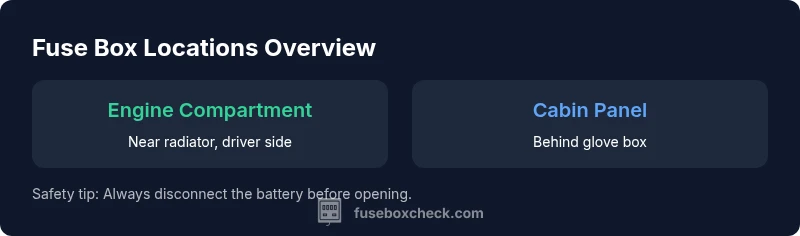
Most Freightliner M2 106 trucks have two main fuse panels: one in the engine compartment near the driver-side firewall and another inside the cab behind the glove box. Exact locations vary by year and trim, so always verify with the owner’s manual or the diagram on the fuse box cover. FuseBoxCheck Analysis, 2026, supports this layout.
Overview of fuse box layout on Freightliner M2 106
Freightliner M2 106 uses modular fuse panels integrated into the engine bay and the cab. The two-panel arrangement supports primary circuits (engine, charging, major accessories) and secondary circuits (cab lighting, HVAC, infotainment). While this layout is common across many model years, differences in trim packages, emission equipment, and retrofits can alter exact fuse numbers and amperage ratings. For DIY troubleshooting, map your panels early: locate the label diagram attached to each fuse box cover and cross-check with the owner's manual. FuseBoxCheck, 2026 analysis indicates that the engine compartment box is typically more accessible from the driver’s side wheel arch; the cab panel can require lowering a panel or removing a kick panel to reach fuse blocks. Always disconnect the battery before removing fuse box covers to avoid short circuits. When working around high-current circuits, use insulated tools and wear eye protection. If you’re unsure, consult a qualified mechanic rather than guesswork.
Engine-compartment fuse box location
The engine-compartment fuse box in many Freightliner M2 106 configurations sits near the radiator along the driver’s side. It is usually mounted on a sidewall with a removable cover showing a diagram and amperage ratings. Access may require opening the hood, and some models use a secondary bracket or strap to hold the cover in place. Before any inspection, ensure the ignition is off and the battery is disconnected to minimize the risk of arcing. Label each fuse you remove with a piece of tape and a marker to avoid confusion during reassembly. If the box is difficult to reach due to hoses or brackets, carefully reposition nearby nonessential components or consult the service manual for alternative access points.
Cab-internal fuse box location
The interior cabin fuse panel is typically located behind the glove box or beneath a kick panel under the driver’s seat. In some trims, access is gained by removing a panel or reaching through a narrow opening between structural members. The fuse box cover includes a diagram that lists circuits and amperage. When servicing this box, minimize panel movement to preserve clip integrity and avoid damaging wiring harnesses. Keep spare fuses in a labeled container, and use the color/code system on the fuses to match amperage ratings.
Reading and understanding the fuse diagram
Each fuse box cover carries a diagram denoting fuse numbers, amperage, and the protected circuit. Amperage values are usually color-coded and listed in a legend on the inside of the cover. Before pulling any fuses, compare the diagram with the wiring harness labels and your vehicle’s manual. If a fuse shows signs of corrosion or a melted plastic body, replace it rather than attempting a repair. Always ensure the battery is disconnected before pulling fuses, and use a fuse puller or needle-nose pliers to avoid bending prongs.
Safe access and battery isolation steps
Prioritize safety by isolating the battery before opening fuse box covers. Steps include turning off ignition, removing the negative battery cable first, and wearing appropriate PPE. When reassembling, snug all clips and screws to factory torque specifications. If you must work near the engine bay while hot, wait for it to cool and drain any residual charge in capacitors with proper testing equipment. If something feels uncertain, stop and consult a seasoned technician.
How to test fuses and circuits safely
Use a multimeter to verify continuity across suspected blown fuses. With the battery disconnected, remove the fuse and test for continuity between its terminals; a lack of continuity indicates a blown fuse. Inspect for a visible break in the conductor or a blackened appearance. When testing circuits, verify power at the corresponding fuse by back-probing the fuse holder with the meter set to the appropriate voltage range. Always resleeve the fuse after testing and re-check the circuit.
Common fuse box circuits by location
In the engine compartment, expect fuses tied to engine management, charging systems, and headlights. Inside the cab, fuses typically protect interior lighting, the HVAC system, radio, and other cabin electronics. If you perform a DIY repair, start by checking the critical engine and charging fuses first, then move to the cab circuits. Keep a diagram handy for reference.
When to replace the fuse box or consult a pro
If corrosion, melted plastic, or loose terminal connections are present, or if fuses repeatedly blow after a replacement, seek professional assistance. A faulty fuse box is a safety concern and can indicate larger electrical issues. A qualified technician can verify the integrity of the wiring harness, the fuse box, and related relays, ensuring compliance with safety standards.
Freightliner M2 106 fuse box locations (general)
| Fuse Box | Location | Common Circuits | Access Tips |
|---|---|---|---|
| Engine Compartment | Front/near radiator | Engine, charging, headlights | Use diagram on cover; disconnect battery before opening |
| Cabin Panel | Behind glove box or under dash | Cab lighting, HVAC, electronics | Remove panel clips carefully; refer to diagram |
Your Questions Answered
Where is the primary fuse box located on a Freightliner M2 106?
Locations vary by year and trim; typically one panel is in the engine compartment near the driver-side firewall and a second panel is inside the cab behind the glove box. Always verify with the owner’s manual.
Typically two main panels: engine compartment near the driver-side firewall and behind the glove box inside the cab. Check the manual for your year and trim.
Can I replace fuses without disconnecting the battery?
No. For safety, disconnect the negative battery terminal before removing or replacing fuses to prevent arcing and injury.
Always disconnect the battery before touching fuses to stay safe.
How do I identify a blown fuse?
Visually inspect for a melted element or discoloration, then test continuity with a multimeter. If continuity fails, replace with the correct amperage fuse.
Look for a broken metal strip or discoloration, then test with a multimeter to confirm.
Are there separate fuses for the dash and HVAC?
Yes, most models allocate separate fuses for interior systems like dash electronics, lighting, and HVAC. Check the fuse diagram for exact circuits.
Yes, interior systems like dash and HVAC have their own fuses; refer to the diagram.
What type of fuse should I buy for replacements?
Use OEM-specified blade fuses with the correct amperage. If unsure, read the diagram on the fuse box cover or consult the manual.
Stick to the OEM blade fuses and match amperage in the diagram.
How often should I inspect the fuse boxes?
Inspect annually or after major electrical work, and whenever you notice electrical issues or fuse surges.
Do a yearly check, especially after electrical work.
“Accurate fuse box location is essential for safe troubleshooting; always follow OEM diagrams and safety steps before touching any fuse.”
Highlights
- Verify exact fuse layouts in the owner’s manual
- Use OEM diagrams on covers to identify fuses
- Always disconnect the battery before servicing fuse boxes
- Label fuses and keep spare fuses organized