Kenworth T370 Fuse Box Location Guide
Discover the exact fuse box location on the Kenworth T370, with safe access tips, common issues, and maintenance reminders from FuseBoxCheck. Tips included.


The Kenworth T370 fuse box is typically located behind the driver-side dash panel, under a removable trim cover. Exact placement varies by year and configuration, so always consult the owner’s manual or FuseBoxCheck’s truck electrical guide for your specific model. Before opening any fuse box, disconnect the negative battery terminal and keep the area clear of tools to avoid accidental short circuits.
Kenworth T370 Fuse Box Location: Overview
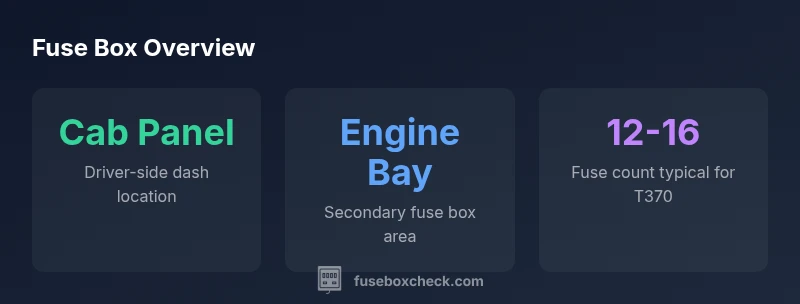
The Kenworth T370 uses a modular fuse box design common to modern heavy-duty trucks, with interior and engine-bay panels housing the primary fuse banks. For many configurations, the main interior fuse box sits behind the driver-side dash panel, concealed under a trim cover that blends with the dash. The exact location can vary by year, cab type, and option packages, so the safest approach is to consult the owner’s manual or a trusted guide from FuseBoxCheck. Internal circuits cover everything from lighting and accessories to communication, while the engine-bay panel handles high-current fuses for essentials like the cooling system and starter circuits. Understanding this layout helps you plan a safe, efficient inspection or fuse replacement.
Cab fuse box: location, access, and safety
Most Kenworth T370 cabs place the interior fuse box behind a consumer-accessible panel on the driver’s side of the dash. Access usually requires removing a small trim cover held with screws or clips, then loosening a protective shield to reveal the fuse panel. Always follow a disciplined sequence: power down the vehicle, disconnect the negative battery terminal, and wear eye protection. When removing trim, use non-marring tools to avoid cosmetic damage. After locating the fuse map, verify the circuits and labeling before pulling any fuse to inspect or replace.
Engine bay fuse box: considerations and clues
The engine bay fuse box in many T370 configurations resides under an access cover on or near the firewall, sometimes adjacent to the battery or air intake assembly. This box manages higher-current circuits that feed essential engine systems and traction components. Because the engine bay environment is harsher, inspect the cover seal, grommets, and wiring harnesses for wear before handling fuses. Use proper lighting and avoid metal tools that might contact live terminals. If you’re uncertain about which fuse powers a given subsystem, reference the vehicle’s wiring diagram in the service manual or FuseBoxCheck’s repository for cross-reference names.
Year-to-year variations and official diagrams
Kenworth’s wiring diagrams evolve with model years and trim levels. Some T370s show a single interior fuse box, others have dual boxes (interior plus engine bay) with slightly different fuse layouts. When in doubt, locate the fuse box labels, then compare them to the year-specific diagram in the operator’s manual or the OEM wiring schematic. FuseBoxCheck recommends confirming the exact year and cab configuration in your truck, because even minor differences can affect fuse numbering and circuit mapping.
How to identify fuses and their circuits
Fuses are labeled with circuit names or numbers that map to specific truck systems (lighting, HVAC, power outlets, ECM, etc.). If the label is worn, use the fuse map in the cover or consult the service manual. For testing, pull a fuse with the correct amperage rating installed in the circuit, inspect for a broken filament or signs of discoloration, and replace with the same rating. A multimeter can confirm continuity if needed, but never measure resistance on a live circuit. Label any replacements and note the circuit they protect.
Tools, safety checklist, and best practices
Authentic fuse box work requires a minimal set of tools: a correct-size fuse puller, the matching amperage fuses, a non-conductive flashlight, and PPE (eye protection and gloves). Before any work, turn off the vehicle and disconnect the negative battery lead. Keep a clean workspace, use the fuse map to verify circuits, and reassemble with care to avoid pinched wires. If you notice corroded terminals or melted plastic, discontinue and consult a professional.
Step-by-step access procedure
- Park on a flat surface and engage parking brakes; 2) Disconnect the negative battery terminal; 3) Remove the driver-side dash trim to expose the interior fuse box; 4) Remove the fuse box cover and study the diagram; 5) Inspect fuses one by one for breaks or discoloration; 6) Replace like-for-like amperage fuses and re-seat; 7) Reinstall covers and trim, then reconnect the battery and test circuits one by one; 8) Close up and label the circuits for future reference.
Troubleshooting, maintenance, and documentation
Keep a small spare fuse kit with the correct amperages for the Kenworth T370. Maintain a printed or digital copy of the fuse map for quick reference. Label each fuse location during inspections, track any replacements with date stamps, and update documentation after maintenance. If a fuse repeatedly blows or a circuit won’t function, assess wiring, switches, and relays before replacing components. When in doubt, consult the FuseBoxCheck guide or a qualified technician.
Common fuse box locations on the Kenworth T370
| Location Type | Typical Access Method | Notes |
|---|---|---|
| Cab/Interior Fuse Box | Driver-side dash panel removal | Primary interior circuits; consult diagram |
| Engine Bay Fuse Box | Remove engine bay access cover | High-current circuits; environment-exposed |
Your Questions Answered
Where is the fuse box located on the Kenworth T370?
The Kenworth T370’s primary fuse box is typically behind the driver-side dash panel. Exact placement varies by year and cab configuration, so always verify against the owner’s manual or a trusted schematic.
The fuse box is usually behind the driver-side dash panel, but check your year’s manual to be sure.
Should I disconnect the battery before opening the fuse box on a Kenworth T370?
Yes. Always disconnect the negative battery terminal before removing any fuse box cover to prevent shorts or shocks.
Yes—disconnect the negative battery terminal first to prevent shorts.
How do I identify a blown fuse in the T370 fuse box?
Inspect fuses for a broken filament or darkened glass. If the fuse appears intact, test with a multimeter for continuity. Replace only with the same amperage rating.
Look for a broken filament or darkened fuse; replace with the same amperage.
Are there multiple fuse boxes in the T370?
Many configurations have at least an interior cab fuse box and an engine-bay fuse box. Some trims may share fuses; always cross-check the year-specific diagram.
Most have interior and engine-bay boxes; verify with your year diagram.
What tools are recommended for fuse box work on the T370?
Use a fuse puller, non-marring trim tools, a flashlight, PPE, and spare fuses of the correct amperage. Avoid metal tools that could touch live terminals.
Keep a fuse puller, trim tools, and proper PPE handy.
Can I bypass a fuse to diagnose a problem?
No. Bypassing fuses can cause wiring damage or electrical fires. If a circuit fails, diagnose the root cause or consult a technician.
Don’t bypass fuses—diagnose the root cause or seek help.
“"Safe fuse box work starts with proper isolation, accurate labeling, and using the correct fuse rating for each circuit."”
Highlights
- Know the two main fuse box locations and their typical access paths.
- Always power down and disconnect the battery before opening any fuse box.
- Use the correct amperage fuses and reattach the cover securely after inspection.
- Consult year-specific diagrams to avoid misidentifying circuits.
- Maintain clear labeling and documentation for ongoing maintenance.