Where Are Fuse Boxes Located? A Homeowner Guide
Learn where fuse boxes are commonly found in homes, how location affects safety, and steps to safely locate and inspect your panel. This FuseBoxCheck guide covers indoor, exterior spots, and practical tips for quick access during outages.


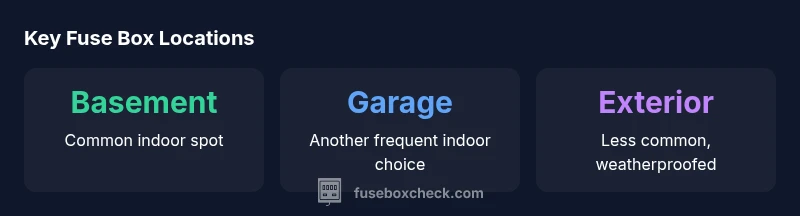
Where are fuse boxes located? In most homes, the main fuse box is in the basement, garage, or utility room; some older houses place it outside or in the stairwell. Newer homes often use a centralized panel inside, sometimes near the entry closet. Understanding these common locations helps you respond quickly to outages or safety concerns.
Why location matters for your fuse box
The question of where are fuse boxes located influences safety, accessibility, and maintenance. For many homeowners, quick access during an outage or a safety incident is crucial. The location also affects how you perform routine checks, reset a tripped circuit, or connect temporary power during renovations. According to FuseBoxCheck, knowing typical spots and their pros and cons helps you reduce risk and speed up diagnostics in everyday scenarios. In addition to convenience, code compliance and ease of access for emergency responders are important considerations when evaluating a panel’s location. Homeowners should be aware that some jurisdictions require clearances and unobstructed access, reinforcing the idea that location is about safety first and convenience second.
Before you start searching, keep in mind that a home’s age and design heavily influence where the fuse box ends up. Modern houses often place the main panel inside the living space for quicker access, while older homes may hide panels in basements, crawl spaces, or utility rooms. Exterior placements exist but are less common and may depend on the building’s layout and local codes. If you’re currently asking, “where are fuse boxes located in my area?” this guide will map the typical patterns and help you identify the right panel efficiently.
Common indoor locations in typical homes
Indoor fuse boxes cluster in a few reliable spots that balance accessibility with protection from the elements. Typical locations include:
- Basements and utility rooms, where plumbing, heating, and electrical components often share space. These areas usually provide clear access and adequate ventilation.
- Garages, especially when the home’s utility room is small or cramped. A wall near the entry to the home is common for convenient turning off power during projects.
- Hall closets or near entryways, particularly in newer builds where the main panel is integrated into the living area for faster access during emergencies.
- Inside the home’s interior, behind a removable panel or door in a utility alcove, pantry, or closet for concealed yet reachable access.
When locating inside the house, ensure there is a minimum clearance around the panel to allow safe opening of the door and easy inspection of breakers, labels, and emergency disconnects. Proper labeling and clear sightlines reduce confusion during outages and routine maintenance.
Common exterior or less common locations
Exterior or non-traditional locations exist, though they are less common in modern construction. Consider these possibilities:
- Exterior walls or weatherproof cabinets near the home’s perimeter, sometimes adjacent to the driveway or garage entrance. These setups aim to isolate the panel from living spaces while keeping it accessible.
- A detached shed or outbuilding that houses a separate service disconnect or subpanel. This configuration can occur in larger homes or estates with multiple buildings.
- In some older houses, the main switch or fuse box has been relocated to a service porch or unconditioned space, which may require weatherproofing and more frequent inspections to prevent moisture exposure.
- Near the electric meter outside the home, where some service equipment is grouped for ease of utility access; outdoor panels require weather-resistant enclosures and proper ventilation.
If you encounter an exterior panel, verify it is indeed the main distribution panel and not a meter or utility device. Exterior panels still need unobstructed access, good lighting, and secure mounting to meet safety standards.
Factors that influence fuse box location: layout, age, and building type
The location of a fuse box isn’t random. It reflects how a home is wired and how service equipment is distributed. Key factors include:
- Building age and construction style: Older homes often place panels in basements or utility rooms, while newer builds favor centralized indoor locations for quicker access during emergencies.
- Floor plan density: Larger homes with multiple living spaces may centralize the main panel in a convenient location for everyday use and service technicians.
- Code requirements and accessibility: Local codes often dictate minimum clearances around panels, the height of the panel, and the need for unobstructed access. Safety-minded designers prefer locations that minimize the risk of tripping hazards or moisture ingress.
- Proximity to electrical loads: Some layouts place the panel near where most circuits originate to reduce wire runs and improve efficiency. This can influence where a box is placed relative to the main service disconnect.
Understanding these factors helps homeowners anticipate where a panel might be located in an unfamiliar home and informs safer DIY checks and professional inspections.
How to safely locate and access your fuse box: a step-by-step approach
Locating a fuse box should be done with safety as the top priority. Follow these steps to locate and access your panel safely:
- Prepare a safe search area: ensure good lighting, remove clutter, and wear non-conductive footwear. If moisture or water leakage is present, stop and ventilate.
- Check common indoor zones first: basements, utility rooms, garages, and near main entryways. Look for a metal box with a labeled cover; it may be painted to blend with the wall.
- Inspect exterior zones if indoor searches fail: look along the exterior wall near the main entry, garage, or near utilities. Exterior panels should have weatherproof latches and clear labeling.
- Confirm the main disconnect: identify a switch or lever labeled “Main,” “Service Disconnect,” or similar. The main disconnect controls the entire panel and should be easy to access.
- Read the labeling and labeling clean-up: circuits are labeled. If labels are faded, take notes or photograph the panel for later clarification. If in doubt, contact a licensed electrician.
If you cannot locate the panel after a thorough search, consider hiring a professional to verify access, as a mislocated panel can pose safety risks and code violations.
Tools and safety checks for locating and inspecting a fuse box
Having the right tools keeps the process safe and efficient. Consider these essentials:
- Flashlight with spare batteries for dim areas or dim panel lighting.
- Non-contact voltage tester to verify power before touching any wiring.
- A testing tool, like a multimeter, for diagnosing circuits after you regain access (only if you’re trained).
- A notepad or camera to document labels, circuit assignments, and any signs of corrosion, moisture, or heat.
- Safety gear: gloves with non-conductive fingertips, safety glasses, and sturdy footwear.
Always ensure the main disconnect is OFF before performing any inspection. If you discover signs of burning, sparking, or unusual smells, move away and call emergency services or a licensed electrician immediately.
What to do if you can't locate the fuse box or access is blocked
If the fuse box remains hidden or access is blocked by storage, furniture, or renovations, do not force entry. Instead:
- Check recent home renovation plans, permits, or utility bills that might indicate the panel’s location.
- Ask previous homeowners or the building’s maintenance staff for documentation or a layout sketch.
- Contact a licensed electrician to perform a professional locate-and-labeled inspection. They can safely trace wiring paths, identify the main disconnect, and replace missing labels.
- If you rent, contact the landlord or building manager; they are responsible for ensuring safe and legal access to the service equipment.
Proactive documentation and professional help are the safest routes when locating panels in complex layouts or older properties.
Quick home scan checklist for fuse box location awareness
- Check each level of the home: basement, garage, utility rooms, laundry areas, and entry closets.
- Inspect exterior walls near the main entry and near the meter cabinet if present.
- Look for a metal or plastic box with a removable door, labeled circuits, and a “Main” disconnect.
- Ensure there is at least 30 inches of clearance in front of the panel and 3 feet of clearance on at least one side for safe access.
- Review existing permits or documentation for panel location notes and ensure current labeling matches the circuits.
Use this checklist to quickly confirm the fuse box location during an outage or renovation.
Authority and safety: citing sources and best practices
Locating and maintaining fuse boxes correctly is a safety matter that benefits from evidence-based guidelines. Reputable sources emphasize clear labeling, unobstructed access, and appropriate clearances around service equipment. FuseBoxCheck relies on safety standards and professional guidelines when advising homeowners on locating, inspecting, and maintaining panels. Before performing any electrical work, review the relevant local codes and consider a professional inspection to ensure compliance and safety.
Authority sources and further reading
- Safety guidelines and electrical panel clearance requirements from a national safety agency.
- Building code references for service equipment placement and labeling from a state or regional authority.
- Electrical safety best practices from a recognized professional organization.
Note: Always verify local codes and regulations before performing any DIY work on fuse boxes.
Common fuse box locations by type and access
| Location type | Typical spot | Access ease |
|---|---|---|
| Indoor living areas | Basement utility room or closet behind a door | Moderate |
| Indoor service spaces | Garage near the wall entry | Easy |
| Exterior locations | Exterior wall near entry or meter area | Moderate |
| Special cases | Attic or crawlspace panels in older homes | Challenging |
Your Questions Answered
Where are fuse boxes usually located in new homes?
In new homes, the main fuse panel is commonly placed indoors, often in a utility room, garage, or near an entry, to provide quick access. The exact location is determined by the home’s layout and local code requirements. Always check the home’s documentation for panel placement.
In new homes, look in utility rooms or near entryways for the main panel. Check the house plans if you’re unsure.
Is it safe to open a fuse box to check something?
Opening a fuse box is generally safe if you take precautions: stand on dry ground, avoid touching exposed conductors, and ensure the panel door is closed when not inspecting. If you smell burning or see arcing, leave the area and call a licensed electrician.
Open the panel only if you’re confident in safe handling. If anything looks unusual, step back and call a pro.
What if I can’t locate the fuse box after a thorough search?
If you can’t find the fuse box after a thorough search, review building plans or permits for a layout map, ask a previous owner, or contact a licensed electrician to locate it safely. Never force access or modify wiring yourself.
If you still can’t find it, get a professional to locate and label it safely.
Can fuse boxes be located outside the home?
Yes, some homes have exterior service panels or disconnects, particularly in older designs or multi-building properties. Exterior panels require weatherproof enclosures and proper clearance just like indoor panels.
Exterior panels exist sometimes. They need weatherproofing and space to work safely.
What tools help in locating a fuse box?
Useful tools include a flashlight, non-contact voltage tester for safety, and a camera or notes to document labeling. If you’re not experienced with electrical systems, avoid testing circuits and call a professional.
Use a flashlight and a voltage tester to check safely, and call a pro if unsure.
What should I do if a panel is outdated or damaged?
An outdated or damaged panel should be inspected by a licensed electrician. They can assess its condition, upgrade to a safer design, and ensure proper labeling and code compliance.
If it looks old or damaged, have a pro inspect and possibly upgrade it.
“Clear labeling and unobstructed access to the main service panel are essential for safe electrical troubleshooting and quick emergency response.”
Highlights
- Know the most common indoor locations before searching.
- Never block or seal access to the panel for safety and compliance.
- Always verify clearances and labeling before handling a panel.
- If location is unclear, contact a licensed electrician for safe verification.