Best Way to Clean Corroded Fuse Box: Safe DIY Guide
Learn the best way to clean corroded fuse box safely with practical steps, safety checks, and maintenance tips. FuseBoxCheck guides homeowners through off-power prep, appropriate cleaners, and when to call a pro to prevent fires and trips.


By safely cleaning corrosion from a fuse box, you can restore reliable circuit connections and reduce nuisance trips. Important: power must be off at the main breaker, and corrosion or damage beyond a light patina means replacement is safer than cleaning. This guide walks you through careful inspection, minimal cleaning, and when to call a licensed electrician.
Understanding corrosion in fuse boxes
Corrosion in a fuse box is more than a cosmetic issue; it signals chemical reactions at the terminals, often caused by moisture, humidity, or salt from outdoor environments, plus aging connections. When copper or aluminum contacts oxidize, resistance rises, heat builds, and tripping can follow. If you own an older home or a humid climate, corrosion is a common maintenance concern. Recognizing the signs early—greenish or bluish patina, white powdery deposits, darkened insulation, or a musty chemical smell—lets you take controlled, safer action. This section explains what corrosion looks like, how it forms, and why addressing it promptly matters for electrical safety and system reliability. FuseBoxCheck emphasizes that prevention is more cost-effective than emergency repairs, and safety should always come first.
Safety first: assess risk before you touch
Before you touch anything, assess the risk. Corrosion may indicate moisture intrusion, overheated connections, or compromised insulation. Signs like a warm panel, buzzing sounds, melted insulation, or a burnt smell mean danger. If you notice any of these, stop immediately, keep others away, and do not attempt cleaning. Always ensure you have a clear exit path in case you need to retreat. Remember: electricity is dangerous even when a panel appears dormant. FuseBoxCheck guidance stresses that personal safety supersedes cosmetic improvements, and if you doubt your ability, call a licensed electrician.
When cleaning is not enough: replacement considerations
Cleaning a corroded fuse box is often a short-term fix for minor oxidation on accessible terminals. If corrosion covers large areas, or if terminals are loose, pitted, or burnt, cleaning may not restore safe operation. In those cases, replacement or relocation of the panel might be required. A panel that shows corrosion around main lugs or bus bars is a red flag for structural integrity. Evaluate the age of the panel, the environment, and any signs of moisture ingress. When in doubt, prioritize reliability and safety over a cosmetic cleanup—consult a licensed electrician to assess whether a full replacement is warranted.
Tools and materials you can safely use
Preparing the right tools is essential for a careful cleanup. Use insulated tools and non-conductive cleaners designed for electrical components. Keep PPE handy: safety glasses, insulated gloves, and a dry working surface. A soft nylon brush helps remove loose oxidation without scratching metal. Electrical contact cleaner (non-residue) is preferred for terminals; avoid water, bleach, or any conductive liquids near energized parts. A lint-free cloth or paper towels are necessary to dry surfaces completely. Optionally, a desiccant or moisture-absorbing pad can help control humidity in enclosed panels between inspections.
Step-by-step workflow for minor corrosion cleanup
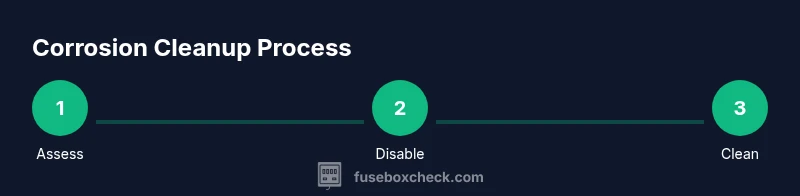
- Power down and secure the area. Switch off the main breaker and verify with a non-contact tester. 2) Remove the fuse box cover and visually inspect for obvious damage. 3) Document areas of corrosion with a photo for reference. 4) Gather tools and PPE before touching anything. 5) Apply a small amount of contact cleaner to affected terminals using a spray and allow to sit for 30 seconds. 6) Gently scrub corrosion with a soft nylon brush. 7) Wipe surfaces dry with a lint-free cloth and repeat if necessary. 8) Reinstall the cover and secure screws. 9) Restore power and observe; listen for unusual sounds or smells. 10) Note results and schedule follow-up inspection. 11) If any lethargic response or overheating occurs, disconnect power and seek professional help. 12) Review your records for next-year maintenance.
tipOneNotes1:
estimatedTimeNote1
Tools & Materials
- Main power switch (main breaker)(Turn off power before inspecting; verify zero voltage at panel with tester if available.)
- Personal protective equipment (PPE): safety glasses, insulated gloves(Electrical PPE rated for working around panels; ensure dry hands and a dry work area.)
- Insulated screwdriver set(Use non-conductive handles; select appropriate size for panel screws.)
- Soft nylon brush(Non-metallic brush to avoid scratching terminals.)
- Electrical contact cleaner (non-residue)(Follow label instructions; spray onto brush, not directly onto live electronics.)
- Lint-free cloths(Dry surfaces completely after cleaning.)
- Multimeter (optional)(ONLY if trained; used to verify circuit status after cleanup.)
- Desiccant or moisture absorber (optional)(Helps reduce humidity in enclosed panels between checks.)
- Owner’s manual or panel schematics (optional)(Keep handy for reference to terminal layouts.)
Steps
Estimated time: 60-120 minutes
- 1
Power off and secure the area
Switch off the main breaker and test for zero voltage with a multimeter or non-contact tester. Ensure the room is dry and free of liquids. This reduces the risk of electric shock during inspection.
Tip: If you’re unsure whether the panel is de-energized, treat it as live and avoid contact until verified. - 2
Open the panel and inspect visually
Remove the cover carefully and look for corrosion around terminals, bus bars, and lugs. Note any melted insulation, brown staining, or peeling coatings. Photograph the area to document prior to cleaning.
Tip: Do not touch exposed conductors with metal tools; use plastic or insulated implements. - 3
Choose and prepare cleaning materials
Set up your electrical contact cleaner and lint-free cloths. Avoid water or liquid cleaners near metal connectors. Make sure the cleaner is compatible with electrical contacts and will evaporate without leaving conductive residue.
Tip: Test cleaner on a small, inconspicuous area first to ensure it won’t discolor or corrode surfaces. - 4
Apply cleaner and loosen corrosion
Spray cleaner on the affected terminals and connectors, then wait 20-30 seconds for reaction. Gently brush away loose corrosion with a nylon brush. Don’t scrub aggressively to avoid bending or damaging contacts.
Tip: If corrosion does not loosen after cleaning, stop and seek professional assessment. - 5
Dry thoroughly and inspect again
Wipe surfaces with a dry cloth and allow remaining moisture to evaporate for several minutes. Recheck for any remaining corrosion or dampness before reassembling the panel.
Tip: Moisture near live parts can reignite corrosion quickly; ensure complete dryness before powering up. - 6
Reconnect and reseal the panel
Secure all wires and lugs as per the manual’s torque specs, then replace the cover tightly. Ensure grommets or seals are intact to minimize moisture intrusion.
Tip: Loose panels can allow humidity to enter; double-check the seal and screws location. - 7
Restore power and observe behavior
Turn the main breaker back on and listen for buzzing, check that all circuits are functioning normally, and watch for heat or smells near the panel for the next 30-60 minutes.
Tip: If anything feels hot to the touch, shut down power immediately and contact a professional. - 8
Document results and plan follow-up
Record the cleaning date, areas cleaned, and any notes about remaining corrosion. Schedule a professional inspection if corrosion recurs within a year or more.
Tip: Keep a simple maintenance log in a home binder for electrical safety. - 9
Evaluate the need for replacement
If corrosion recurs quickly, is widespread, or you notice damaged insulation, plan for a panel replacement rather than repeated cleanings.
Tip: Discuss retrofit options or panel upgrades with a licensed electrician for long-term reliability. - 10
Finalize safety and cleanup
Dispose of used materials properly, store cleaners out of reach of children, and return tools to their storage. Confirm the area is dry, safe, and ready for routine use.
Tip: Always wash hands after handling cleaners and avoid touching your face.
Your Questions Answered
What causes corrosion in a fuse box?
Corrosion is usually caused by moisture exposure, condensation, or aging electrical connections that oxidize over time. External humidity and salt in damp environments can accelerate the process. Regular inspection helps catch early signs before major damage occurs.
Corrosion in a fuse box is usually due to moisture and aging connections; watch for moisture to prevent bigger problems.
Is it safe to clean a corroded fuse box myself?
Only if the main power is off and you’re confident about basic electrical safety. If you see deep corrosion, melted insulation, or loose/burning smells, stop and call a licensed electrician. Safety and structural integrity take precedence over a DIY cleanup.
Only attempt cleaning if the power is off and you’re comfortable with basic electrical safety; otherwise, call a pro.
What cleaners are safe to use on fuse box terminals?
Use a compatibility-tested electrical contact cleaner that evaporates completely and leaves no conductive residue. Do not use water, bleach, or other household solvents near live components.
Use a proper electrical contact cleaner that dries clean; avoid water near electrical parts.
How do I know when to replace rather than clean?
If corrosion covers large areas, is accompanied by melted insulation, loose connections, or recurring issues after cleaning, replacement or panel upgrade is recommended. A licensed electrician can assess condition and safety.
If corrosion is widespread or recurs after cleaning, replacement is the safer option.
Can corrosion lead to fires?
Yes. Corrosion can increase resistance, cause overheating, and create conditions that may ignite insulation or surrounding materials. Regular inspection reduces this risk.
Corrosion can raise the risk of overheating and fires if not addressed.
How often should I inspect my fuse box for corrosion?
Annual inspections are a good baseline, plus checks after heavy humidity, storms, or water exposure. If you notice new corrosion between inspections, call a pro sooner.
Inspect annually, and after any moisture event; contact a pro if you see new corrosion.
Watch Video
Highlights
- Turn off power before any inspection.
- Use non-conductive cleaners and insulated tools.
- Replace the panel if corrosion is extensive or recurring.
- Document findings and plan professional follow-up.
- Prioritize safety over cosmetic fixes to prevent electrical fires.