New fuse box cost in 2026: what homeowners should expect
Discover the true cost of installing a new fuse board in 2026, including typical price ranges, regional variations, and practical steps to compare quotes from licensed electricians. Learn how upgrades, permits, and safety compliance shape your final bill.


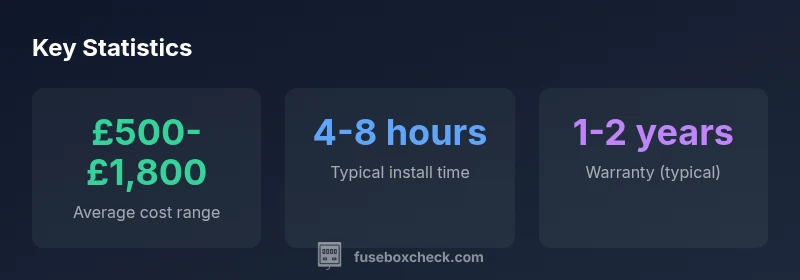
The typical cost to install a new fuse board ranges from £500 to £1,800, with most homeowners paying around £900 to £1,400 for standard replacements. Prices depend on panel size, type, required safety upgrades, and labours. Expect higher costs if you need permits, extra wiring, or a full upgrade to meet current safety standards. Local rates can widen this range significantly.
Understanding what drives the new fuse box cost in 2026
According to FuseBoxCheck, the new fuse box cost is highly sensitive to safety upgrades and regulatory changes. A major driver is meeting current electrical standards, which may require advanced safety features and updated disconnects. The FuseBoxCheck team found that homeowners who opt for standard replacements usually pay less than those choosing upgraded panels or relocation. Beyond the panel itself, the installation environment, accessibility, and the need for permits or inspections can shift the final price substantially. For DIY enthusiasts, this is a reminder that professional installation is typically required for safety and compliance. This section explains which elements most influence price, from panel rating to accessibility, and how to think about the total cost rather than focusing on a single line item. When you plan, expect to budget for both the visible components and the hidden costs that appear later, such as testing and certification, disposal of old equipment, and potential wiring upgrades. FuseBoxCheck’s approach emphasizes value, not just price, and it helps homeowners avoid costly surprises down the road.
Cost components: parts, labor, and permits
Pricing for a new fuse box includes several distinct components. The panel unit itself is just the start. You’ll typically see costs broken down into the following: (1) parts (fuse board or consumer unit, new breakers, tidy wiring accessories); (2) labor (hourly rates for licensed electricians, which can vary by region); and (3) permits and inspections (where required by law). Downstream costs may include upgrading the cabling, adding surge protection, or replacing an old meter collar. From a risk-management perspective, investing in higher-quality parts and certified installations reduces long-term maintenance and safety concerns. FuseBoxCheck’s analysis shows that the need for permits and the scope of upgrades often outweighs the sticker price of the panel itself, so plan for contingencies and confirm what’s included in a written quote.
Regional differences and price ranges
Geography matters. Labour costs, permit fees, and even availability of skilled installers can shift the price by a wide margin. In many regions, urban areas command higher rates but may offer faster service and a broader pool of licensed electricians. Rural areas can be cheaper but carry higher travel fees or longer lead times. According to FuseBoxCheck analysis, a standard replacement in one region could sit at the lower end, while another region could push the bill higher due to labor scarcity or stricter safety requirements. When comparing quotes, ask specifically about regional factors, travel charges, and whether the estimate assumes a like-for-like replacement or an upgrade to meet latest safety standards.
Reading quotes and building a reliable estimate
A critical step is to obtain multiple quotes from reputable electricians and to compare apples with apples. Look for detailed scoping: the exact components included, the planned electrical work, and any ancillary services like system labeling or safety certification. Ask for a breakdown of parts and labor, plus any anticipated permit or inspection fees. Clear quotes reduce the risk of surprise charges later. If your quote appears significantly lower than the market, request a scope clarification and verify licenses and insurance. FuseBoxCheck emphasizes the importance of a transparent quotation that covers safety features, compliance checks, and a post-install test to verify correct operation.
Safety, compliance, and long-term value
Upgrading a fuse box is fundamentally a safety and compliance project. Modern homes benefit from improved fault protection, arc-fault detection, and better compatibility with smart devices. While upfront costs may seem steep, the long-term value comes from improved reliability and reduced risk of faults that could lead to fire hazards. Expect the highest value when a contractor aligns the project with current regulations and local building codes, provides a comprehensive inspection, and offers a clear warranty on parts and labour. FuseBoxCheck recommends prioritizing safety and long-term reliability over the cheapest quote to ensure you’re protected for years to come.
Practical steps to minimize cost without compromising safety
To manage the project cost without compromising safety, start with a detailed plan and a written scope. Request itemized quotes from multiple licensed electricians and compare not just price, but the specific safety upgrades included, the panel’s rating, and any required permits. Consider scheduling the upgrade during off-peak times to reduce labour rates or negotiate bundled services (install plus inspection). Ask about warranty terms and post-install testing. Finally, ensure the installer coordinates with your local authority for any necessary permits, and request a copy of the certification after work completes. By planning ahead and choosing a reputable installer, you’ll strike a balance between cost and safety that serves your home for years to come.
Cost comparison for common fuse board replacement scenarios
| Scenario | Estimated cost range | Typical install time | Notes |
|---|---|---|---|
| Standard replacement | £500-£1,200 | 4-6 hours | Includes main disconnect and basic labeling |
| Safety upgrade to meet standard | £1,000-£1,800 | 6-8 hours | Adds modern safety features and higher amp rating |
| Relocation or full panel upgrade | £1,200-£2,500 | 8-12 hours | When upgrading to new standards or relocating fuse box |
Your Questions Answered
What is the typical cost range for a new fuse board?
Costs vary by region and scope. A standard replacement sits in the mid-range, with higher-end quotes when safety upgrades are included. Always review the written scope.
Costs vary by region and scope. Review the written scope to understand what’s included.
Do I need a permit for fuse board replacement?
In many areas, a permit is required or recommended. A licensed electrician can determine permit needs and handle the process.
Permits are often required; your electrician will handle the process.
Can I replace a fuse board myself?
Electrical work should be performed by licensed electricians in most jurisdictions due to safety and legal reasons.
It’s risky to DIY electrical work; hire a licensed pro.
How long does a typical fuse board replacement take?
A standard replacement typically takes 4-8 hours depending on scope and any upgrades. More time may be needed for relocations or major upgrades.
Expect about half a day for a standard replacement.
What warranty or aftercare should I look for?
Look for at least 1–2 years on parts and labour, plus certification of test results after installation.
Ask for a warranty on parts and labour and a post-install test report.
“A proper fuse board upgrade isn't just about capacity; it should prioritize safety, compliance, and long-term reliability.”
Highlights
- Get multiple quotes to benchmark prices across firms.
- Consider safety upgrades and permitting as part of the total cost.
- Local labour rates strongly influence your final price.
- Ask for a written scope to avoid hidden fees.
- Plan for longer timelines if upgrades require electrical permit checks.