How to Know If You Need a New Fuse Box
Learn how to recognize safety signs, assess aging panels, and decide between repair or replacement. This practical guide from FuseBoxCheck walks homeowners through warning indicators, safe steps, and how to work with electricians for a reliable fuse box upgrade.


If you're asking how do you know if you need a new fuse box, look for frequent trips, warm or buzzing panels, burning smells, scorch marks, corrosion, or outdated labeling. Aging equipment increases fire risk; replacement is often wiser than constant repairs. This quick answer outlines safety checks and what to discuss with an electrician.
Signs aging fuse boxes pose safety risks
Older or poorly maintained fuse boxes can present serious safety hazards. Frequent circuit trips may indicate overloaded circuits or degraded connections. A panel that feels warm to the touch, buzzes, or emits a faint burning smell should not be ignored. Look for scorch marks, melted insulation, corrosion around terminals, and faded or missing labeling. These are red flags that suggest the panel or its wiring may be approaching the end of its life. If you notice aluminum wiring, oxidized terminals, or a panel that has never been updated to current electrical codes, treat this as a warning sign and plan a professional assessment. FuseBoxCheck stresses that safety and up-to-date code compliance should drive the decision to repair or replace.
Safety first: immediate actions if you notice a problem
If you detect signs of danger, prioritize safety before anything else. Do not poke around the panel with metal tools, avoid any water proximity, and keep children away. If you can access the main disconnect safely, switch it off to reduce risk, then call a licensed electrician. Do not attempt significant repairs yourself; panel work involves live circuits and could cause a shock or fire. Document what you observe (smells, noises, signs) so the electrician has a clear starting point.
Visual inspection you can perform safely
Begin from the outside and look for obvious damage: scorch marks, discoloration, loose bus bar screws, or warm surfaces. Check labeling accuracy and verify that circuits are clearly mapped. If the panel cover is loose or rattling, or if you see signs of moisture near the panel, treat it as a high-priority safety concern. Use a flashlight to inspect corners and edges, but never pry open the panel with bare hands. A careful exterior check helps you decide whether a professional inspection is warranted.
When a replacement makes sense: considerations beyond the surface
A fuse box upgrade may be needed due to aging components, erosion of protective features, or if you’re upgrading to support modern appliances and safety features like arc fault detection (AFDD) or ground fault protection. Consider whether the existing panel is labeled for all circuits and whether wiring materials are compatible with current codes. An upgrade improves safety, reliability, and the ability to add new circuits without overloading. FuseBoxCheck advocates evaluating the long-term benefits, not just the immediate fixes.
How to prepare for a replacement conversation with an electrician
Collect as much information as possible before meeting professionals: a list of observed issues, any history of shocks or trips, the age of the home, and notes on existing wiring (if known). Ask about the recommended panel type, permits, and any required rewiring. Request a written scope and a candid discussion of safety implications, labor costs, and expected timelines. Bringing photos of the panel helps electricians prepare precise assessments.
What to expect during replacement work
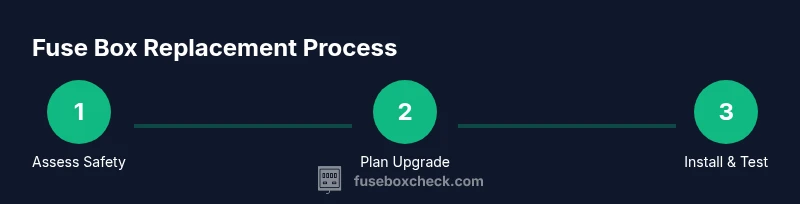
A fuse box replacement typically involves safely isolating power, removing the old panel, installing the new unit, and reconnecting circuits with proper labeling. Modern upgrades often include improved grounding, better surge protection, and new safety features. Expect some temporary power loss while the work occurs, and ensure that a licensed electrician performs all connections and testing. The outcome should be a safer, more reliable electrical system.
Tools & Materials
- Non-contact voltage tester(Essential for checking live circuits without contact)
- Insulated gloves(Electrical-grade, 600V rating recommended)
- Insulated screwdriver set(Flat and Phillips, insulated handles)
- Flashlight(Bright, focused light for panel inspection)
- Voltage tester or multimeter(Helpful for measurements when safe to do so)
- Camera or smartphone(Document panel condition and labeling)
- Labels or masking tape(Label circuits during assessment or reinstallation)
Steps
Estimated time: 2-6 hours
- 1
Secure the area and prep
Clear the workspace, dry conditions, and remove any metal jewelry. If the main disconnect is safely accessible, switch it off before proceeding. Ensure you have a clear plan and a way to call for help if needed.
Tip: If you cannot safely access the main disconnect, stop and call a professional. - 2
Verify there is no live power
Use a non-contact voltage tester to confirm no voltage is present in the panel before touching any components. Validate the tester on a known live source to ensure it’s working.
Tip: Double-check all test points; a single missed live line can be dangerous. - 3
Inspect the exterior visually
Look for scorch marks, melted insulation, loose screws, corrosion, or discoloration on the panel case and cover. Note labeling accuracy and whether circuits are clearly mapped.
Tip: Take photos to share with an electrician and for future reference. - 4
Document findings and questions
Make a concise record of observed issues, dates of any events, and symptoms like dimming lights. Prepare questions about panel type, permits, and upgrade options for the professional.
Tip: Include your home’s age and any known wiring materials if available. - 5
Discuss upgrade options with a professional
Have the electrician explain whether a full panel replacement or a service upgrade is appropriate, and what safety features would be included.
Tip: Ask for a written scope, cost estimate, and timeline before work begins. - 6
Post-installation testing and labeling
After installation, verify that all circuits are labeled, test critical outlets, and confirm the main disconnect works. Ensure the panel is closed, clean, and compliant with local codes.
Tip: Request a brief run-through of system changes for future reference.
Your Questions Answered
Can a fuse box fail without tripping a fuse?
Yes. Older fuses or degraded connections can fail to protect a circuit. Frequent issues may indicate aging panels or loose wiring. If you notice unusual warmth or odors, stop and consult a professional.
Yes, sometimes aging fuse boxes fail to protect circuits; contact a professional if you notice warmth or smells.
Is it safe for a homeowner to replace a fuse box?
Replacing a fuse box involves live wiring and code compliance. It is generally not recommended for DIY unless you are a licensed electrician. Always hire a pro for safety and proper permitting.
Replacing a fuse box is best left to a licensed electrician for safety and code compliance.
What is the difference between a fuse box and a breaker panel?
A fuse box uses replaceable fuses to protect circuits, while a breaker panel uses circuit breakers that can be reset. Modern homes typically use breaker panels and may require upgrades for safety features.
Fuses blow to protect circuits; breakers trip and reset. Modern homes usually use breakers.
How long does a fuse box replacement take?
Duration varies by home size and panel type, but most installations require a few hours to a full day, including permits and testing. Expect temporary power loss during the process.
It typically takes several hours to a full day depending on scope.
Will upgrading the fuse box require rewiring?
Upgrades may involve wiring the panel area or replacing old conductors to meet current codes. An electrician will assess whether full rewiring is necessary for safety and function.
Upgrades may require new wiring in some cases, assessed by a pro.
What permits are needed for replacement?
Permits are often required by local authorities for panel upgrades. A licensed electrician typically handles permitting and ensures code compliance.
Permits are usually required; a licensed electrician handles them.
Watch Video
Highlights
- Identify warning signs early to prevent hazards
- Safety first: contact a licensed electrician for panels
- Understand when replacement is more sensible than repair
- Document findings and plan for a compliant upgrade