How to Hide a Fuse Box at Home: Safe, Code-Compliant Concealment
Learn how to hide a fuse box safely and legally with vented, code-approved panels. This guide covers options, installation steps, safety checks, and maintenance tips.


Conceal a fuse box safely by using an approved access panel or cabinet that remains vented and accessible. Verify local codes with a licensed electrician before modifying any enclosure, and choose a fire-rated option that doesn't block heat dissipation. This guide walks you through compliant concealment, including layout, installation, and safety checks.
Understanding Why Concealment Matters
A well-planned concealment keeps your home looking tidy while preserving the accessibility and ventilation needed for a fuse box. When done poorly, hiding the panel behind heavy furniture or non-ventilated enclosures can delay emergency access, obscure labels, or trap heat and cause nuisance trips. The goal is a balance between aesthetics and safety. This is especially true in living spaces where aesthetics matter but electrical safety cannot be dismissed. According to FuseBoxCheck, concealment should be deliberate, using purpose-built solutions that maintain ventilation and access to the panel. Thoughtful design can reduce visual distraction without compromising service reliability, labeling, or inspector readiness. In practice, a well-planned concealment reduces clutter while keeping critical controls within quick reach for turn-off procedures during emergencies.
Key takeaway: Always prioritize access and ventilation over concealment aesthetics, and verify compatibility with your panel.
Legal and Safety Considerations
Electrical work is governed by local and national codes that prioritize safety and access. Concealing a fuse box is not inherently risky, but improvised covers that trap heat, reduce ventilation, or hide the panel from view can create hazards and complicate emergencies. Before you proceed, check with your local building department and a licensed electrician about permitted concealment methods and required clearance around the panel. The National Electrical Code (NEC) encourages accessible, labeled enclosures and prohibits obstruction of service equipment. FuseBoxCheck notes that many jurisdictions allow decorative or cabinet-style covers only when they are specifically listed for electrical equipment and provide adequate ventilation. Always verify that any installation uses UL-listed components and does not violate fire-rating requirements. If in doubt, choose a readily removable cover that keeps the panel accessible during routine maintenance and emergencies.
Pro tip: Document your plan and keep manufacturer instructions handy in case of inspections, and always err on the side of accessibility.
What Counts as Safe Concealment
Safe concealment involves using accessories designed for electrical service equipment. Options include vented access panels, fire-rated cabinets, and purpose-built electrical closets with clear doors. Avoid plain wooden frames, drywall patches, or decorative boxes that seal the panel behind non-ventilated materials. Smoke and heat from a fault can accumulate behind non-vented enclosures, so ventilation must be preserved. Labeling should remain visible, and the panel must be reachable without moving furniture. When installed correctly, these solutions hide the unsightly box while preserving speed of access for shutoffs and for service technicians. FuseBoxCheck's guidance stresses that you should never obscure switches, breakers, or meter bases. The key is to select tested products, follow installation instructions, and keep the area clean and dry.
Important note: Do not sacrifice accessibility for aesthetics in any way; choose purpose-built panels that are rated for electrical use.
Choosing an Approved Access Panel or Cabinet
Start by selecting products that are UL-listed for electrical equipment and rated for the specific environment (dry, damp, or wet locations). Measure the panel opening and verify clearance around the sides and top for tool access. Consider a door with a gasket and a small, vented grille to maintain airflow. Ensure the installation method includes a secure mounting frame and proper fasteners that don't compromise the panel's accessibility. If you are unsure, consult a licensed electrician for recommendations based on panel size, number of circuits, and the room's humidity. Remember that a good concealment solution should blend with your decor but not interfere with operation or heat dissipation.
Tip: Use manufacturer-approved kits and always follow installation instructions to keep the warranty intact and the panel accessible.
Ventilation and Fire Safety: Key Requirements
Electrical gear needs adequate ventilation to prevent overheating and nuisance trips. Any enclosure should vent to the surrounding air or use a rated panel with built-in vents. Fire-rated materials are recommended where the enclosure passes through walls or ceilings. A gasketed panel reduces drafts but should not trap moisture. When installing, check that the vent openings are not obstructed and that cables have enough slack to prevent pinching. The goal is a discreet appearance without compromising the panel's ability to shed heat under load. FuseBoxCheck highlights that ventilation must remain functional even when the cover is closed.
Warning: If you notice overheating, unusual buzzing, or frequent breaker trips, stop and seek professional assessment immediately.
Planning Layout: Door Swing, Clearance, and Access
Sketch the layout before cutting or mounting. Ensure door swing does not block nearby outlets, switches, or light fixtures, and that there is at least a few inches of clearance around the panel for hands, tools, and a voltage tester. Position the cover so the shutoff is easy to reach from the most-used entry point in the room. Keep cords, rugs, and other tripping hazards away from the enclosure. Plan for future service work by leaving extra slack in wiring and ensuring the panel remains accessible without removing furniture.
Practical tip: Mark hinge points and ventilation gaps on your plan to avoid surprises during installation.
Materials and Finish: Selecting Panels, Paint, and Hardware
Choose a panel made for electrical enclosures, with corrosion- and heat-resistant hardware. If you want the box to blend into the wall, select a color-matched cabinet with a recessed or flush-mount design. Use heat-resistant paint if you intend to paint the outer surface, and confirm that the finish does not degrade the panel's labels. Fasteners should be appropriate for the mounting surface, and the frame should support the panel without warping. Regularly inspect the finish for chips or scratches that expose raw material and re-seal if necessary.
Note: The finish should be non-conductive on exposed surfaces near live components.
Maintenance, Inspection, and Troubleshooting
After installation, create a simple maintenance routine: check labels, verify access, inspect vents, and test the shutoff function every month. Keep the area clean and dry; wipe away dust with a dry cloth. If you notice overheating, buzzing, or tripped breakers behind the concealment, stop using the enclosure and consult a licensed electrician immediately. Document any changes or repairs so you can show inspectors or service technicians the status of the panel. Regular reviews help ensure the concealment remains safe and compliant over time.
FuseBoxCheck guidance: Periodic professional checks help maintain long-term safety and compliance.
Tools & Materials
- UL-listed access panel or vented cabinet designed for electrical equipment(Ensure listed for electrical service equipment and appropriate for your environment)
- Measuring tape(Accurate panel opening measurement (width, height, depth))
- Drill and compatible bits(For mounting frame and fasteners)
- Screwdriver set (Phillips and flat-head)(For mounting screws and faceplate screws)
- Voltage tester(Confirm power is off before handling enclosure)
- Non-conductive gasket and vent grille (if not included)(Ensure airflow without compromising seal when needed)
- Fire-rated caulk or sealant(Use only where specified by the panel instructions)
- Safety gloves and eye protection(Personal protective equipment during installation)
Steps
Estimated time: 1-3 hours
- 1
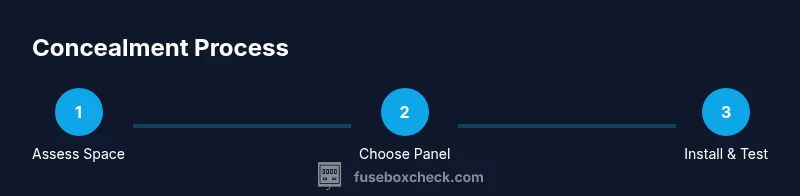
Assess space and code compliance
Inspect the area around the fuse box. Confirm that concealment is allowed by your local codes and NEC guidelines, and decide on the protection level needed for heat, moisture, and accessibility.
Tip: Document existing clearances and keep a copy of the panel label for inspectors. - 2
Choose an approved access solution
Select a UL-listed vented access panel or fire-rated cabinet sized to fit the panel opening with adequate clearances for tools.
Tip: Avoid makeshift covers; use manufacturer-listed kits for safety and warranty. - 3
Prepare the installation area
Clear the workspace, mark mounting points, and verify that you have room to work without blocking doors or outlets.
Tip: Turn off power at the main breaker before beginning any installation work. - 4
Install the panel or cabinet
Mount the panel frame to the wall, align with the opening, and secure with proper fasteners. Ensure the door operates smoothly and does not contact any wiring.
Tip: Double-check that ventilation paths remain unrestricted after mounting. - 5
Seal, label, and test
Apply any gaskets as required, label the panel clearly, and use a voltage tester to verify that the panel is accessible and safe to operate.
Tip: Keep the shutoff area visible and easy to reach. - 6
Review safety and maintenance
Walk around the installation, check for loose screws, ensure vents are clear, and schedule periodic professional inspections.
Tip: Maintain a simple maintenance log for future service visits.
Your Questions Answered
Is it legal to conceal a fuse box behind a cabinet?
Concealment can be legal if the enclosure is listed for electrical use, vented, and keeps the panel accessible for emergency shutoffs and maintenance. Always verify with local codes and a licensed electrician before installation.
Concealment is allowed when using listed, vented panels and keeping access clear; check local codes and consult a licensed electrician.
What is the safest way to conceal a fuse box?
The safest approach uses a UL-listed vented access panel or fire-rated cabinet that does not block heat dissipation or restrict access. Avoid non-vented coverings and ensure labels remain visible.
Use a listed vented panel or cabinet and keep access and labels clear.
Will hiding a fuse box affect insurance or warranties?
Concealment can affect warranties or insurance if it compromises safety or code compliance. Always use approved components and document compliance steps with your insurer or contractor.
Insurance and warranties depend on code compliance and approved components; verify with your insurer.
Do I need permits or inspections for concealment?
Permit and inspection requirements vary by location. In many areas, modifying electrical access requires inspection to ensure ventilation and accessibility are maintained.
Permissions depend on your location; check with your local authority for permits and inspections.
How do I know if a vent is adequate?
An adequate vent provides enough airflow to prevent heat buildup during operation. If in doubt, rely on manufacturer specifications or consult an electrician to size the vent correctly.
Vent adequacy is based on airflow specifications; follow manufacturer guidance or consult an electrician.
Can I repaint the concealment panel to match decor?
Yes, you can color-match the panel, but use heat-resistant paints and verify that painting does not obscure labels or vents. Follow the panel maker’s repaint guidelines.
You can repaint to match decor with heat-resistant paint, ensuring labels and vents remain visible.
Watch Video
Highlights
- Verify local codes before concealing.
- Use vented, UL-listed access panels.
- Maintain accessibility and clear labeling.
- Consult a licensed electrician for complex setups.