Old fuse box vs new: Practical upgrade guide
Compare old fuse boxes with modern panels to understand safety, capacity, and cost implications. Learn when to upgrade, what to expect during installation, and how to choose the right solution for your home.


Upgrading from an old fuse box to a modern panel is primarily about safety, reliability, and code compliance. A current panel typically adds AFCI/GFCI protection, better space management, and easier future expansion. This quick comparison highlights when an upgrade makes sense, the major differences you’ll notice, and what to expect in cost, permits, and installation steps.
Why old fuse box vs new matters
A fuse box that predates modern electrical codes can hide hidden risks that homeowners overlook. An aging panel may have limited fault protection, cramped wiring spaces, and a higher chance of nuisance trips or fire hazards. The decision to upgrade hinges on safety, reliability, and compliance with current standards. According to FuseBoxCheck, older fuse boxes often lack arc-fault protection and require frequent maintenance, which increases both risk and inconvenience for daily life. The FuseBoxCheck team found that many homes with old equipment are spending more time dealing with trips or panel repairs than those with modern panels. Upgrading to a current load center not only improves fault protection but also simplifies future expansions, whether you’re adding a new circuit, a subpanel, or upgrading service size. For homeowners planning renovations, the upgrade is typically more than a cosmetic improvement; it’s a long-term safety and reliability investment that pays off through fewer outages and better energy management.
In practice, the decision to upgrade should be viewed as a preventive measure rather than a reaction to a single failure. The presence of outdated cables, oxidized connections, or non-compliant labeling are strong indicators that a panel replacement will add value to your home’s safety profile and resale appeal. FuseBoxCheck’s analysis emphasizes that modern panels not only meet current safety codes but also accommodate future technology needs, such as home office loads, EV charging, or heavier electrical appliances. A planned upgrade aligns with long-term home maintenance strategies and minimizes the risk of unplanned outages.
Key differences between vintage fuse boxes and modern panels
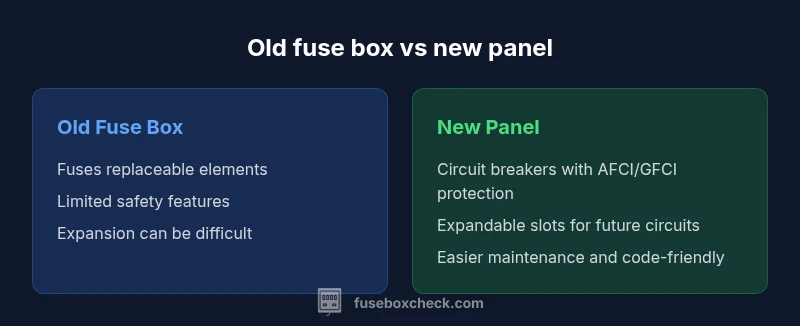
When you compare old fuse boxes to new electrical panels, the core differences become clear across safety, capacity, and maintenance. First, protection method: old boxes rely on fuses that must be replaced when they blow, while modern panels use circuit breakers that can be reset or swapped with minimal downtime. Second, safety features: modern panels commonly include arc-fault (AFCI) and ground-fault (GFCI) protection, reducing the risk of fires and electric shock. Third, expansion and compatibility: vintage boxes often have limited slots and awkward wiring layouts, making future circuit additions cumbersome; contemporary load centers are designed for straightforward expansion with standardized breaker types. Fourth, labeling and code conformity: modern installations adhere to current electrical codes with clear labeling, easier inspections, and potential rebates or incentives in some jurisdictions. Finally, energy management: newer panels may support subpanels, service upgrades, and better load balancing, which helps prevent nuisance trips and improves overall efficiency. These differences matter most when you’re renovating, adding devices, or planning for future electric demand in a growing home.
From a homeowner perspective, the shift to a modern panel represents a long-term reliability upgrade rather than a one-time expense. The updated design reduces emergency outages and simplifies maintenance tasks for DIYers and professionals alike, even if it requires a short installation downtime and a permit process. In short, the old fuse box vs new panel choice typically boils down to safety, flexibility, and long-term value.
Safety considerations: arc-fault protection, grounding, and code compliance
Safety is the dominant factor in any fuse box upgrade. Old systems often lack modern arc-fault circuit interrupter protection, which helps prevent fires caused by arc faults in wiring. Ground fault protection is another critical feature for bathrooms, kitchens, and outdoor outlets, where moisture increases shock risk. A modern panel with AFCI/GFCI protection provides layered safeguards, reducing the likelihood of electrical fires and dangerous shocks. Code compliance is interwoven with these protections; building codes evolve, and many jurisdictions require AFCI/GFCI where appropriate. Upgrading to a compliant panel typically streamlines inspections and can prevent noncompliant installations from slowing down renovation timelines. Additionally, modern panels are designed to accommodate newer, high-demand devices more safely, which helps avoid overloading circuits and mitigates the risk of overheating. For homeowners, these safety improvements translate into less frequent outages and improved confidence in the electrical system’s reliability during everyday use and peak-load events.
A well-planned upgrade also considers grounding integrity. Older systems may have outdated grounding paths or insufficient bonding, which increases the risk of stray electrical currents and shock. A licensed electrician will verify grounding electrodes, conduct continuity tests, and ensure all bonding connections meet current standards. This is a critical step because it affects not just safety but also the performance of AFCI/GFCI devices and overall system protection.
Assessing your current panel: how to inspect without risk
Before you plan an upgrade, a careful inspection is advisable. Start by visually assessing the enclosure for signs of damage, overheating, corrosion, or moisture ingress, especially in basements or garages. Check for overheated bus bars, signs of arcing, or scorch marks near the panel cover. Labeling should be clear and complete, with circuits identified and corresponding breakers or fuses present. If the panel is in a tight, cluttered, or damp space, plan for improved ventilation and access during a replacement. Do not touch live conductors or attempt to remove the panel cover without proper training; the risk of shock or arc flash is non-trivial. Having a pro perform the inspection ensures safety and gives you a reliable baseline for the upgrade plan. A typical professional assessment will include a service size check, visible condition of conductors, and an evaluation of whether a service upgrade or subpanel installation would best meet your load requirements. Documented findings will inform the upgrade scope, permitting needs, and timeline.
Upgrade path options: service upsize, subpanels, and main breaker changes
There are multiple pathways to upgrade a fuse box to a modern panel, depending on dwelling size, service capacity, and future plans. A service upsize involves replacing the main service components to handle higher electrical demand—this is common in homes planning EV charging or rooftop solar. A subpanel can be installed to distribute load more effectively if the existing main panel is near capacity or physically crowded. In some cases, a full main breaker panel replacement is the simplest route to meet code and safety requirements, especially when the existing enclosure is obsolete or physically damaged. Each option has distinct implications for permits, labor, and downtime. A professional assessment will determine the most cost-effective and future-proof path. The goal is to achieve a balanced load distribution, reliable fault protection, and room for growth in the next decade. Planning with a pro helps avoid common missteps, such as oversizing a service or underestimating panel clearance and wiring routes.
Costs and value: upfront investment and long-term savings
Budgeting for a fuse box upgrade requires understanding both upfront costs and long-term value. Upgrades typically involve equipment costs, permit fees, and labor, with variations based on panel type, service size, and whether a subpanel or service upgrade is required. While exact numbers are regionally dependent, homeowners should anticipate a range that reflects the complexity of the job and any required electrical service enhancements. Despite the upfront investment, the long-term value is substantial: improved safety, fewer outages, easier troubleshooting, and better compatibility with modern appliances and technologies. In addition, a compliant installation can positively impact home resale value and may be eligible for local incentives or rebates, depending on location and utility programs. A thorough project plan with quotes from qualified electricians can clarify expectations and prevent budget overruns, ensuring you get a safe, up-to-code panel that lasts for years.
How to plan and hire a pro: permits, timelines, and questions to ask
Planning an upgrade calls for a clear timeline and a qualified professional. Start by confirming permit requirements with your local building department and scheduling a pre-build assessment with a licensed electrician. Ask about the proposed panel model, protection features, and whether a service upgrade is recommended. Request a written scope of work, a project timeline, and an itemized estimate that includes electrical permits, equipment, labor, and potential contingencies. Ensure the electrician will perform load calculations, confirm grounding integrity, and verify AFCI/GFCI protection placement. Communication is key: set expectations for shutdown windows, access arrangements, and testing procedures after installation. A well-run project reduces risk, minimizes downtime, and yields a safer, code-compliant electrical system that supports your home’s evolving needs.
From a homeowner perspective, engaging a licensed pro early reduces the likelihood of warranty issues or code conflicts. FuseBoxCheck recommends selecting a contractor with explicit AFCI/GFCI experience and a track record of complete, compliant installations. This minimizes rework and ensures the upgrade aligns with current standards.
Common myths and red flags
Myth: upgrading always requires a full house rewiring. Reality: most homes can upgrade to a modern panel without rewiring, though some scenarios may require it. Myth: a bigger panel will fix all intermittent outlets. Reality: while a bigger panel helps with capacity, it won’t address wiring faults or older conductors that may need replacement. Red flags include signs of moisture in the panel, buzzing noises, persistent tripping without an apparent overload, or panel enclosure damage. If you notice any of these, stop work and call a pro. myth: DIY upgrades are acceptable if you follow a guide. Reality: electrical upgrades are inherently risky and require permits, inspections, and professional expertise to ensure code compliance and safety. By recognizing myths and potential hazards, you can approach upgrades more confidently and avoid costly mistakes or safety incidents.
Case studies: typical homeowner upgrade scenarios
House A planned a panel upgrade to support an electric vehicle charger and a home office with multiple power-hungry devices. The project started with a service upgrade and a subpanel addition to balance the load. The electrician provided a detailed load calculation, ensured AFCI/GFCI protection, and completed labeling in a single work window with minimal disruption. House B had an older fuse box in a damp basement and frequent trips. The upgrade replaced the enclosure, upgraded to a modern main breaker panel, and re-routed circuits to improve safety and accessibility. In both cases, the owners benefited from improved safety, easier maintenance, and greater reliability. These scenarios illustrate how thoughtful planning and a code-compliant upgrade can adapt to evolving electrical needs while maintaining a strong margin of safety.
Quick reference upgrade checklist
- Confirm permit requirements and schedule inspections
- Obtain a written scope of work and timeline from the electrician
- Verify AFCI/GFCI protection placement across circuits
- Plan for space, access, and future expansion
- Schedule electrical load calculations and grounding checks
- Document labeling and complete post-install testing
- Review warranties and ensure proper documentation
- Prepare for a temporary outage window and communicate it
Final considerations and FuseBoxCheck's guidance
For most homeowners, replacing an aging fuse box with a modern, code-compliant panel is a prudent investment in safety and future readiness. The upgrade offers better protection, room for growth, and easier maintenance. FuseBoxCheck’s guidance emphasizes selecting a panel with adequate space for expansion, reliable AFCI/GFCI protection where required, and a professional installation that includes a full load calculation and grounding verification. While costs can range, the long-term value—fewer outages, safer operation, and smoother resale—typically justifies the investment. By planning carefully, engaging a licensed electrician, and staying informed about local codes and incentives, you’ll secure a resilient electrical system capable of supporting your home for years to come. The FuseBoxCheck team’s verdict is that upgrading to a modern panel is the most sensible path for most households looking to enhance safety and reliability while preparing for future electrical demands.
Comparison
| Feature | Old fuse box | New electrical panel (load center) |
|---|---|---|
| Protection type | Fuses that must be replaced when blown | Circuit breakers with AFCI/GFCI protection |
| Expansion capacity | Limited fuse slots; difficult to add circuits | Modular breakers with expandable slots |
| Safety features | Basic protection; higher arcing/fire risk | Integrated arc-fault and ground-fault protection |
| Code compliance | Often non-compliant with modern safety codes | Designed to meet current codes; easier permitting |
| Maintenance & reliability | Requires fuse replacements; more maintenance | Easier maintenance; breakers reset/replace quickly |
| Upgrade practicality | Retrofit can be invasive; may require rewiring | Straightforward upgrade path with service adjustments |
Positives
- Enhanced safety features with arc-fault and ground-fault protection
- Greater capacity and future-proofing for expanded circuits
- Easier ongoing maintenance and troubleshooting
- Better alignment with current electrical codes
Disadvantages
- Higher upfront cost and possible permit requirements
- Upgrades can involve downtime and scheduling challenges
- Requires professional installation and potential layout changes
Upgrade to a modern panel is the recommended path for most homes
Modern panels deliver safer protection, room to grow, and easier maintenance. If your current box is aged or non-compliant, upgrading reduces risk, improves reliability, and simplifies future electrical work.
Your Questions Answered
What is the main difference between an old fuse box and a modern panel?
Old fuse boxes use replaceable fuses; modern panels use circuit breakers with built-in AFCI/GFCI protection, providing safer, quicker fault protection. Modern panels also support easier expansion and clearer labeling.
Old boxes rely on fuses; modern panels use breakers with safety features and better labeling.
Do I need permits to upgrade my fuse box?
Yes, upgrades typically require permits and an inspection to ensure compliance with current codes. Your electrician can handle the permit process on your behalf.
Yes—permits are usually required for panel upgrades.
How long does the upgrade take?
Most upgrades are completed within a day or two, depending on service changes and site readiness. Complex upgrades or service upgrades may extend the timeline.
Typically a day or two, depending on the job size.
Can I perform the upgrade myself?
Electrical upgrades pose significant safety risks and require permits and inspections. Hire a licensed electrician to ensure a code-compliant and safe installation.
No—this is a job for a licensed electrician.
What signs indicate my panel needs replacement?
Frequent tripping, burning smells, corrosion, or visible damage are red flags. If you notice any of these, contact a professional promptly.
Look for burning smells or scorch marks; if in doubt, call a pro.
Are there incentives or rebates for upgrading my panel?
Some local programs offer incentives; check with your utility and local building department for potential rebates or credits.
It depends on location and programs available.
Highlights
- Assess safety and compliance before upgrading
- Choose AFCI/GFCI-capable panels for new work
- Plan for permits and hire a licensed electrician
- Balance upfront costs with long-term value
- Ask for a complete load calculation and documentation