USCC2i Fault Code: Urgent Fix Guide
Urgent guide to diagnose and address USCC2i, a fuse box error code. Learn symptoms, causes, quick fixes, a step-by-step repair flow, safety tips, and when to call a pro with FuseBoxCheck.


USCC2i is a critical fault code displayed by many smart fuse panels indicating a safety-related electrical fault, typically overcurrent or sensor fault. It signals an immediate need to halt DIY testing, power down the panel, and inspect for overloads or moisture. If reset doesn't clear it, contact a licensed electrician for professional diagnostics to avoid fire risk.
What USCC2i Means and Why It Demands Immediate Action
uscc2i appears on modern smart fuse panels when the system detects a safety condition that could threaten the electrical circuit or your home. According to FuseBoxCheck, USCC2i most often signals an overcurrent scenario or a faulty sensor monitor inside the panel. This is not a warning to be ignored; it is a sign that the panel's protective features have engaged to prevent overheating, fire, or electrocution. A calm, methodical response is essential, as hastily bypassing the code can put occupants at risk. FuseBoxCheck emphasizes that true safety hinges on recognizing when professional judgment is needed rather than forcing a reset.
Understanding USCC2i helps homeowners prioritize immediate safety concerns, then proceed with diagnostics in a controlled way. If you’re dealing with a smart panel, ensure you are operating under dry conditions and with non-conductive footwear to minimize risk while you assess the situation.
The FuseBoxCheck team recommends treating USCC2i as a circuit-level alarm that requires careful verification of load, moisture, and sensor integrity before any restoration attempts. By approaching it with caution, you can reduce the chance of a repeat fault and protect your home infrastructure.
Symptoms and Symptom Mapping
When USCC2i appears, you typically observe more than one indicator at once. Common symptoms include a blinking or solid USCC2i code on the display, tripped breakers, a faint burning odor, buzzing sounds, or a panel that feels warm to the touch. In some smart panels, you may notice an accompanying red ring or warning icon near specific circuits. Mapping these symptoms to likely causes can help you respond quickly and safely.
Key correlate signals include overload on a heavily loaded circuit, moisture intrusion near the panel, or a degraded sensor module. This mapping is not perfect, but it provides a practical starting point for prioritizing checks without exposing you to live electrical parts. If the panel is hot or you smell burning, exit the area immediately and call emergency services if necessary, then a licensed electrician.
Primary Causes: Likely Overloads, Moisture, or Sensor Failures
The USCC2i fault is most often linked to three broad categories. First, an overload condition where multiple high-draw appliances run on the same circuit can trigger protective sensors. Second, moisture or condensation in the panel or conduit can create short paths and corrosion. Third, a faulty sensor or monitoring module can report incorrect fault states. A fourth, less common factor, is a loose neutral or degraded grounding connection.
- Overload on a circuit or simultaneous high-draw loads (high likelihood)
- Moisture ingress or damp environments around the panel (medium)
- Faulty sensor/monitor module within the breaker box (low)
- Loose or corroded neutral connections (low)
Understanding these categories helps you prioritize actions without guessing. Start with safe checks on load and moisture before you suspect a component failure.
Quick, Safe Actions You Should Take Right Now
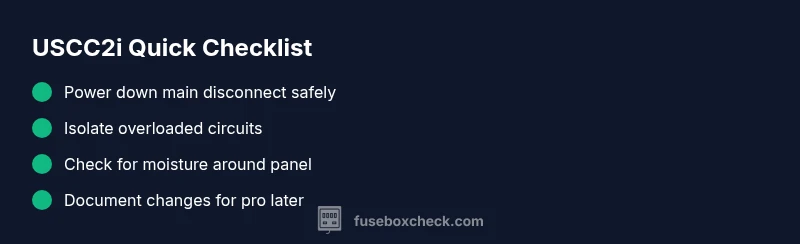
Your first actions should prioritize safety and prevent further damage. Power down the panel from the main disconnect if you can do so safely, then switch off individual branch breakers to reduce load. Do not attempt to reset or bypass the code while the panel is warm, smells peculiar, or you hear buzzing. If you have any signs of moisture, avoid touching metal parts and safely dry the area before inspecting. Keep a clear path to exit and avoid holding metal tools near live parts.
If the code clears after a safe power-down and load rebalancing, monitor circuits for reoccurrence. If the code remains or reappears after resets, do not continue testing. Contact a licensed electrician promptly to perform a thorough diagnostic test and panel assessment.
How to Inspect the Panel Without Risk (Non-Destructive Checks)
Non-destructive inspection focuses on observable cues rather than live testing. Start with a visual inspection of all panel openings for moisture, corrosion, or scorch marks. Check for loose or discolored wires at circuit breakers and the main disconnect. Ensure you have dry hands and use a flashlight with one hand while keeping the other away from metal surfaces. If any portion of the panel is visibly damaged, stop and call a pro.
Record any visual anomalies to share with the technician—this saves time and reduces the need for multiple on-site visits. Do not use metal tools to probe any energized parts. The goal is to gather non-intrusive evidence to guide professional diagnostics.
Step-By-Step Repair for the Most Common Cause (Overload-Related USCC2i)
This section highlights actionable steps for the most common scenario: overload. Always approach with caution and safety in mind. If you are uncertain, skip ahead to professional service. First, power down the main disconnect and all branch breakers. Then, unplug or relocate the heavy-load appliances to restart with a lighter configuration. After that, sequentially restore breakers while monitoring for the reappearance of USCC2i. If the code returns, move to the next steps and seek professional help.
Document breaker positions and load distribution to help a technician identify miswired or degraded connections. Avoid testing with live circuits; use non-contact voltage indicators to confirm dead states where appropriate. Finally, if the fault persists, a licensed electrician should inspect the sensor module and main controller for faults.
When to Call a Licensed Electrician
Indications that professional help is needed include persistence of USCC2i after a safe power-down and reset, signs of moisture, warmth, or burning smells, or a panel that cannot be safely powered down. An electrician can perform a comprehensive diagnostic with proper tools, verify sensor health, test for improper grounding, and replace faulty components if required. Electrical repairs involve risk of shock and fire, so professional handling is essential for safety and code compliance.
Prevention: Reducing USCC2i Incidents and Keeping Panels Healthy
Preventive steps can minimize the likelihood of USCC2i reoccurrence. Maintain circuits by distributing load evenly, avoid running high-draw devices on the same circuit, and ensure adequate ventilation around the panel. Schedule regular visual inspections for moisture, corrosion, and loose connections. Replace aging breakers and sensors per manufacturer guidance, and keep documentation of changes for future service. Regular maintenance helps sustain safe operation and reduces emergency repairs.
],
diagnosticFlow={
symptom
causes
fixes
invalidKeyNotUsedInJSON
Steps
Estimated time: 30-60 minutes
- 1
Power down safely
If it is safe to do so, switch off the main breaker and unplug nonessential loads. Do not touch any live parts. This minimizes risk before you begin any inspection.
Tip: Use a non-contact tester to confirm no voltage before handling components. - 2
Isolate and reduce load
Identify circuits with heavy appliances and relocate them to a different circuit if possible. Restore power gradually to observe whether USCC2i recurs.
Tip: Label circuits to keep track of changes for future reference. - 3
Inspect for moisture or damage
Check for signs of water intrusion, dampness, or corrosion around the panel, conduit, and enclosure. If moisture is present, do not energize further—call a pro.
Tip: Never wipe moisture from energized parts; moisture must be fully addressed. - 4
Check connections visually
Look for loose or discolored wires at breakers and the main disconnect. Do not tighten live components; only inspect when panel is de-energized.
Tip: Take clear photos of any suspicious connections for the electrician. - 5
Test or replace the sensor module (if trained)
Only attempt sensor testing if you have manufacturer guidance and proper PPE. Misdiagnosis can lead to further faults.
Tip: If in doubt, skip this step and proceed to professional service. - 6
Call a professional if unresolved
If USCC2i persists after safe checks, contact a licensed electrician for a thorough diagnostic and panel service. Do not resume testing repeatedly.
Tip: A pro can perform advanced measurements and verify code compliance.
Diagnosis: Panel displays USCC2i, breakers trip, or panel buzzes after power is applied
Possible Causes
- highOvercurrent condition from overloaded circuit
- mediumMoisture or condensation inside the panel
- lowFaulty sensor/monitor module
- lowLoose neutral connection or degraded grounding
Fixes
- easyPower down the main disconnect and remove load to reduce current
- mediumDry out the panel area and check for moisture ingress; reseal as needed
- hardTest sensor/monitor module per manufacturer guidelines or replace faulty module
Your Questions Answered
What is USCC2i and why does it appear on my fuse box?
USCC2i is a fault code indicating a safety-related electrical condition in a fuse box, often tied to overloads or sensor faults. It triggers protective actions to prevent fire or shock. Always treat it as urgent and follow safety steps before attempting any diagnosis.
USCC2i is a safety fault code that means there’s a risk in the fuse box. Treat it as urgent and follow safety steps before diagnosing.
Is USCC2i dangerous to handle myself?
Yes, USCC2i signals a safety fault that could involve live components. Do not bypass or repeatedly reset the code. Only perform non-live checks after powering down, and contact a licensed electrician for diagnosis.
Yes, it’s dangerous to ignore. Power down and call a professional if unsure.
Can I reset USCC2i myself?
Resets are not advised while the panel shows USCC2i. If a reset clears the code, monitor the system closely; if it returns, professional inspection is required.
Resetting is not recommended. If it comes back, get a professional to check it.
What tools do I need to diagnose USCC2i safely?
Non-contact voltage tester, flashlight, and a camera to document panel conditions are useful. Do not touch live parts; use safety equipment and manufacturer guides.
A non-contact tester and a camera to document conditions can help, but avoid touching live parts.
How can I prevent USCC2i from recurring?
Practice load distribution, keep the panel dry, schedule regular visual inspections, and replace aging components per manufacturer guidance. Prevention reduces the chance of future faults.
Spread out loads, keep it dry, and inspect regularly to prevent repeats.
When should I call a professional immediately?
If you notice burning smells, heat, visible damage, or the code persists after safe power-down and reset, call a licensed electrician immediately.
Call a pro if you smell burning, see damage, or it keeps coming back after safe resets.
Watch Video
Highlights
- Power down safely before inspecting.
- USCC2i indicates a serious electrical fault; don’t ignore it.
- Start with non-destructive checks before component testing.
- If unresolved, hire a licensed electrician promptly.
- Regular panel maintenance reduces USCC2i risk.