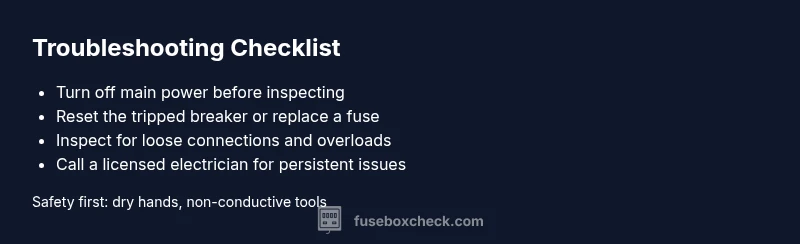
Why is Half My Fuse Box Not Working? A Practical Troubleshooting Guide
Urgent, practical troubleshooting for when half your fuse box isn’t working. Learn safe steps, common causes, and when to call a pro—with a clear diagnostic flow and quick fixes.


The most likely cause is a tripped breaker or blown fuse on the half that’s dead. Start by safely resetting the breaker, then unplugging heavy loads and testing each circuit. If the half still doesn’t power up, there may be a loose connection or a main-feed issue—pro guidance may be needed.
Understanding Half-Panel Failures
If you’re asking why is half my fuse box not working, you’re not alone. In many homes the fuse box is split into two sections that feed different circuits. When one side loses power, you may still have lighting or outlets on the other half. According to FuseBoxCheck, half-panel faults are among the most common electrical nuisance calls we handle, especially in older installations where connections age or insulation degrades. The FuseBoxCheck team found that many of these issues originate from a tripped breaker, a blown fuse, or a loose connection at the bus bar. Before you proceed, remember: working inside a fuse box is hazardous and should be treated with respect. If you smell burning, hear buzzing, or see arcing, stop immediately and contact a licensed electrician. With the right approach, you can isolate the problem and avoid unnecessary risk. This section will walk you through the typical signs, what they mean, and how to approach testing safely.
Common Symptoms You Might Notice
Half of a fuse box going dark often presents as a sudden loss of power to one half while the other continues to function. You may see a tripped breaker switch, a blown fuse inside a cartridge, or a breaker that won’t stay on after resetting. Flickering lights, outlets that don’t respond, or a warm or buzzing panel are red flags. If one side is constantly tripping, that’s a sign there’s either an overload or a fault feeding that side. The keyword here is stability: any recurring trip or inconsistent power should be treated as a warning sign rather than a minor nuisance. FuseBoxCheck emphasizes that timely diagnosis prevents further damage and reduces the risk of electrical fire. Always proceed with caution, using dry hands and insulated tools, and never work on a live panel if you’re unsure.
The Most Likely Causes (and Why They Happen)
There are several common culprits when half the fuse box stops delivering power. The most frequent is a simple trip or blown fuse on the affected side. This can occur from overloaded circuits, especially when high-draw appliances run simultaneously. A loose or corroded wire connection at the bus bar can also interrupt current flow without obvious external signs. A faulty main feeder or a damaged neutral can produce similar symptoms, and in older homes, wear and aging components increase the odds of a half-panel failure. Less common but possible are moisture intrusion, a faulty breaker, or a defective panel itself. Understanding these causes helps you prioritize checks—from the easiest (resetting) to the more involved (inspecting connections).FuseBoxCheck’s guidance is to start with the simplest explanations and advance only as needed, never skipping safety steps.
How to Verify Safety Before You Work
Safety is non-negotiable when dealing with fuse boxes. Start by turning off the main breaker to deprive the panel of power. Use a non-contact voltage tester to confirm there’s no live voltage on exposed conductors before touching them. Wear slip-resistant footwear, dry gloves, and keep a clear workspace free of water or dampness. Never work alone; if you’re unsure, pause and contact a licensed electrician. Keep flammable materials away from the panel and avoid loosening or prying wires with metal tools. By establishing a safe baseline, you reduce the risk of shock, burns, or arc faults as you diagnose.
Diagnostic Flow in Practice
Symptom → Diagnosis → Solutions: When one half of the panel drops power, begin by confirming the symptom (which side is affected, does the main feed appear stable?), then test the likely causes in logical order. Start with safety checks, then reset each potentially tripped breaker, and inspect for obvious signs of damage. If the problem persists after a reset, test for loose connections or a failing bus bar. Finally, determine whether the issue is isolated to a single circuit or a main feed problem that requires professional service. This flow minimizes misdiagnosis and helps you move from symptoms to reliable fixes.
Immediate Fixes You Can Try First
Begin with the simplest steps to see if you can restore power safely. Turn off all loads on the affected half, reset the corresponding breaker fully, and then switch it back on. If a fuse box uses fuses, replace any blown fuse with the correct rating. Inspect for warm components, buzzing sounds, or an acrid smell—these signs mean you should stop and call a pro. If the half remains dead, reduce the load on other circuits to prevent cascading trips and note any recent additions that might have overloaded the panel. Keep a log of what you tested and the outcomes to guide the next steps or a professional visit.
Prevention Tips and When to Call a Pro
After you regain power, implement prevention to keep future trips at bay. Label circuits clearly and track what loads are on each side of the panel. Consider upgrading to a modern panel if the current one is aging or undersized for your home needs. Regular inspections by a licensed electrician can catch loose connections, corrosion, or degraded insulation before they fail. If you notice burning smells, heat on the panel, or visible arcing, stop immediately and seek emergency help. Proactive maintenance is the best defense against repeat half-panel failures.
Steps
Estimated time: 45-60 minutes
- 1
Power down safely
Switch off the main breaker and all circuits on the affected half. Verify there is no voltage with a tester before touching any conductors.
Tip: Use dry hands and non-conductive tools for safety. - 2
Identify the affected breaker or fuse
Look for a breaker that is off, or a fuse that is blown. If you can’t tell, test each circuit with a tester or observe which devices lost power.
Tip: Document which circuit controls what for future reference. - 3
Reset or replace
Flip the breaker fully to the OFF position, then back to ON. If a fuse blew, replace with a fuse of the same rating and type.
Tip: Do not exceed the label rating or use makeshift fuses. - 4
Inspect for damage
With power still off, check for scorch marks, melted insulation, or a warm panel. Do not touch hot components.
Tip: If anything looks damaged, stop and call a professional. - 5
Check for loose connections or overloading
Tighten any loose wires and review loads on the affected half. Remove nonessential appliances if the panel is crowded.
Tip: Balance loads across both halves when possible. - 6
Test and reassemble safely
Power the system back up and test circuits one by one. If problems recur, shut down and schedule a professional inspection.
Tip: Keep a log of tests and outcomes for your electrician.
Diagnosis: Half of the fuse box is dead or intermittently powered
Possible Causes
- highTripped breaker on the affected half
- highBlown fuse on the affected half
- mediumLoose or corroded connection at the bus bar
- mediumOverloaded circuit on the affected half
- lowFaulty main feeder or neutral issue
Fixes
- easyReset the tripped breaker; replace blown fuse with correct rating
- mediumInspect for loose connections and tighten (with power off)
- easyRedistribute loads or unplug high-draw devices
- hardTest the main feeder/neutral with a multimeter; call a pro if unresolved
Your Questions Answered
Is it safe to reset a tripped breaker myself?
Yes, you can reset a tripped breaker yourself if you follow safety steps: switch off nearby loads, flip the breaker fully to OFF, then back to ON. If it trips again, stop and seek professional help.
Yes, you can reset a tripped breaker yourself if you follow safety steps. If it trips again, contact a professional.
What should I do if half the panel is still dead after reset?
If half remains dead after a full reset, inspect for loose connections or overloaded circuits. If unresolved, there may be a main-feed problem requiring an electrician's assessment.
If half is still dead after reset, check connections and overloads. If it’s still dead, call a professional.
Difference between fuses and breakers?
Fuses protect circuits by melting when overloaded; breakers trip and can be reset. Modern homes typically use breakers, while older homes may have fuses.
Fuses melt open to stop current; breakers trip and can be reset. Modern homes use breakers.
Can I fix a fuse box without an electrician?
Only very basic tasks like resetting a breaker or replacing a fuse may be attempted if you have proper safety training. Most repairs, especially inside the panel, should be handled by a licensed electrician.
You can do basic resets, but for inside-panel repairs, hire a licensed electrician.
How often should fuse boxes be inspected?
Have your fuse box inspected every 5-10 years, or sooner if you notice frequent trips, discoloration, or buzzing sounds.
Have it inspected every 5-10 years, or sooner if you notice issues.
What indicates a dangerous panel condition?
Signs of danger include burning smells, sizzling sounds, scorch marks, melted insulation, or warmth near the panel. Evacuate and call emergency services if needed.
Burning smell or signs of damage require urgent professional help.
Watch Video
Highlights
- Identify the affected half and confirm safety first
- Start with the simplest fix: reset or replace a fuse
- Look for loose connections or overloading as common culprits
- Know when to call a licensed electrician
- Prevent future trips with labeling and maintenance