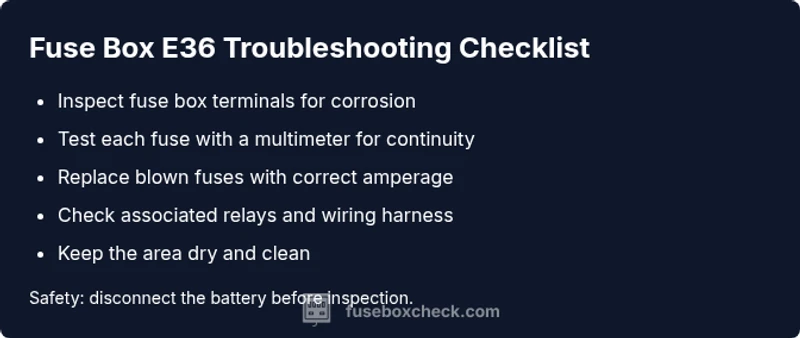
Fuse Box E36: Urgent Diagnostics and Safe Fixes
Urgent guide to diagnosing and fixing fuse box e36 faults in BMWs. Learn quick checks, safety steps, and practical prevention to keep your car electrical system reliable.


The fuse box E36 fault means the BMW's central electrical hub is triggering protection due to a blown fuse, loose connection, or wear. Start with a quick fuse check, inspect for corrosion, and replace any faulty fuse or relay. If symptoms persist or safety is compromised, arrange a professional inspection. This quick guide helps homeowners spot E36 fuse box issues early and avoid costly misdiagnoses.
Understanding the fuse box E36: what it does and why urgency matters
The fuse box in a BMW E36 is more than a simple fuse panel; it is the nerve center that distributes power to essential systems like headlights, dashboard electronics, and the ignition circuit. When the E36 fuse box begins to fail, you may experience intermittent power loss, blown fuses, or non-responsive accessories. According to FuseBoxCheck, aging connectors and corrosion are common culprits in older vehicles, and the E36 is no exception. A failing fuse box can present a cascade of symptoms—from dimmed interior lights to complete electrical shutdown—so addressing the issue promptly reduces the risk of a roadside breakdown. This guide walks homeowners through fast checks, safer early actions, and when to escalate to a professional. By understanding the fuse box E36 system, you can prioritize repairs that protect you and your car’s electrical life.
Common symptoms you might notice with a fuse box issue in the E36 BMW
Watch for intermittent power to accessories, blown fuses that recur after replacements, dim or flickering dash indicators, or sudden loss of lighting when cranking the engine. A stubborn fuse can be a sign of corrosion on the fuse terminals or a loose ground strap. In some cases, a single faulty relay or a damaged wiring harness tied to the fuse box can manifest as multiple failures across systems. If you observe these signs, document when they occur and what functions are affected. Quick checks can prevent unnecessary replacements and help you narrow down the root cause without risking your safety. FuseBoxCheck’s team emphasizes careful inspection over guesswork for a durable resolution.
Safe quick fixes you can perform before deeper diagnostics
First, disconnect the negative battery cable to prevent sparks while inspecting. Then, remove the fuse box cover and visually inspect for corrosion or charred plastic. Clean any corrosion with a non-abrasive contact cleaner and re-seat all fuses firmly. Replace blown fuses with the correct amperage rating and swap suspected relays if you have a spare that matches the original part. Keep replacement parts on hand that meet the OEM ratings for the E36. If the problem recurs after these quick fixes, it’s time to proceed with more definitive diagnostics or professional help. Remember, safety comes first—if you smell burning plastic or see melted connectors, stop and seek a pro immediately.
Quick diagnostics you can perform (overview)
Run a visual inspection first, then use a multimeter to check fuse continuity and ground integrity. Look for loose connections at the fuse block, corrosion on terminals, and signs of heat damage on wiring near the fuse box. Validate that the battery and alternator are delivering proper voltage, as fluctuations can cause fuse failures. If a fuse repeatedly blows after replacing with the correct rating, the fault likely lies beyond the fuse itself—such as a short to ground or a damaged wire harness that feeds multiple circuits. Use a step-by-step diagnostic flow to stay organized and safe.
How to prepare for a professional diagnosis
If quick fixes don’t resolve the issue, prepare a clean, organized report for the technician: list symptoms, dates of occurrence, any recent work on the electrical system, and a note about any aftermarket components. Collect fuse and relay part numbers if available, and capture photos of the fuse box connections. A professional inspection will typically include a wiring harness check, relay testing, and voltage drop tests. By laying out the facts clearly, you’ll speed up the service and reduce diagnostic costs.
Cost considerations and planning ahead
Expect the parts cost for fuses and relays to be modest, while labor and potential harness repairs can vary widely by region and vehicle condition. Typical ranges might be: parts (fuses/relays) from tens to a few hundred dollars, and labor from around $100 to several hundred dollars depending on access and the complexity of the repair. If a full harness replacement is necessary, costs can rise further. Use this guidance to budget and discuss options with your shop before work begins.
Safety and prevention tips
Always work with the battery disconnected, use insulated tools, and wear eye protection when probing the fuse box. Keep the area dry and avoid forcing connectors. Regular inspection and gentle cleaning can lengthen fuse box life and prevent corrosion. The best defense against E36 fuse box faults is proactive maintenance and timely replacement of aging components as they show wear.
Steps
Estimated time: 2-4 hours (variable by complexity and access)
- 1
Prepare and safety check
Disconnect the negative battery terminal and confirm you have a clear, dry workspace. Gather the OEM fuse ratings and a basic multimeter. Wear safety glasses and gloves.
Tip: Begin with a plan and keep a log of observations. - 2
Inspect visually
Remove the fuse box cover, inspect for corrosion, burn marks, or loose connectors. Check that relays seated firmly and wires appear intact. Take photos for reference.
Tip: Document any signs of wear before cleaning. - 3
Clean and reseat
Clean corroded terminals with a non-abrasive contact cleaner. Dry thoroughly. Reseat all fuses, relays, and connectors firmly.
Tip: Do not bypass fuses or force connectors. - 4
Test fuses and circuits
Reconnect the battery, test each circuit with a multimeter for continuity and voltage. Replace any fuse that blows or reads out of spec.
Tip: Test one circuit at a time to isolate the issue. - 5
Evaluate the harness
If fuses still blow or circuits fail, inspect the wiring harness for damaged insulation or discoloration near the fuse box. Look for signs of heat damage and repair as needed.
Tip: Avoid rough splices; use proper gauge wires and solder or crimp connectors. - 6
Decide on repair path
If issues persist after the above steps, prepare for professional help or partial harness repair. Document findings to speed service.
Tip: Budget in advance for parts and labor estimates.
Diagnosis: Intermittent electrical issues or repeated fuse blows in a BMW E36
Possible Causes
- highCorrosion or loose connections at the fuse box terminals
- highBlown fuse due to a short or overloaded circuit
- mediumWorn or damaged wiring harness connected to the fuse box
- lowFaulty relay or control module linked to the fuse box
Fixes
- easyClean corrosion from terminals and reseat fuses securely
- easyReplace blown fuses with the correct rating and test circuits individually
- mediumInspect and repair damaged wiring harness; repair splices as needed
- hardTest/replace faulty relays or associated control modules with OEM or equivalent parts
Your Questions Answered
What is the fuse box E36 responsible for in my BMW?
The fuse box distributes power to critical circuits, like ignition, lights, and dashboard electronics. Issues here can cause multiple systems to fail. Start diagnosis with visual inspection and test one circuit at a time.
The E36 fuse box powers key car systems. If it faults, test circuits one by one and inspect for corrosion or loose connections.
How do I tell if my fuse box is the source of the problem?
Look for recurring fuse blows, corroded terminals, melted plastic, or multiple systems failing simultaneously. If these occur after rule-out checks on individual components, the fuse box or wiring is likely at fault.
Recurring fuse blows and corrosion near the fuse box usually point to the fuse box being the culprit.
Can I fix a BMW E36 fuse box issue myself?
Basic checks, cleaning, and fuse replacement can be done safely with proper precautions. More complex problems—like harness damage or relay faults—are best handled by a professional to avoid safety risks.
You can handle simple fixes, but more serious issues should be done by a pro.
What are typical costs to repair a fuse box issue on an E36?
Costs vary by issue. Parts like fuses and relays are inexpensive, while labor and harness repairs can raise the total. Budget a rough range of hundreds of dollars depending on the repair scope and locale.
Repair costs can range from a few hundred dollars for simple parts to more for harness work, depending on your area.
When should I call a professional for an E36 fuse box fault?
If you smell burning, see melted components, or your fuses repeatedly fail despite correct parts, stop and contact a licensed technician. Electrical faults can pose fire risks and require professional testing equipment.
Call a professional if there are burning smells or repeated fuse failures.
Are there safety precautions I should take during DIY checks?
Always disconnect the battery before touching the fuse box, work in a dry area, and wear protective gear. Keep tools insulated and avoid forceful disassembly that could damage wiring.
Safety first: disconnect the battery, stay dry, and wear protective gear.
What maintenance improves fuse box reliability?
Regularly inspect for corrosion, clean connectors, and replace aging relays before they fail. Keep the area free of moisture and avoid aftermarket modifications that alter power distribution.
Inspect, clean, and replace aging parts to keep the fuse box reliable.
Watch Video
Highlights
- Identify symptoms early and document when they occur
- Clean, reseat, and test fuses before replacing major components
- Safety first: disconnect battery and work in dry conditions
- Persistent faults merit professional assessment to avoid fire risk