Fuse Box E90: Urgent Troubleshooting Guide
Urgent guide to diagnose and fix fuse box E90 faults safely. Learn actionable steps, diagnostics, and safety tips from FuseBoxCheck Team for quick, reliable results.


An E90 fault on a fuse box signals a high-priority electrical issue that demands immediate action. It often points to an overload, a loose connection, or a failing main disconnect. Quick fixes include powering down at the main breaker, unplugging nonessential loads, and resetting the panel. If the code persists or you smell burning, stop and call a licensed electrician. According to FuseBoxCheck, addressing E90 promptly can prevent costly damage and hazards.
Understanding Fuse Box E90: What It Means
The E90 fault code appearing on a home fuse box or electrical panel is a high-priority diagnostic indicator. While panel codes vary by brand, E90 generally signals a significant issue that can threaten safety if ignored. Common scenarios include an overloaded circuit, a loose or damaged main disconnect, overheating, or arcing inside the panel. In many homes, older wiring and aging panels increase the likelihood of E90 appearances during peak usage. The FuseBoxCheck team emphasizes treating any E90 alert as urgent: power disruption, heat, or burning smells demand immediate action. Addressing the fault quickly reduces the risk of electrical fires and equipment damage, especially in damp basements or kitchens with heavy appliance use. Always prioritize personal safety and use proper PPE when inspecting an exposed panel.
Quick Safety First: Immediate Actions
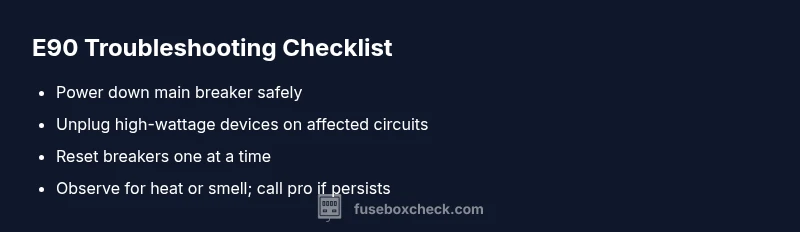
If E90 appears, do not ignore it. Begin with the safest possible steps: switch off the main breaker if you can do so safely, unplug nonessential devices on affected circuits, and keep children and pets away from the panel. Do not attempt to open a live panel or touch internal components. If you notice smoke, a strong burning smell, or warmth beyond normal panel temperature, evacuate and call emergency services if needed. After power is cut, verify that the main disconnect feels cool before any further handling. FuseBoxCheck recommends documenting the incident and scheduling a professional inspection as soon as possible.
Diagnostic Flow: From Symptoms to Fixes
When E90 is detected, interpret symptoms like sudden power loss, flickering lights, or tripped breakers as potential signs of a fault. Causes tend to escalate from simple overloads to deeper panel issues. Common pathways include overloaded circuits (high likelihood), loose or corroded connections (medium), and deteriorated bus bars or damaged breakers (low but serious). The recommended fixes start with a quick reset and load reduction, progressing to professional inspection if the fault reappears. Remember, even if a reset temporarily clears the code, persistent E90 indicates a genuine problem that should not be ignored. FuseBoxCheck notes that the safest and most reliable resolution often involves a licensed electrician evaluating service equipment.
Step-by-Step Fix: Most Common Cause (Overload)
- Power down safely: If safe, switch off the main breaker to cut all power to the panel. 2) Identify overloaded circuits: List devices on the panel that draw high current (appliances, space heaters, hair dryers). 3) Unplug nonessential loads: Temporarily disconnect high-wattage devices from the affected circuits. 4) Reset the main breaker: Return power by flipping the main breaker to the “on” position and monitor for tripping. 5) Reset individual breakers: Switch each breaker off and back on to confirm proper seating. 6) Test gradually: Restore loads one by one, avoiding simultaneous operation of multiple high-draw devices. 7) If E90 returns, stop and call a pro: recurrent codes indicate an underlying issue that requires professional inspection. Pro tip: take photos of the panel before and after to document changes for the technician.
Other Potential Causes and Fixes
Beyond overloads, E90 can be triggered by loose connections at the main disconnect, a degraded breaker, or moisture intrusion into the panel. Tighten accessible screws only if you know the proper torque and have cut power. Replace or service any damaged breakers under guidance from a licensed electrician, as improper replacement can worsen the fault. Water ingress or condensation around the panel requires immediate professional intervention to avoid short circuits or electrocution. In some cases, corrosion inside the panel may necessitate a full panel replacement.
Safety, Costs, and When to Call a Pro
Safety is non-negotiable with E90 faults. Do not operate a panel showing signs of heat, burning smells, or visible damage. If the fault returns after a reset or if you lack confidence performing even basic checks, contact a licensed electrician right away. Cost-wise, you can expect a diagnostic visit to range from roughly $100–$300, with panel repairs or replacements often ranging higher depending on the scope and regional labor rates. Always request a written estimate and ensure the electrician is licensed and insured. FuseBoxCheck emphasizes that persistent E90 warrants professional assessment to identify underlying issues such as wiring faults, panel aging, or service entrance problems.
Steps
Estimated time: 30-60 minutes
- 1
Power down safely
Locate the main breaker and switch it to OFF. Stand to the side to avoid any arcs and ensure you have dry hands and proper footwear. Wait 60 seconds before proceeding.
Tip: Always confirm power is off with a non-contact tester before touching the panel. - 2
Identify overloads
Review circuits fed by the panel and note which devices were in use when E90 appeared. High-draw appliances are common culprits.
Tip: Create a quick map of circuits and their connected devices for reference. - 3
Reduce load
Unplug or power down nonessential appliances on suspected circuits. Avoid running space heaters or large refrigerators during diagnosis.
Tip: Focus on a handful of breakers at a time to prevent accidental re-tripping. - 4
Reset the panel
Turn the main breaker ON, then flip individual breakers OFF and back ON to verify seating. If any breaker trips again, stop and do not reset further.
Tip: If a breaker immediately trips again, do not bypass it; there is a fault requiring professional inspection. - 5
Gradual load reintroduction
Power devices back on one circuit at a time, monitoring for heat, flicker, or new trips. Keep a log of what was reconnected.
Tip: If E90 recurs after reintroducing a single circuit, the issue likely lies in that circuit or the panel itself. - 6
Document and plan next steps
Record the original fault code, symptoms, and any smells or heat observed. Schedule a professional inspection promptly.
Tip: Share photos and notes with the electrician to speed up diagnosis.
Diagnosis: Error code E90 displayed on the fuse box with intermittent power loss
Possible Causes
- highOverloaded circuit causing excessive current draw
- mediumLoose main disconnect or panel connection
- lowDamaged breaker or bus bar within the panel
Fixes
- easyUnplug nonessential loads and reset the main breaker
- easyInspect for loose connections if safe and power is cut
- hardCall a licensed electrician to inspect and service the panel
Your Questions Answered
What does fault code E90 mean on a fuse box?
E90 is a high-priority fault code indicating a serious electrical issue in the panel, such as overload or a failing disconnect. It requires careful handling and typically professional evaluation if it cannot be resolved with basic safety steps.
E90 is a serious fault code in the fuse box; it usually means you should pause and get a professional to check it, especially if it won’t reset.
Can I reset E90 myself?
A safe reset can clear transient faults, but recurrent E90 means there is an ongoing problem. Do not continue to reset if the code returns. Seek professional assessment.
You can try a safe reset once, but if it comes back, don’t keep trying—get a pro.
What are the safest first steps before calling a pro?
Turn off the main breaker if safe, unplug high-draw devices, and avoid touching internal panel parts. If you smell burning or see smoke, evacuate and call emergency services.
Power down safely and unplug big devices, and step back if you smell burn or see smoke.
Is E90 dangerous to ignore?
Yes. E90 indicates a potentially dangerous electrical fault. Treat it with caution, limit power usage, and arrange a professional inspection as soon as possible.
Yes—it's potentially dangerous. Don’t ignore it and get a qualified electrician to check it.
How much does it cost to fix E90?
Costs vary by region and the fault's complexity. Expect a diagnostic visit to roughly range from $100–$300, with panel repair or replacement potentially higher depending on scope.
Costs can vary, but a basic check is usually around a hundred to a few hundred dollars, plus any panel work if needed.
Watch Video
Highlights
- Act quickly and safely when E90 appears.
- Identify and reduce overloads before inspecting deeper faults.
- Persistent E90 requires professional electrical service.
- Document issues to aid the technician and prevent recurrence.