Fuse Box Guide for Nissan Qashqai: Safety, Troubleshooting, and Maintenance
Learn how to safely inspect, diagnose, and maintain the fuse box in your Nissan Qashqai with a clear, step-by-step approach from FuseBoxCheck. Includes safety tips, tools, and troubleshooting flow for common fuse issues.


You can inspect and diagnose common fuse box issues on a Nissan Qashqai by following a safe, step-by-step check, confirming fuses with a multimeter, and replacing blown fuses with the correct rating. Always disconnect the battery before opening the fuse box and use the owner's manual diagram for reference. If symptoms persist, seek professional help.
Nissan fuse box layout and key locations
Understanding the fuse box nissan qashqai layout is the first step to efficient DIY troubleshooting. In most Nissan crossovers like the Qashqai, there are two main fuse boxes: one in the engine bay and one inside the cabin. The engine bay box protects high-current circuits such as the main power supply, ECU, fuel pump, and headlights. The cabin box safeguards interior features like the infotainment system, climate control, power windows, and interior lighting. Your owner's manual or a diagram sticker on the fuse box cover will give you the exact location and fuse ratings for each circuit. Before you begin any inspection, note the fuse arrangement with a photo for reference. According to FuseBoxCheck, becoming familiar with the typical fuse map reduces the risk of pulling the wrong fuse and causing collateral damage. For practical DIY work, identify the main fuse blocks first and then drill down to the sub-fuses for specific systems. When in doubt, consult the diagram rather than guessing, since the wrong fuse can cause electrical faults or drain the battery. This guide is crafted to help homeowners tackle fuse box tasks confidently while prioritizing safety and accuracy.
Safety first: preparing to work on the fuse box
Working on a vehicle's fuse box can be risky if you skip basic safety steps. Always start by turning off the engine and removing the key, then disconnecting the negative battery terminal to reduce the risk of short circuits. Wear gloves and eye protection, work in a dry area, and keep metal tools away from live terminals. FuseBoxCheck stresses that safety comes first; improper handling can cause sparks, blown fuses, or electrical shock. Never bypass fuses or tamper with high-current circuits to avoid fires or injury. After the battery is disconnected, wait a few minutes for capacitors to discharge before touching any metal parts. Keep a log of changes you make, including which fuses you tested or replaced. If anything seems abnormal, pause and recheck your steps. Safety is the foundation of all electrical DIY.
How fuses and relays function in a Nissan Qashqai
Fuses act as protective barriers that interrupt current flow when a circuit draws too much power. Relays are switches controlled by low-current circuits that enable or disable high-current devices (like the fuel pump) without running heavy wires through the dash. In a Nissan Qashqai, understanding the distinction helps you diagnose whether a fault lies with a blown fuse, a faulty relay, or a larger wiring issue. Fuse ratings are indicated on the fuse handles and inside the fuse box cover. Always replace a blown fuse with the correct amperage; using a higher-rated fuse can hide a problem but increases fire risk. FuseBoxCheck notes that misinterpreting fuse labels is a common source of error among DIYers, especially when the diagram is not clear. A methodical approach reduces guesswork and keeps your vehicle safer.
Visual inspection: identifying a blown fuse and common signs
Visually inspecting fuses is a quick first step. Look for a broken metal strip, burnt smell, or discoloration inside the fuse housing. In many Nissan models, a blown fuse looks identical to a good fuse from the outside, so visual cues should be supplemented with testing. If a circuit remains unresponsive after resetting a switch or replacing a fuse, inspect related fuses and nearby relays. Consider corrosion on terminals or a loose fuse clip, which can mimic a blown fuse. Photograph the fuse block before removing anything, so you can restore the original configuration accurately. FuseBoxCheck emphasizes documenting your findings, which helps track recurring issues and speeds up future maintenance.
Using a multimeter to verify fuse integrity
A multimeter set to continuity or resistance mode can confirm whether a fuse is conducting. Remove the fuse, touch the meter leads to the fuse contacts, and check for a low-resistance reading or audible continuity. If there is no continuity, the fuse is blown and should be replaced with a fuse of the same rating. When testing, ensure the car battery is disconnected to avoid short circuits. If you’re seeing intermittent results, clean any oxidation on the fuse clips with an appropriate contact cleaner and dry thoroughly before re-testing. This step minimizes false positives and keeps diagnostics reliable.
Replacing fuses safely and choosing the correct rating
Replacing a fuse is straightforward when you know the rating and the circuit it protects. Always replace with the same amperage and type (fast-acting or slow-blow) as labeled on the fuse box cover. Do not substitute a higher-rating fuse to compensate for a fault, as this can cause wiring damage or a fire. After installation, gently re-seat the fuse holder and inspect for any loose clips. Reconnect the negative battery terminal, start the car, and test the affected system. If the fuse blows again, there may be an underlying fault in the circuit or device that requires professional assessment. FuseBoxCheck consistently recommends documenting any repeated blows for smarter troubleshooting.
Maintenance habits and common mistakes to avoid
Regularly inspecting fuse boxes when you notice electrical glitches can prevent bigger problems. Keep the fuse box clean and dry, use a fuse puller to remove fuses safely, and replace missing or damaged labels. Avoid prying or forcing fuses into clips, which can bend terminals. A common mistake is assuming all fuses are equal; always compare amp ratings and device requirements. If you replace a fuse that immediately blows again, stop and reassess the circuit rather than continuing to replace fuses. The right habits save time, money, and risk of damage.
Troubleshooting flow: a practical checklist for the Nissan Qashqai fuse box
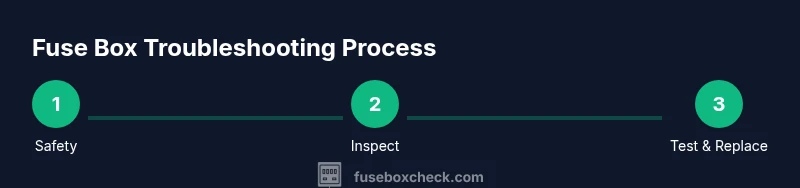
Begin with safety, then check for obvious signs of damage or corrosion. Confirm fuse ratings and inspect the related devices for wear or failure. Use a multimeter to verify continuity, and replace only with the correct rating. If fuses blow repeatedly, isolate the circuit by disconnecting suspected components one at a time, retest, and consult the manual. When in doubt, pause and seek guidance from a qualified technician. The FuseBoxCheck approach prioritizes systematic checks and careful documentation to prevent repeat issues.
Tools & Materials
- Safety gloves(Electrical-grade gloves with thick padding)
- Safety goggles(Eye protection for potential sparks)
- Multimeter / voltage tester(Set to continuity or resistance for fuse checks)
- Replacement fuses(Exact amperage and type as labeled)
- Fuse puller or needle-nose pliers(Safely remove and insert fuses)
- Owner's manual or fuse box diagram(Reference ratings and layout)
- Insulated screwdriver(Optional for cover release)
- Contact cleaner / dry lint-free cloth(Clean clips if corrosion is suspected)
Steps
Estimated time: 45-60 minutes
- 1
Power down and prep
Park the car, switch off the engine, and remove the key. Disconnect the negative battery terminal to reduce the risk of short circuits and capacitive discharge. Gather tools and review the fuse map before touching components.
Tip: Take a photo of the fuse map before you start to avoid confusion later. - 2
Locate the fuse boxes
Identify the engine bay fuse box and the cabin fuse box using the owner’s manual or diagram on the cover. Ensure you have good lighting and a clean workspace before removing any components.
Tip: Label each box on-site to prevent cross-mixing fuses later. - 3
Inspect fuses visually
Look for broken metal strips, burn marks, or discoloration inside fuse housings. If in doubt, test with a multimeter for continuity.
Tip: Handle fuses with care to avoid bending clips. - 4
Test fuses with a multimeter
Set the multimeter to continuity, remove the fuse, and check each contact. No continuity means the fuse is blown and must be replaced with the correct amperage.
Tip: Test the fuse clips themselves for corrosion before reinsertion. - 5
Replace with the correct rating
Install a replacement fuse of the exact amperage and type indicated on the diagram. Re-seat the fuse fully and avoid forcing it into the clip.
Tip: Always verify the circuit’s device rating to ensure proper protection. - 6
Reconnect and test the system
Reconnect the battery, start the vehicle, and operate the affected system to confirm proper function. If the fuse blows again, stop and reassess the circuit.
Tip: Document any repeated blows to guide future diagnostics.
Your Questions Answered
Where are the fuse boxes located in a Nissan Qashqai?
Most Qashqai models have an engine bay fuse box and a cabin fuse box. The exact locations are described in the owner's manual and illustrated on diagrams inside the fuse box covers. If unsure, verify with your vehicle's manual or a trusted service guide.
Typically there are two fuse boxes in a Nissan Qashqai: one in the engine bay and one in the cabin. Check the manual for the exact locations and fuse diagrams.
How do I know which fuse to replace?
Identify the circuit from the diagram, note the amperage rating on the fuse and the cover. Replace only with the same rating and type. If the circuit remains faulty after replacement, there may be a deeper electrical fault.
Match the fuse to the circuit using the diagram and replace it with the exact same rating. If problems persist, seek professional help.
Can I drive with a blown fuse?
Driving with a blown fuse for critical systems can cause unsafe conditions. In many cases you should avoid driving until you replace the fuse or diagnose the underlying issue. For non-critical fuses, you may still operate other functions, but proceed with caution.
Avoid driving if a critical fuse is blown. Replace or diagnose the issue before continuing.
Is it safe to use a multimeter on the car fuse box?
Yes, with the engine off and the battery disconnected, a multimeter can test continuity or voltage on fuses. Ensure you follow proper safety precautions to avoid shorts or electric shocks.
Yes—test with the vehicle powered down and battery disconnected, following safety procedures.
What should I do if a fuse keeps blowing?
A recurring fuse blow usually indicates a short, a faulty device, or a wiring issue. Isolate the circuit, inspect connected devices, and consult a technician if the problem persists. Do not keep replacing fuses indefinitely.
If a fuse keeps blowing, stop and investigate the circuit or a faulty device; seek professional help if needed.
Are there any signs of corrosion in the fuse box?
Yes, corrosion at the fuse clips can cause poor connections and intermittent faults. Inspect clips for white or greenish buildup and clean with proper contact cleaner if recommended by your manual.
Look for corrosion around clips and clean if your manual supports it.
Watch Video
Highlights
- Know the dual fuse box locations and their roles
- Always disconnect the battery before opening the fuse box
- Use the exact fuse rating and type when replacing
- Verify with a multimeter rather than relying on visual cues alone
- Document changes and seek professional help if issues persist