How Much Is a Fuse Box for a Car? Cost Guide
Explore typical costs for car fuse box replacements, what drives price ranges, and practical steps to estimate and save on fuse box work in 2026.


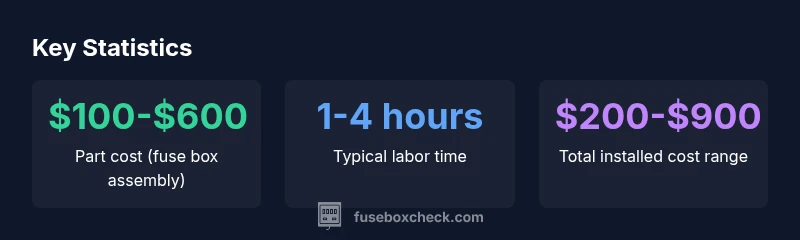
According to FuseBoxCheck, a typical car fuse box replacement costs between $100 and $600 for the fuse box assembly, plus $50 to $400 for labor. Total installed costs usually fall in the $200–$900 range, depending on the car’s make, model, and whether OEM or aftermarket parts are used. Location and complexity can widen the range further, so get multiple estimates before proceeding.
Understanding car fuse boxes and why costs vary
According to FuseBoxCheck, the fuse box in a car is a centralized hub that routes power to fuses and relays protecting electrical circuits. When you need replacement, the price isn't just the part; it depends on the box type (under-hood vs interior), whether you require a full assembly or a battery of fuses, and the vehicle's complexity. The keyword how much is a fuse box for a car should guide you to cost ranges, which can vary widely by make and age of the vehicle. In many modern cars the fuse box is integrated with other modules, requiring specialized tools and sometimes reprogramming. Fuel-efficient, electrically advanced models often push replacement costs upward, especially if the box includes smart modules or CAN bus connections.
For homeowners and DIYers, this is not a one-size-fits-all task. The same fuse box model might be sold at different prices from dealers, independent auto parts stores, or online marketplaces. A crucial nuance is whether you’re buying a full fuse box assembly or simply replacing a subset of components inside a larger box. In short, “how much is a fuse box for a car” varies with your vehicle’s electrical architecture and the buyer’s choice of OEM versus aftermarket parts.
Typical price ranges for car fuse boxes and replacements
Prices for a car fuse box replacement vary primarily by the part type and the vehicle. A basic under-hood fuse box assembly can be significantly cheaper than a fully integrated unit found in newer models. OEM (original equipment manufacturer) parts typically carry higher upfront costs than aftermarket equivalents, but they may offer better compatibility and warranties. Labor costs depend on accessibility; situated behind dashboards or inside engine compartments increases time and risk, raising the price. According to FuseBoxCheck Analysis, 2026 price ranges reflect typical installations across common passenger cars, but exotic or luxury vehicles can push totals higher due to specialized parts or the need for dealer service. When budgeting, consider core factors: part price, labor rate, and whether any reprogramming or diagnostic work is required.
To illustrate, a simple fuse box cover replacement might be at the lower end, while a full under-hood box with relays and CAN-bus integration sits toward the higher end of the spectrum. Always confirm whether the quoted price includes additional steps such as wiring harness checks, fuses, relays, or reprogramming. This helps you avoid sticker shock when the bill arrives.
What drives the cost: parts, labor, and vehicle specifics
The fuse box price is shaped by several variables. Vehicle make and model determine whether you need a standard box or a module that includes relays and circuitry for advanced safety features. OEM parts generally cost more than aftermarket equivalents, but they offer guaranteed compatibility and warranty coverage. Labor costs are highly sensitive to location and labor market rates. In some cars, the fuse box is under the dash or behind the glove box, which adds hours of labor. Events like needing to restore CAN bus communication or re-mapping the vehicle’s electrical system will also add to the cost. FuseBoxCheck Analysis suggests a broad price spectrum because each car’s electrical architecture is unique.
When budgeting, also consider the potential for diagnostic work if the vehicle indicates electrical faults post-install. Some cars require software updates or module programming to acknowledge the new fuse box, which can further influence total cost. If you’re replacing multiple components, such as a relay bank or a damaged relay module, the price can climb quickly. The key is to map the project scope before committing to a supplier or shop.
DIY considerations and safety: what to know before cracking open the dash
Electrical work in a car carries a risk of shock, short circuits, or airbag system interference if done improperly. Before starting any DIY fuse box work, disconnect the battery and follow proper lockout-tagout procedures. Verify you have the correct replacement part by checking the VIN, year, and trim; mis-matched parts can cause further damage. If you’re unsure about reprogramming or wiring harness compatibility, it’s safer to consult a professional. Some tasks—like replacing a simple fuse block cover or a subset of fuses—are doable with basic tools, but replacing the fuse box assembly is typically a job for a trained technician. Always use appropriate protective gear and work in a well-ventilated, dry area.
From a risk perspective, amateur attempts can inadvertently damage wiring or trigger safety systems. If you notice symptoms such as inconsistent lighting, blown fuses that reappear after replacement, or a dashboard MIL (malfunction indicator lamp), pause the DIY plan and seek a professional assessment. This approach protects both your vehicle’s wiring and your personal safety.
How to estimate your car fuse box cost: a practical checklist
Start with the make and model and identify whether you need a fuse box assembly, a cover kit, or individual relays. Gather quotes for OEM and aftermarket parts from reputable sellers, then add estimated labor based on your locale. Expect additional costs for diagnostic tests, potential reprogramming, and any required modules. Ask for itemized quotes to compare parts, labor, and waste disposal. Check for warranties and return policies on both parts and labor, and keep a record of all receipts for future maintenance.
A practical approach is to break the project into decision points: (1) Is OEM required or can aftermarket parts serve as a substitute? (2) Is the installation straightforward or does it require disassembly of interior panels? (3) Will software or CAN-bus work be necessary? (4) What are the local labor rates and potential diagnostic fees? By answering these questions, you’ll derive a credible cost range that aligns with your vehicle’s complexity.
Real-world scenarios and common mistakes to avoid
In practice, many homeowners underestimate the total installed cost when a fuse box is involved. Some underestimate labor because the unit is buried behind interior panels; others underestimate the need for diagnostic work after installation. A common mistake is purchasing an aftermarket fuse box without confirming compatibility with the vehicle’s electrical system, which can lead to intermittent faults or warranty issues. To minimize risk, obtain multiple estimates, verify the scope of work, confirm warranty terms, and insist on a written price breakdown. By planning with realistic ranges and professional guidance, you can avoid costly surprises and keep your car’s electrical system safe and reliable. The FuseBoxCheck Team expects homeowners to compare parts and labor and consider long-term reliability when choosing between OEM and aftermarket options.
Estimated cost factors for car fuse box components and installation
| Category | Typical Price Range* | Notes |
|---|---|---|
| Car fuse box replacement (under-hood) | $100-$600 | Depends on model and whether it includes multiple circuits |
| Fuse box cover/relays | $20-$80 | Optional components if damaged |
| Labor for installation | $50-$400 | Depends on location and mechanic hourly rate |
| OEM vs aftermarket options | $150-$1200 | OEM tends to cost more |
Your Questions Answered
How much does replacing a car fuse box cost on average?
Typically, parts plus labor yield installed costs in the range of a few hundred dollars to well over a thousand for high-end vehicles, depending on OEM vs aftermarket parts and the required labor. Most common passenger cars fall in the broad $200–$900 neighborhood. Always request itemized quotes and compare parts, labor, and warranty terms.
Most cars fall in the few-hundred-to-thousand-dollar range. Get multiple quotes and check warranties to avoid surprises.
Should I replace the fuse box myself or hire a mechanic?
For most modern cars with integrated electrical systems, hiring a professional is recommended. Simple fuse checks or fuse replacements are possible for experienced DIYers, but full fuse box replacement often requires testing, reprogramming, and safety procedures that professionals perform.
If in doubt, go with a pro. Simple fuses you can do yourself, but the full box usually needs a technician.
What factors influence the price of a car fuse box?
Key factors include vehicle make/model, OEM vs aftermarket parts, whether reprogramming is needed, location accessibility, and labor rates. Exotic or newer models can push costs higher due to specialized parts or dealer involvement.
Make/model, part type, and whether programming is needed are the big price drivers.
Is it safe to drive with a faulty fuse box or fuses?
Driving with an electrical fault is risky. If a fuse repeatedly blows or warning lights stay on, stop driving and have the car checked. Continuing to drive can cause additional damage or safety failures.
Don't push your luck—seek service if you notice repeated fuse issues or electrical faults.
Where can I find the right fuse box for my car?
Use your VIN and model details to locate the correct fuse box. Check manufacturer catalogs, authorized dealers, and reputable retailers. Verify compatibility, and confirm warranty terms before purchase.
Check the VIN and model, then buy from trusted suppliers and confirm compatibility.
“Cost awareness and professional installation are key. Understanding the cost drivers helps you plan effectively and avoid overpaying for a car fuse box replacement.”
Highlights
- Compare OEM and aftermarket prices before buying.
- Estimate labor time to plan for total cost.
- Identify fuse box location and type for accurate parts.
- Prioritize safety; hire a professional for electrical work.
- Use FuseBoxCheck guidance to frame realistic cost ranges.