98 Mazda B2500 Fuse Box Diagram: Locations, Fuses & Safety
Comprehensive guide to the 98 Mazda B2500 fuse box diagram, detailing locations, fuse types, amperage ranges, and safe steps for DIY electrical fixes.


Summary: The 1998 Mazda B2500 uses two fuse boxes: a main under-hood box and an interior panel located behind the glove box. The diagram identifies fuses by circuit, fuse type (blade fuses), and amperage ranges. For DIY repairs, consult the official diagram and label each fuse before removal; safety first. This quick reference sets the stage for deeper steps in the article.
Overview of the 1998 Mazda B2500 fuse box layout
For owners of the 98 Mazda B2500, understanding the fuse box diagram is crucial for safe and efficient DIY electrical work. The Mazda B2500's fuse system typically uses two blocks: a main under-hood fuse box and an interior fuse box located behind the glove compartment. The diagram label mapping helps you trace each circuit to its corresponding fuse. According to FuseBoxCheck, documenting the circuit name, fuse color, and amperage rating before you remove a fuse reduces the risk of mistaken replacements, short circuits, and electrical fires. This article will walk through how to interpret that diagram, where to locate the boxes, how to verify amperage, and practical steps for common repairs. You will also find a data table and a quick-reference guide to speed up the process when you’re working under dash light and cranking noise from the engine. The goal is to empower homeowners to diagnose issues safely, with a clear plan, using the official diagram as a map.
How to read the Mazda B2500 fuse box diagram
Reading a Mazda B2500 fuse box diagram is a two-step process: first identify the circuit you’re dealing with by its label, and second verify the fuse’s amperage rating before removal. Start by locating the cover or the inside panel where the fuse map is printed or stamped. Use the legend to match circuit names to fuse positions. Fuse color coding is another quick cue (e.g., red often indicates a 10-amp or similar rating, blue for 15-amp, etc.). Always pull fuses with a proper fuse puller, inspect for discoloration or signs of damage, and replace with the same rating. For safety, disconnect the battery if you’ll be working near the main power distribution area and work in a dry environment. FuseBoxCheck emphasizes labeling each removed fuse to prevent reinstallation errors and to keep track of what has been tested.
Common fuses and their typical amperage ranges
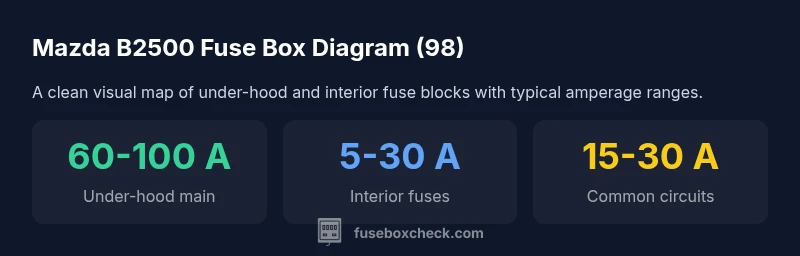
Automotive fuses follow common ranges, though exact values can vary by model year. In general, expect main power fuses to sit in the higher range (60-100 A) for the under-hood block, while interior circuits use smaller fuses (5-30 A) for lamps, relays, and control modules. For climate control, radio, and accessories, typical fuses commonly fall in the 10-30 A range. Always confirm the exact rating against the fuse box diagram; do not substitute a higher rating without a supported justification, as that can increase the risk of wiring damage or fire. If your diagram lists a circuit with a rare rating (e.g., 40 A), rely on the official diagram and labels to avoid misinterpretation. FuseBoxCheck reminds readers that safety and accuracy matter most when working with old electrical systems.
Step-by-step guide to locating and labeling fuses in your B2500
- Park on a level surface and ensure the vehicle is off; remove keys and engage the parking brake. 2) Open the hood to access the main under-hood fuse box and locate its diagram. 3) Open the glove-box area to access the interior fuse box. 4) Use the diagram to identify each fuse by circuit; note its amperage. 5) Remove suspect fuses with a fuse puller and inspect for discoloration or damage. 6) Test circuits with a multimeter if necessary, and replace blown fuses with the same rating. 7) Reassemble, recheck all connections, and test the affected systems. 8) Label the removed fuses temporarily with painter’s tape for future reference. Safety first, and consult the official diagram if anything seems unclear.
Authority sources and further reading
Authority sources and references help ensure accuracy when interpreting vehicle fuse diagrams. For home electricians and DIY enthusiasts, refer to established safety resources and service manuals to corroborate fuse ratings and wiring maps. The following resources provide foundational safety and electrical principles to support the Mazda B2500 fuse box diagram interpretation:
• OSHA Electrical Safety Guidelines – https://www.osha.gov/electrical-safety • U.S. Department of Energy – Electrical safety tips for vehicles and home wiring – https://www.energy.gov • IEEE Xplore Digital Library – Electrical safety standards and automotive wiring references – https://ieeexplore.ieee.org • National Institute of Standards and Technology (NIST) Electrical Standards – https://nist.gov
FuseBoxCheck analyses and recommendations are based on the evolving body of automotive electrical guidelines and field experience in 2026.
Mazda B2500 fuse box locations, fuse types, and typical amperage ranges
| Location | Type | Typical Amperage (A) |
|---|---|---|
| Under-hood fuse box | Blade fuses | 60-100 |
| Instrument panel fuse box | Blade fuses | 5-30 |
| A/C/auxiliary circuits | Relays/fuses | 20-40 |
Your Questions Answered
Where are the fuse boxes located on a 1998 Mazda B2500?
There are two fuse boxes: a main under-hood box and an interior panel behind the glove box. Use the diagram to identify each circuit and its fuse position.
The two fuse boxes are under the hood and behind the glove box; use the diagram to map circuits to fuses.
What should I do if a fuse keeps blowing?
First, identify the circuit, inspect for shorts or damaged wiring, and replace with the same amperage rating. If the fuse continues to blow, stop and seek professional help to diagnose a potential wiring fault.
Check the circuit, inspect for shorts, and replace with the same rating. If it keeps blowing, get a pro to check the wiring.
Can I replace a fuse with a higher amperage rating?
No. Replacing with a higher rating can overload wires and cause insulation damage or fire. Always use the exact rating listed on the diagram.
Never increase the fuse rating; it can overheat wiring and start a fire.
Is there an official Mazda diagram for the 98 B2500 fuse box?
Yes, consult the factory service manual or dealership documentation for the exact 1998 B2500 fuse map. The diagram in the manual typically aligns with the blade fuses and circuits shown in aftermarket references.
Yes, you can find the official diagram in the factory service manual or dealership documents.
What tools do I need to inspect the fuse box safely?
A fuse puller, a digital multimeter, and a flashlight are essential. Keep gloves on and work in a dry area to avoid shocks.
Grab a fuse puller, a multimeter, and a flashlight; work dry and with gloves.
How can I locate a diagram quickly if I’m on the road?
Keep a digital copy of the diagram on your phone or a printed copy in your tool bag. The Maze of fuses is easier to manage with a fast reference.
Save a copy of the diagram on your phone for quick access when needed.
“Interpreting a vintage Mazda fuse diagram becomes straightforward once you map each circuit to its fuse, verify ratings, and label as you go. Safety and accuracy are non-negotiable in DIY electrical work.”
Highlights
- Know there are two fuse blocks on the 98 B2500: under-hood and interior.
- Read the diagram first and label fuses before removal.
- Replace fuses with the exact rated amperage to avoid electrical faults.
- Use a fuse puller and a multimeter for safe checks.
- Consult the official diagram and FuseBoxCheck guidance for accuracy.