Difference Between Fuse Box and Consumer Unit: A Practical Guide
Learn the difference between fuse box and consumer unit, including definitions, safety features, upgrade paths, and what to consider when planning a modern installation.


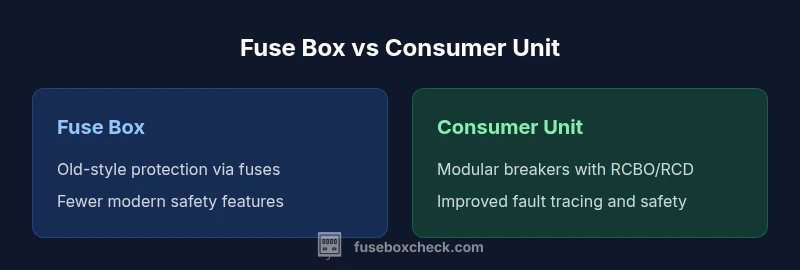
The difference between fuse box and consumer unit is largely terminological in many regions, with the consumer unit being the modern, safety-focused standard. A fuse box is the older term for the same enclosure that houses protective devices. In practice, most homeowners today will encounter a consumer unit featuring RCBO/RCD protection, modular breakers, and clearly labeled circuits.
Understanding the difference between fuse box and consumer unit
The phrase difference between fuse box and consumer unit is widely used, yet in most modern homes both refer to the same electrical enclosure that distributes power to circuits. The key distinction is not the fundamental function—protecting circuits—but the design, safety features, and regulatory expectations that have evolved. In today’s electrical work, the term consumer unit is preferred, reflecting a shift toward modular protection, per‑circuit safety, and easier fault isolation. For homeowners exploring renovations, this distinction matters because it signals the move from legacy fuse boxes toward modern, compliant systems that meet current electrical safety rules.
As you read about upgrades or replacements, keep an eye on the type of protective devices, labeling clarity, and ease of testing. The phrase difference between fuse box and consumer unit will keep appearing in manuals, quotes, and inspections, but the practical takeaway is simple: modern consumer units offer better safety and future-proofing.
Historical context and terminology evolution
The terminology around electrical enclosures has evolved with safety standards. Traditionally, the term fuse box described an enclosure containing cartridge fuses or rewirable fuses that interrupt the circuit when a fuse element melts. Over time, engineers and regulators adopted the term consumer unit to emphasize modern protection concepts such as modular breakers and residual current protection. In many regions, the language differences reflect regulatory expectations rather than a fundamental change in how power is distributed. If you inherited a home with a fuse box, you are not alone; many existing installations still use that language, even though the system may be a consumer-unit-style distribution board in practice.
Modern protective devices: RCBOs, RCDs and breakers
A defining feature of today’s consumer units is the integration of protective devices that go beyond simple overcurrent protection. Modern units commonly include RCBOs (combined residual current and overcurrent protection), RCDs (residual current devices), and MCBs (miniature circuit breakers) for individual circuits. This combination provides more selective tripping, reduces nuisance outages, and improves safety for electrical faults. By contrast, a classic fuse box relies on fuse elements that melt when current exceeds a limit, which can lead to broader circuit loss and slower fault tracing. The shift from fuses to circuit breakers and residual current protection is a core reason many homeowners consider upgrading.
Core components: fuse elements vs modular protection
In a traditional fuse box, the core components are the fuse elements and fuse carriers. When a fault occurs, the fuse element heats and ruptures, interrupting power. A modern consumer unit substitutes these elements with modular MCBs, RCBOs, and RCUs (residual current units) arranged on a common busbar. This modular approach makes it easier to upgrade protection on individual circuits without replacing the entire enclosure. It also supports per-circuit labeling and testing, turning maintenance from a guessing game into a straightforward process. Understanding this shift helps decode why many homeowners see a consumer unit as the standard upgrade path.
Safety features in modern consumer units
A modern consumer unit emphasizes safety through multiple layers of protection. RCDs detect imbalances between live and neutral conductors and quickly disconnect power if leakage is detected, reducing shock risk. RCBOs add overcurrent protection to the RCD function, offering selective, per‑circuit protection. Clear labeling, tested isolation mechanisms, and proper main-switch protection are standard expectations in new work. The cumulative effect is a safer, more predictable electrical system that minimizes the consequences of faults and makes diagnostics simpler for homeowners and electricians alike.
Regulatory backdrop and compliance expectations
Electrical safety regulations require protection that can quickly detect faults and isolate circuits. In many jurisdictions, new installations must use a modern consumer unit with RCD protection and clearly labeled circuits. Older fuse boxes may be allowed only if they are retained in a compliant, upgraded system or are part of a larger rewire that meets current standards. The difference between fuse box and consumer unit in regulatory terms often comes down to compliance: a consumer unit that incorporates modern protection is more likely to satisfy building codes and safety inspections, reducing risk for occupants.
How to size and plan for an upgrade
Sizing a consumer unit and planning an upgrade begins with assessing the electrical demand, existing circuits, and structural layout of the home. The goal is to provide sufficient space for the number of circuits, while ensuring that main protection and per‑circuit protections match anticipated loads. A licensed electrician can evaluate the service headroom, cable sizes, and earthing arrangements to determine whether a replacement is necessary, and what type of protective devices should be installed. In this context, the difference between fuse box and consumer unit becomes a practical question of upgrading to modular, compliant protection.
Step-by-step guide to upgrading from a fuse box to a consumer unit
- Schedule a professional assessment to verify current wiring and service capacity. 2) Plan the upgrade scope, including the number of circuits and the protective devices to be installed. 3) Prepare the property for a temporary power cut and ensure safety measures are in place. 4) Remove the old enclosure, install the new consumer unit, and connect circuits with appropriate RCBO/RCD protection. 5) Test all circuits, label them clearly, and obtain required inspections or certificates. Each step reinforces the practical difference between fuse box and consumer unit by illustrating how a modern unit is assembled and tested.
Costs, budgeting, and value considerations
Costs for upgrading to a modern consumer unit vary by region, complexity, and the number of circuits. A typical upgrade includes equipment, labor, testing, and certification. While many homeowners weigh upfront costs, a modern consumer unit offers long‑term safety benefits, easier fault tracing, and better compatibility with future electrical upgrades. If you are weighing a fuse box vs consumer unit decision, consider not just the price tag but the value of improved protection, regulatory compliance, and peace of mind.
Installation considerations: professionals and safety checks
Electrical work carries inherent risks and is heavily regulated for safety. Always hire a fully licensed electrician with appropriate insurance and qualifications. Ask for a detailed quotation, a schematic of the new unit, and a clear plan for testing and certification. Ensure the chosen protective devices match the planned circuits and that labeling is precise. After installation, perform comprehensive testing, including RCD/RCBO testing, earth fault loop impedance checks, and functional verification of each circuit. These checks are essential to validate the difference between fuse box and consumer unit in a real-world upgrade.
Common myths and misconceptions about fuse boxes and consumer units
One common myth is that a fuse box is inherently unsafe, while a modern consumer unit is always expensive. In reality, safety depends on the installation quality, protection level, and compliance with current standards. Another misconception is that upgrading automatically guarantees no faults; faults can still occur if circuits are overloaded or poorly labeled. A third misconception is that all consumer units are identical; in fact, unit types vary by protective devices, space for future circuits, and compliance features. Understanding these nuances helps demystify the transition from fuse box to consumer unit.
Real-world scenarios: decision trees for homes of different ages
Older homes with legacy wiring often face a choice: upgrade the existing fuse box or install a modern consumer unit with per-circuit protection. For newer homes where circuits are already modular, upgrading may focus on replacing outdated devices rather than the entire enclosure. In rental properties, the regulatory emphasis on safety means a timely upgrade to a compliant consumer unit can reduce liability and improve overall electrical reliability. Each scenario demonstrates how the difference between fuse box and consumer unit translates into practical planning and safety outcomes.
Maintenance and safety practices after an upgrade
Post-upgrade maintenance focuses on regular testing, labeling accuracy, and monitoring for signs of wear or overheating. Schedule periodic RCD tests, keep a written circuit map, and check for loose connections during inspections. Encourage household members to recognize trip indicators and report any unusual flickering, buzzing, or hot outlets. Keeping maintenance routines simple and consistent preserves the safety gains achieved with a modern consumer unit, ensuring continued protection and compliance.
Assessing your current setup and planning a safe upgrade
Begin with a clear audit of your current fuse box or consumer unit: the age, the type of protection, the number of circuits, and signs of wear. Check for labeling clarity and visible damage. Consult a licensed electrician to translate these observations into a practical upgrade plan, including cost estimates, timelines, and required certificates. By focusing on a systematic assessment, homeowners can translate the abstract difference between fuse box and consumer unit into a concrete, safe, and compliant upgrade path.
Comparison
| Feature | Fuse box | Consumer unit |
|---|---|---|
| Definition | Historically houses protective devices in a cabinet with cartridge/rewireable fuses. | Modular distribution board with circuit breakers and protective devices for each circuit. |
| Components | Cartridge fuses, fuse holders, sometimes rewirable fuses | MCBs, RCBOs/RCDs, busbars, terminal blocks, labeling |
| Safety features | Overcurrent protection via fuse elements; protection depends on fuse type | Residual current protection with selective per‑circuit tripping |
| Regulatory status | Older practice; may lack required protective features in new work | Current standard; expected for new installations and upgrades |
| Sizing / capacity | Limited by fuse ratings and number of fuses | Expanded capacity with space for additional circuits and protective modules |
| Typical locations | Utility rooms, basements, or garages | Wider placement options in living spaces; close to entry points |
| Upgrade path | Replace the enclosure and fuse elements with a modern unit | Replace with a modular consumer unit and per-circuit protections |
| Maintenance & testing | Fuse elements require periodic replacement | Regular testing of RCDs/RCBOs and per-circuit inspection |
| Best for | Older homes or legacy wiring contexts | Homes needing modern safety features and easier future upgrades |
Positives
- Modular design in consumer units facilitates upgrades
- Integrated protective devices enhance safety (RCD/RCBO)
- Clear labeling and per‑circuit protection aid fault tracing
- Future-proofing options reduce long-term compliance risk
Disadvantages
- Higher upfront cost and professional installation
- More complex wiring can require a licensed electrician
- Older fuse boxes may be cheaper to repair but offer limited protection
- Upgrades may require permits or inspections in some regions
Upgrade to a modern consumer unit for safety and future-proofing
A modern consumer unit offers better per-circuit protection, regulatory compliance, and easier maintenance. Upgrading from an aging fuse box is generally worth it for improved safety and long-term reliability.
Your Questions Answered
What is the practical difference between a fuse box and a consumer unit?
The practical difference lies in safety features and modern standards. A fuse box uses replaceable fuses, while a consumer unit uses modular breakers and protective devices like RCBOs/RCDs. The term consumer unit reflects current design and compliance expectations.
The fuse box is the older style with fuses, while a consumer unit uses breakers and safety devices for modern protection.
Do I need to upgrade if my house has a fuse box?
If your fuse box lacks modern residual current protection or modular breakers, upgrading is advisable for safety and regulatory compliance. A professional assessment can determine whether an upgrade is appropriate based on your wiring and usage.
If your fuse box is outdated, upgrading to a consumer unit is generally recommended for safety.
Is it safe to upgrade myself?
Electrical work should be performed by a licensed electrician. Upgrading a fuse box to a consumer unit involves main isolation, proper earthing, and testing, which require professional expertise and certification.
No—upgrades should be done by a licensed electrician.
What should I look for when choosing a new consumer unit?
Look for appropriate protection (RCDs/RCBOs), sufficient circuit space, clear labeling, and compatibility with your home's wiring. Ensure the unit is rated for your service capacity and complies with local regulations.
Choose a unit with RCD/RCBO protection, clear labeling, and enough space for future circuits.
How often should a consumer unit be tested?
RCDs should be tested regularly, typically annually, and the entire system should be checked during maintenance or after significant work. Always follow local codes and obtain certification after installation.
Test RCDs annually and have a professional inspect the system during maintenance.
Highlights
- Assess whether your current setup is a fuse box or consumer unit; upgrade when protection is lacking
- Modern units with RCBO/RCD protection improve safety and fault isolation
- Plan upgrades with a licensed electrician to align with current standards
- Expect costs to reflect both hardware and professional installation
- Regular testing and accurate labeling sustain safety after installation