Fuse Box Guide: Safe Home Electrical Practices
A comprehensive fuse box guide for homeowners and DIY enthusiasts. Learn to locate, label, test, and troubleshoot your panel safely with practical steps and expert guidance from FuseBoxCheck.


This fuse box guide provides a safe path to inspecting, testing, and resetting circuits, labeling panels, and recognizing when professional help is needed. It covers essential safety steps, locating your panel, understanding fuses vs breakers, and creating a reliable circuit map for future maintenance.
What this fuse box guide covers
A well-maintained fuse box is essential for home electrical safety. This guide covers the basics of what a fuse box is, how it functions in most homes, and the difference between fuses and circuit breakers. You will learn how to locate the panel, recognize common configurations, and build a simple circuit map to prevent confusion during future trips. The content is written for homeowners and DIY enthusiasts who want to handle routine checks and small maintenance tasks safely. According to FuseBoxCheck, a practical fuse box guide empowers people to approach electrical safety calmly, understand panel layouts, and know when to call a professional. This article emphasizes safety, labeling, and step-by-step procedures you can follow in a non-emergency context to reduce risk and improve response times during malfunctions.
Safety first: essential precautions before touching electrical panels
Safety is non-negotiable when dealing with electrical systems. Before touching any panel, ensure your hands are dry, you wear insulated gloves, and you’re standing on a dry surface. Use a non-contact voltage tester to confirm that circuits are de-energized before you pry open a panel. Keep the area well-lit, and avoid wearing loose jewelry or clothing that could catch on live components. Never work alone near a live panel; if you suspect damage, burning smells, or sizzling sounds, stop immediately and call a licensed electrician. Keep children and pets away from the workspace, and ensure all tools are properly insulated. A small disturbance can cause a spark or short that leads to injury, so proceed with caution and respect the power you’re working near.
Locating and accessing your fuse box
Most homes in North America have a main service panel located in the garage, basement, utility room, or outside a wall cavity. Look for a metal box with a removable cover labeled with circuit descriptions. If you’re renting, obtain permission and review the lease language about electrical work. Access may require removing screws and using a screwdriver with insulated handles. When you open the panel, verify the main disconnect is accessible and clearly labeled. Take a moment to note any unusual signs like discoloration, corrosion, or a panel that feels warm to the touch. Accessibility and visibility are crucial for safe maintenance and quick response during an outage.
Understanding fuses vs breakers and panel layout
Panels vary by design: some use fuses, others use circuit breakers. Fuses must be replaced when they blow, while breakers can be reset after a trip. Understanding the layout helps you quickly identify which circuit controls which area or appliance. The panel label or door often lists each circuit’s function, but it’s common to find gaps or outdated entries. In some homes, the main service disconnect sits above the branch circuits, and knowledge of its location speeds up safe de-energization in an emergency. If your panel shows signs of arcing, sizzling sounds, or a persistent burning odor, back away and contact a pro. FuseBoxCheck emphasizes knowing your panel’s configuration to reduce confusion during outages and routine checks.
Labeling circuits and building a map of your panel
A clear, up-to-date circuit map helps you diagnose issues faster and prevents accidental re-energization of the wrong circuit. Start by labeling each breaker or fuse with its corresponding room or device. Use a durable label or masking tape with a permanent marker, and consider a written list kept near the panel or a digital photo stored in a safe place. Update the map whenever you add or remove circuits, and include notes about unusual loads or devices that draw high power. This practice reduces risk, enhances safety, and makes future maintenance easier for anyone who works on the panel.
Labeling circuits and building a map of your panel (continued)
A practical map includes the panel layout (top to bottom), breaker amp ratings, and the approximate branch circuit purpose. When you document a circuit, include a short description like “Kitchen outlets” or “Living room lighting.” If the panel is split-bus or has unusual configurations, consult the panel directory or the user manual. Keeping the labeling current is especially important after renovations or adding high-draw appliances. FuseBoxCheck suggests periodic checks—at least once a year—to confirm that labels remain accurate and legible.
What you can do safely vs. what you should avoid
Basic, non-invasive actions are usually safe for most homeowners: locating the panel, turning off the main disconnect to de-energize the bus, and labeling circuits. Do not attempt to replace a fuse with an oversized rating, or bypass safety devices. Never work on a panel while it is wet or while the main service disconnect is compromised. If you see signs of damage, melted insulation, loose conductors, or a burning smell, stop and call a licensed electrician. For non-urgent maintenance, rely on the labeling map and keep a log of trips and resets to spot recurring issues that may warrant professional attention.
Troubleshooting common issues
Common problems include nuisance trips, flickering lights, or a panel that feels warm. Start by identifying the affected circuit and inspecting for overloaded outlets or daisy-chained devices. After safely de-energizing that circuit, reset the breaker one time and observe. If trips recur, the issue may lie in a faulty appliance or an overloaded circuit, not the panel itself. Avoid pushing or forcing a breaker, and never replace fuses with higher-rated ones. In some cases, frequent trips indicate outdated wiring or a panel nearing capacity—these situations typically require professional assessment.
Upgrades, maintenance, and when to hire a pro
Over time panels can reach the end of their service life, especially in older homes. Upgrades may involve replacing fuses with breakers, upgrading to a higher-capacity panel, or adding AFCI/GFCI protection where code requires. Any work beyond routine labeling and resetting should be treated as a professional task, particularly when dealing with main disconnects or visible signs of wear. Regular maintenance includes checking for corrosion, ensuring clear labeling, and testing protective devices. FuseBoxCheck recommends scheduling a professional inspection if you notice persistent trips, breakers that won’t reset, or heat buildup in the panel.
Tools & Materials
- Non-contact voltage tester(Verify de-energized before touching conductors)
- Voltage tester or multimeter(Test between hot and neutral/ground to confirm voltage status)
- Insulated screwdriver set (Phillips and flat-head)(Use insulated handles to reduce shock risk)
- Insulated gloves (Category II or higher)(Wear when working near exposed conductors)
- Flashlight or headlamp(Panel areas are often poorly lit; ensure good illumination)
- Label maker or masking tape + permanent marker(Label all circuits and any changes you make)
- Owner’s manual for your panel (optional)(Helpful for specific diagrams and ratings)
Steps
Estimated time: 30-60 minutes
- 1
Identify the panel and confirm power status
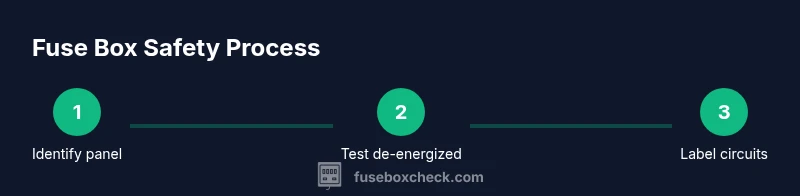
Locate the service panel and read the directory. Use a non-contact tester to confirm no voltage exists near exposed conductors before touching anything. If you’re unsure, pause and consult a professional—safety first.
Tip: Always verify power before touching any conductor; assume it could be live until confirmed. - 2
Prepare your workspace and safety gear
Clear the area, wear insulated gloves and boots, and ensure good lighting. Place tools within reach on a dry, non-conductive surface. Keep children and pets away from the panel during work.
Tip: Work with dry hands and dry footwear; moisture increases shock risk. - 3
Test for voltage and deactivate circuits
Turn off the main breaker if you will access multiple circuits; then re-check with a voltage tester to confirm absolute de-energization. Only work on circuits you intend to inspect; avoid probing other paths.
Tip: Test repeatedly before touching any exposed terminations. - 4
Inspect the panel for signs of damage
Look for scorch marks, melted insulation, buzzing sounds, or a warm panel. If you notice any of these, stop and contact a licensed electrician immediately. Do not attempt repairs beyond basic inspection.
Tip: Document any signs of wear with photos for reference. - 5
Label circuits and document
Assign clear labels to each breaker or fuse and create a circuit map. Use durable labeling and keep a copy near the panel or in a digital folder for easy updates.
Tip: Include a note about high-draw appliances on the map. - 6
What to do after the inspection
Close the panel securely, restore power, and test essential devices to confirm normal operation. Keep the panel accessible and re-check labels after any changes.
Tip: Maintain a simple maintenance log for future reference.
Your Questions Answered
Is it safe to reset a circuit breaker myself?
In many cases, it is safe to reset a tripped breaker after confirming the cause (such as an overloaded circuit). If the breaker trips repeatedly, or you smell burning, stop and seek professional advice. Always ensure you know which circuit you’re resetting.
You can reset a trip if the panel seems safe and you’ve identified a non-hazard cause. If it repeats or you sense heat or burning, contact a professional.
What is the difference between a fuse box and a breaker panel?
A fuse box uses replaceable fuses that blow when overloaded, while a breaker panel uses switches that trip to interrupt power. Breakers are reusable; fuses must be replaced. Understanding this helps you plan maintenance and upgrades.
Fuses blow and need replacement; breakers trip and can be reset. Breakers are reusable, which often makes maintenance easier.
When should I call an electrician instead of trying to fix it myself?
Call an electrician for signs of damage, persistent trips, burning smells, melted insulation, or work beyond labeling and safe inspection. Electrical work can be hazardous, and code-compliant upgrades require a licensed professional.
Call a pro if you smell burning, see damage, or have repeated trips. For safety, rely on licensed electricians for upgrades.
How do I locate the main service disconnect in my home?
The main disconnect is usually at the top of the panel or a separate switch near the meter. It may be in the basement, garage, or outside. Use the main to de-energize all branch circuits when performing major work.
Look for the big switch at the top of the panel or near the meter. It controls power to the whole house.
What should I do if a fuse keeps blowing or a breaker trips frequently?
Frequent trips indicate an overloaded circuit or a potential wiring issue. Unplug devices on that circuit, inspect for overloaded outlets, and schedule a professional inspection if the problem persists. Do not ignore repeated trips.
If trips keep happening, unplug what’s on that circuit and call a pro if it continues.
Are AFCI or GFCI devices required in modern homes?
Code requirements vary by location and circuit purpose. AFCI and GFCI protection is increasingly common to reduce shock and fire risk, especially in living areas, kitchens, and bathrooms. Check local codes and consider upgrading where protection is recommended.
AFCI and GFCI protection is often required in new or renovated homes; verify with local codes.
Watch Video
Highlights
- Verify power before any contact with panels.
- Label circuits to prevent misidentification.
- Differentiate fuses vs breakers and their use cases.
- Document circuit map for safer maintenance.
- Call a pro for major upgrades or persistent issues.