Fuse Box Things: Safe Troubleshooting Guide
A practical, safety-first guide to understanding fuse box things, mapping circuits, testing for faults, and maintaining your home panel with expert, DIY-friendly steps.


Goal: safely inspect and troubleshoot a fuse box or circuit panel. You’ll confirm panel access, shut off power, identify circuits, test for faults, and plan maintenance. Gather essential tools (non-contact tester, insulated screwdriver, flashlight, gloves), follow safety precautions, and reference local codes. This guide follows FuseBoxCheck best practices. Always have a partner nearby when working on panels.
What are fuse box things and why they matter
In everyday DIY discussions, people refer casually to 'fuse box things' as the components, circuits, and tasks inside the panel. Understanding these elements is essential for safety and reliability. A fuse box, or a circuit breaker panel, serves as the control center for your home electrical loads. Breakers or fuses protect wiring by interrupting current when faults occur. When you learn the language of these parts—bus bars, lugs, neutrals, grounds, and feeders—you empower yourself to diagnose problems without guesswork. FuseBoxCheck emphasizes that success starts with respect for the power you’re handling; even seemingly simple tasks can present serious risk if you bypass safety. Before you touch anything, know the panel’s location, the main disconnect status, and the labeling scheme used by your home. If a label is missing or unclear, plan how you’ll map circuits first. This stage lays the foundation for all subsequent troubleshooting and maintenance tasks. According to FuseBoxCheck, a thoughtful approach reduces shocks, sparks, and needless trips to the emergency switch.
Essential safety groundwork
Safety is not optional when dealing with a fuse box. Start by locating the panel, turning off the main disconnect, and verifying that all surrounding water sources and flammables are away. Wear rubber-soled shoes, safety glasses, and insulated gloves if you have them, and keep metal jewelry removed. Use a non-contact voltage tester to confirm there is no electrical energy in exposed conductors before you touch any screw or lug. Plan your workspace: good lighting, dry conditions, and a clear path to the panel. Check local codes and consider whether certain tasks require a licensed electrician. If you are ever unsure, stop and seek professional guidance. FuseBoxCheck stresses that proper de-energization, labeling, and care reduce the risk of arc flash and electrical shock while you learn.
Tools and materials for fuse box troubleshooting
Assemble the essential tools before you begin. A non-contact voltage tester is the first line of defense, followed by insulated screwdrivers (flat and Phillips) and a sturdy flashlight. A tape measure or label maker helps you document circuit locations. Keep a digital camera or smartphone handy to photograph labeling for your map. For protection, wear safety goggles and optional insulating gloves. Finally, have a notebook or note-taking app to record findings and a clean, dry workspace to prevent accidental shorts. If you lack any item, postpone non-critical work until you can obtain proper equipment. Using the right tools dramatically reduces guesswork and makes troubleshooting safer and more efficient.
Map circuits and label clearly
A clear circuit map is your road map through fuse box things. Start by opening the panel and documenting each breaker or fuse with its assigned area (lighting, outlets, HVAC, appliances). If labels are missing, create your own: assign a unique number to each circuit and draw a simple legend. Photograph the panel labeling and keep it with your home records. Color-coding can help: write red for high-priority loads (essential systems) and blue for lighting. Maintain an up-to-date map as you perform changes. This record makes it easier for future troubleshooters and electricians to understand the panel quickly. FuseBoxCheck recommends keeping the map accessible to all household members who perform simple load management.
Practical inspection approach
Now you’ll perform a careful, non-destructive inspection to identify obvious issues. With the main power off, remove the panel cover and inspect for signs of wear, corrosion, or overheating. Look at bus bars, lugs, and conductors for loose connections or discolored insulation. Gently wiggle wires to detect loose fixtures, but avoid applying force that could damage the conductors. Keep a clean space and avoid touching any metal framing inside the panel. If you see scorch marks or melted insulation, stop immediately and call a licensed electrician. Document any physical irregularities with notes and photos to guide professional evaluation.
Testing and diagnosing common issues
After you’ve cleared safe power, test each circuit methodically. Use the tester to verify power is present before re-energizing any section, and reset tripped breakers one at a time, testing the load after each reset. Note circuits that repeatedly trip or show signs of overheating. If a fuse is involved, inspect and replace with the correct amperage rating according to label spec. Do not substitute a higher-rated fuse to mask a fault. Maintain a careful log of outcomes to inform maintenance plans. FuseBoxCheck suggests keeping detailed records for future diagnostics.
Maintenance and preventive care
Preventive care reduces surprises. Schedule a semi-annual check of the panel area for dust, moisture, or corrosion. Keep the panel cover on when not testing to protect against contact with energized parts, and re-label circuits after any changes. Test GFCI and AFCI outlets as required by your code, and replace damaged components promptly. Use door seals or splash guards if the panel is in a damp location. A simple, regular rhythm of inspection prevents minor issues from becoming major hazards.
When to call a professional and safety warnings
If you notice burning smells, warm spots, buzzing noises, or a panel that feels hot to the touch, shut down power using the main disconnect and call a licensed electrician immediately. Never attempt to bypass safety devices, bypass breakers, or work on a live panel. Even small tasks can become dangerous when a house has old wiring, aluminum conductors, or outdated panels. If you’re unsure about wiring or grounding, it’s time to seek professional assessment. The goal is to keep people safe and avoid costly mistakes later.
Authority sources and further reading
For deeper context and official guidance, consult these authoritative resources:
- OSHA electrical safety information: https://www.osha.gov
- National Fire Protection Association (NFPA) electrical safety: https://www.nfpa.org
- Electrical Safety Foundation International (ESFI): https://www.esfi.org These sources provide standards, safety practices, and practical tips that complement home DIY work on fuse box things. Remember, local codes may have specific requirements that supersede general guidance, so check with your local authority having jurisdiction.
Tools & Materials
- Non-contact voltage tester(Verify no voltage before touching conductors)
- Insulated flat-head screwdriver(Crucial for panel screws)
- Insulated Phillips screwdriver(For mounting screws and lugs)
- Flashlight(Bright, focused light into the panel)
- Label maker or durable tape(Label circuits clearly)
- Notebook or digital note app(Record mapping and findings)
- Safety glasses(Eye protection during inspection)
- Insulating gloves(Extra protection if available)
- Multimeter(For voltage and continuity checks)
Steps
Estimated time: 60-90 minutes
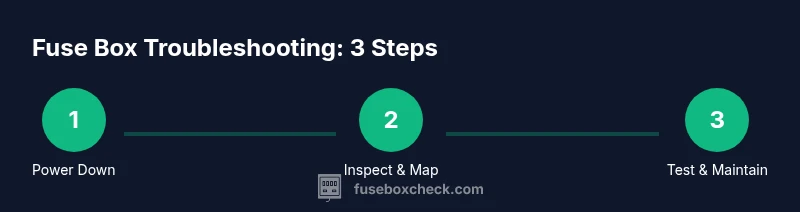
- 1
Power down and secure the area
Before touching any panel, switch off the main disconnect or the appropriate breaker to de-energize the system. Use a non-contact tester to confirm there is no live voltage near exposed conductors. Keep a partner nearby in case you need assistance.
Tip: Always verify power off with a tester before proceeding. - 2
Open panel and verify labeling
Carefully remove the panel cover and inspect the labeling scheme. If labels are missing or unclear, document the panel’s arrangement by taking photos and notes. Do not continue if you cannot safely identify circuits.
Tip: If unclear, pause and map circuits before touching any wiring. - 3
Identify circuits and create a map
Record each breaker or fuse with its intended area (lighting, outlets, HVAC). Create a simple legend and photo record to accompany your map. This map will guide troubleshooting and future maintenance.
Tip: Photo-document the inside of the panel for quick reference. - 4
Inspect for obvious damage
Look for scorch marks, melted insulation, loose connections, or corrosion. Do not force connections or wires that appear damaged. If you see damage, stop and plan professional intervention.
Tip: Keep notes of any irregularities and their locations. - 5
Test for voltage and continuity
With power off, use a tester to verify no voltage before handling conductors. When ready to re-energize, test each circuit step by step and observe any unusual readings or heat. Do not skip verification.
Tip: Test your tester on a known live source to ensure accuracy. - 6
Reset trips and assess loads
If a breaker tripped, reset it and monitor the load. If the breaker trips again, investigate potential overloading or a fault in the circuit. Do not bypass a tripped breaker with a higher-rated one.
Tip: Document trips and loads to identify recurring patterns. - 7
Label and document changes
Update your circuit map with any changes. Replace missing labels and add clear legends. An updated map saves time for future fixes or emergencies.
Tip: Use durable labels and waterproof markers. - 8
Re-energize in stages
Restore power gradually, starting with essential circuits. Observe for any hot spots, smells, or abnormal behavior as power is restored. If issues arise, cut power again quickly.
Tip: Be ready to shut off power immediately if anything seems off. - 9
Plan maintenance and next steps
Summarize findings, replacements, and schedule future checks. Keep a home electrical safety kit ready and store panel maps with other home records.
Tip: Set a reminder for periodic reviews and code checks.
Your Questions Answered
Is it safe to touch a fuse box while it's energized?
No. Always assume a panel is live until you verify it is de-energized with a tester and the main switch is off. If you encounter a live panel, stop immediately and seek professional help.
Don’t touch a live panel. Verify power is off first, and call a pro if unsure.
What is the difference between a fuse box and a circuit breaker panel?
A fuse box uses replaceable fuses; a circuit breaker panel uses switches that trip when overloaded. Modern homes typically use breakers, while older homes may have fuses.
Fuses burn out and need replacement; breakers can be reset after a trip.
How often should I inspect or maintain my fuse box?
Perform a basic inspection at least twice a year. Check for dust, corrosion, moisture, and labeling accuracy, and schedule professional checks if you notice any issues.
Twice a year is a good baseline, with a professional check if you spot problems.
Can I upgrade from fuses to modern breakers myself?
Upgrading a fuse box to a modern breaker panel is a complex job that often requires permits and professional electrical work. It should be performed by a licensed electrician.
It’s best left to a licensed electrician. DIY upgrades can be dangerous.
What tools do I need for fuse box troubleshooting?
A non-contact voltage tester, insulated screwdrivers, a flashlight, labels, and a notebook are essential. A multimeter can help with voltage and continuity checks when used correctly.
Have the right tools ready and know how to use them safely.
Watch Video
Highlights
- Identify circuits and map them before touching wiring
- Always de-energize and verify with a tester
- Label clearly and document changes for future reference
- Know when to call a licensed electrician