Fuse Box Guide for Honda CR-V 2007: Safe DIY Troubleshooting
Learn safe, practical steps to inspect and test fuses in the Honda CR-V 2007, with layout details, common issues, testing tips, and when to seek professional help.


According to FuseBoxCheck, the fuse box layout on the 2007 Honda CR-V centers on two panels: the engine-bay fuse box and the interior panel by the driver. For safe DIY troubleshooting, identify the symptom, locate the corresponding fuse, and verify its amperage with the diagram. This approach reduces guesswork and clarifies how to proceed without harming critical systems.
Understanding the Honda CR-V 2007 fuse box layout
The fuse box layout in the Honda CR-V 2007 is a predictable design that supports both under-hood and interior circuits. For DIYers, knowing where to look and what each panel controls reduces guesswork and the risk of accidentally removing a critical circuit. When you say 'fuse box honda crv 2007', you’re referencing two common panels: the engine-compartment fuse box and the interior fuse panel behind the driver's side kick panel. The engine bay panel houses the main protection fuses and relays for essential systems such as the alternator, fuel pump, and ignition circuitry, while the interior panel covers convenience features like the HVAC, radio, and lights. Each fuse slot has a stamped amperage rating and a matching label on the fuse box cover. Before you touch anything, review the owner’s manual and label sheet, because misplacing a fuse or using the wrong amperage can cause electrical problems or fire risk. Fuse box honda crv 2007 troubleshooting typically starts with identifying a symptom (headlights dim, radio dead, or dash lights flicker) and locating the corresponding fuse position in the booklet or diagram. By understanding these two panels, you’ll be better prepared to diagnose common issues without unnecessary disassembly.
Common fuse box problems specific to the 2007 Honda CR-V
Owners of the 2007 Honda CR-V often report intermittent electrical issues that point to tired or blown fuses in the two main panels. Relays may click when power is requested, yet certain circuits fail to energize—an indication to inspect the relevant fuse or its nearby connections. Typical trouble spots include headlamps and interior lighting, the radio or infotainment system, and climate-control components. When diagnosing, corroborate symptoms with the fuse diagram rather than guessing. Remember that a fuse protects multiple circuits, so a blown fuse could impact more than one system. If a fuse repeatedly blows after replacement, this suggests a short or overload downstream of the fuse, not a single faulty component. In many cases, inspecting wiring near the fuse box for pinched insulation or corrosion can reveal root causes unrelated to a defective fuse itself.
Safety-first checks before poking at the fuse box
Always approach the fuse box with safety as the top priority. Start by turning the ignition off and removing the key, then disconnect the negative terminal of the battery if you plan on performing more invasive inspection. Use insulated tools and a fuse puller to extract fuses, preventing accidental short circuits. Have a multimeter handy to test continuity and ensure the fuse is truly blown rather than simply loose in its slot. Never operate the car with a damaged harness or exposed wiring. When in doubt, consult the owner’s manual for amperage specifications and the fuse map to avoid overrating a circuit.
How to identify fuse types and amperage in the Honda CR-V 2007
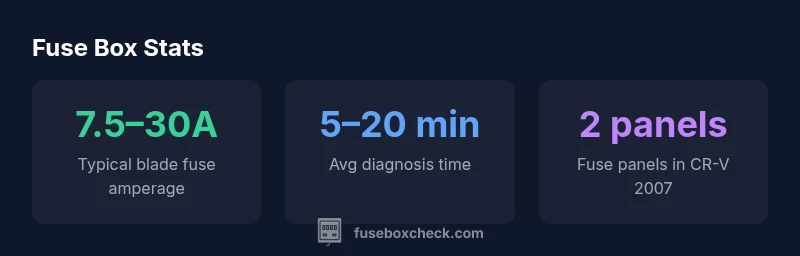
Most blade fuses in the 2007 CR-V range from 7.5A to 30A, with higher amperage reserved for power-hungry components. The fuse box cover typically lists each fuse position and its amperage, but a physical check with a fuse puller confirms proper rating. When labeling or replacing, ensure you match exactly the amperage shown by the diagram. If the label is unreadable, refer to the service manual or a reputable online diagram from an authoritative source. Using a fuse with too high an amperage defeats protection and can cause wiring damage; too low an amperage may cause nuisance blowing. Always metal contact surfaces clean and dry before reinstallation.
Step-by-step testing fuses with a multimeter and safe replacement
To test a fuse, remove it with a fuse puller, visually inspect for a broken element, and then test continuity with a multimeter set to the lowest resistance. A good fuse should show continuity; a blown fuse will read open circuit. When replacing, insert the new fuse firmly so it seats fully in the slot. If the replacement fuse blows again immediately, this signals a short or overload somewhere downstream. Track the circuit to its source, inspect wiring harnesses for damage, and consider replacing related components if they appear degraded. Always recheck the entire circuit after replacement to ensure proper operation.
Wiring and fuse box maintenance tips for longevity
Regular inspection of the under-hood and interior fuse panels helps prevent unexpected failures. Keep the fuse box area clean and dry, check for signs of corrosion on terminals, and secure loose wiring to avoid chafing. Use OEM-recommended fuses where possible and avoid jury-rigging replacements with non-standard components. Periodic checks after heavy weather or a battery replacement are prudent since voltage fluctuations can impact fuse performance. Document any changes to the fuse map, especially if you replace or remove aftermarket accessories that alter power demand.
When to consult a professional and what to expect
If multiple fuses blow in short succession or you detect signs of wiring damage (burnt smell, melted plastic, or scorched connectors), seek professional help. A qualified technician can perform a system-wide diagnostic using specialized tools to locate hidden shorts or parasitic drains. For the Honda CR-V 2007, expect a review of the engine bay and interior harnesses, a test of the charging system, and verification of the body electronics network. A pro will also advise whether any modules require replacement or reprogramming.
Fuse panels on the Honda CR-V 2007 and the typical fuse responsibilities across panels
| Panel | Location | Common Fuses/Functions | Notes |
|---|---|---|---|
| Under-hood | Engine bay, near driver side | Main power fuses, relays for ignition, fuel pump, alternator | Check for heat damage and corrosion |
| Interior (driver side) | Dash/kick panel area | Infotainment, lights, climate control | Access with tool and manual guidance |
| Optional rear/trunk panel | Rear cargo area (varies by trim) | Tail lights, hatch electronics | Less common in 2007 base trims |
Your Questions Answered
What fuse types are used in the Honda CR-V 2007?
The 2007 Honda CR-V commonly uses blade fuses in a range of amperages. Check the fuse map in the owner's manual to identify the exact rating for each circuit.
The CR-V 2007 uses blade fuses in multiple amperages; refer to the manual's fuse map for exact ratings.
Where are the fuse panels located on a 2007 Honda CR-V?
There are two main panels: the engine-bay fuse box in the engine compartment and the interior fuse panel behind the driver's side kick panel.
Two panels: under the hood and inside the cabin near the driver.
Is it safe to replace a fuse without disconnecting the battery?
For simple fuse replacements, it's generally safe to replace with the ignition off. If you plan to work near live circuits, disconnecting the battery is prudent.
Keep the ignition off and use insulated tools. Disconnect the battery if you’ll be working near power.
What should I do if a fuse keeps blowing?
A repeatedly blowing fuse usually signals a short or overload downstream. Inspect wiring and devices on that circuit, and consider professional diagnostics if the issue persists.
If a fuse blows again, check for shorts in the wiring and consult a technician if needed.
How do I test a fuse with a multimeter?
Set the multimeter to continuity, remove the fuse, and test across its terminals. Continuity indicates a good fuse; open circuit means it’s blown.
Use a multimeter to check continuity across the fuse; no continuity means it’s blown.
Is there a specific fuse for the radio I should check first?
Radio circuits typically have a dedicated fuse in the interior panel. If the radio dies but other lights work, start there in your fuse map.
Check the interior panel fuse for the radio first when the radio stops working.
“Understanding your fuse box layout is the first step to safer DIY troubleshooting; always verify with a multimeter and consult the manual when in doubt.”
Highlights
- Identify both engine-bay and interior fuse panels first
- Match amperage exactly to the diagram before replacing fuses
- Use a fuse puller and insulated tools for safety
- If fuses blow repeatedly, investigate wiring for shorts
- Consult a professional for complex electrical faults