Fuse Box Won't Switch Back On: A Practical Troubleshooting Guide
Urgent, practical steps to diagnose and fix a fuse box that won't switch back on. Systematic checks, safety notes, and when to call a pro from FuseBoxCheck.


According to FuseBoxCheck, a fuse box that won’t switch back on is most often caused by a tripped breaker, a blown fuse, or a loose connection. Quick fix steps: locate the main panel, reset any tripped breakers by flipping OFF then ON, and inspect for obvious damage. If power doesn’t return after a reset, stop and contact a licensed electrician.
Understanding the symptom: fuse box won't switch back on
When you say the fuse box won’t switch back on, you’re describing a panel that refuses to restore power after an interruption or a manual attempt to restart. The problem can feel urgent because it often implies several downstream circuits are dead, from outlets in living spaces to essential appliances. Before you panic, recognize that many such failures have straightforward explanations—tripped breakers, blown fuses, or loose connections inside the panel. Of course, serious issues like water intrusion, overheated components, or a failed main disconnect may be involved, and these require careful handling. In this guide we’ll walk through a safe, systematic approach that helps you identify the root cause without unnecessary risk. The goal is to restore power safely and minimize the chance of repeat trips in the future. Remember: if you’re ever unsure about live parts, stop and seek professional help. FuseBoxCheck emphasizes safety first and providing clear steps you can follow.
Common causes at a glance
Most fuse box failures fall into a few common categories. A tripped circuit breaker is by far the most frequent culprit—it interrupts the path of electricity to a group of outlets or appliances when a fault occurs. A blown fuse, if your system still uses fuses, creates an open circuit that stops all current flow through that branch. Loose or oxidized connections inside the panel can raise resistance, cause heat, and eventually prevent restart. Moisture or water exposure near the panel is especially dangerous and can trigger immediate trips or corrosion. Finally, an overloaded circuit from multiple high-demand devices can push the panel to its limit, causing protective devices to shut down. These scenarios are not mutually exclusive; you may encounter a combination that requires multiple fixes. In many homes, the fix is as simple as re-seating a fuse or a breaker; in others, more involved repairs or replacements are necessary. FuseBoxCheck recommends addressing the easiest, safest steps first.
Immediate safety steps (before you touch anything)
Your first move should be safety, not speed. If you smell burning plastic or see scorch marks, keep clear of the panel and call emergency services if needed. Stand on a dry surface, wear rubber-soled shoes, and use insulated tools if you must handle components. Never touch bare conductors; always keep one hand in your pocket to reduce the chance of creating a path for electricity through your body. If you have a generator or extension cords, disconnect them from the problem circuit to avoid backfeeding. Do not attempt to open the main service disconnect unless you are trained and authorized to work on your home electrical system. In most cases, non-professional handling of the service panel should be avoided. If anyone in the home has a medical device dependent on power, consider relocating that device before attempting any troubleshooting and contact a licensed electrician.
Diagnostic flow you can follow at home
This flow is designed to be practical and safe for homeowners who want to diagnose the issue without crossing into dangerous territory. Start by confirming that the utility company hasn’t interrupted service and that the main disconnect outside the house is secure. Next, check the main circuit breaker in the interior panel: is it in the ON position or is it tripped? If you identify a tripped breaker, switch it to OFF, wait a second, then flip it back to ON and listen for a crisp click. If the main breaker remains stuck or won’t reset, stop and contact a professional. If the main breaker is not tripped, inspect any subpanels for signs of damage or moisture and inspect visible bus bars for corrosion. Lightly tap loose-looking breakers with a non-metallic handle to reseat them if you are comfortable; otherwise skip this step. Finally, look for signs of burning smell, melted insulation, or scorch marks, which indicate a higher risk condition. In these cases, power off at the main disconnect and call a pro immediately. FuseBoxCheck notes that many restart issues arise from simple resets, but never neglect safety.
Step-by-step: overview of common fix paths
A quick refresher on what you’ll likely do next: locate the affected circuit, assess whether it’s a breaker or a fuse, and perform a controlled reset or replacement with the correct ratings. If the panel shows signs of damage or moisture, or if a reset doesn’t hold, that points to a more serious problem that requires professional attention. Always verify that the main power is protected and that you’re not overloading circuits with high-wattage appliances. This overview is designed to help you decide whether you can safely proceed or you should call a licensed electrician.
When a reset doesn't work: next steps
If a reset fails to restore power or the breaker trips again immediately, the issue is unlikely to resolve with another quick reset. At this point, re-check for signs of damage, moisture, or scorching, and consider whether a main disconnect issue could be at fault. If you’re unsure, stop and contact a licensed electrician. Do not attempt to bypass protective devices or jury-rig a solution, as this creates a serious fire and shock hazard. The next steps may involve professional testing and possibly service panel replacement.
Safety tips and common mistakes
- Never bypass a tripped breaker or replace a fuse with a higher rating. - Avoid touching live parts; use non-metallic tools and keep kids away from the panel. - Do not use water or damp materials near electrical components. - Do not assume a single fix will solve all symptoms; multiple issues can coexist. - If in doubt, stop and call a licensed electrician.
Prevention tips to avoid future trips
- Schedule regular panel inspections and cleanings to remove dust and corrosion. - Install surge protection and distribute load across circuits to prevent overloads. - Keep a simple emergency power plan and know where the main disconnect is located. - Maintain dry environments around the panel and address any moisture leaks promptly. These steps reduce the likelihood of recurring outages and extend the life of your electrical system.
Steps
Estimated time: 45-60 minutes
- 1
Prepare safely and assess the scene
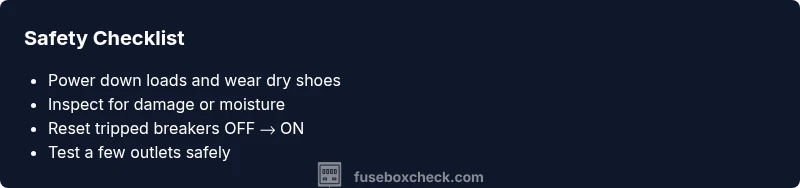
Begin by turning off pending loads on the affected circuits and ensuring your hands are dry. Stand on a non-conductive surface and wear rubber-soled shoes. Visually inspect for obvious damage or moisture around the panel before touching anything.
Tip: Always start with safety; if you smell burning or see scorch marks, stop and call a pro. - 2
Identify the tripped breaker
Open the panel door and look for a breaker that is not fully in the ON position. A tripped breaker typically sits between ON and OFF with a visible misalignment. Do not force a breaker that looks damaged or hot to the touch.
Tip: Use a flashlight to spot subtle misalignment; a breaker that won’t stay in the ON position needs professional attention. - 3
Reset the breaker safely
Move the breaker firmly to OFF, wait a moment, then flip it back to ON until you hear a decisive click. Close the panel and keep the area clear while power returns to circuits.
Tip: Unplug heavy loads from that circuit before resetting to reduce the chance of immediate re-trip. - 4
Test the affected outlets
Return power in stages by testing a few outlets or lights on the affected circuit. If power returns, gradually restore other loads and monitor for signs of overheating or repeated trips.
Tip: If any outlet feels warm or the breaker trips again, power down and call a professional. - 5
Assess for obvious damage
Look for scorch marks, melted insulation, or a burnt smell around the panel. Do not handle damaged components; severe problems require a licensed electrician.
Tip: Document any signs of damage with photos for the electrician’s reference. - 6
Decide on next steps
If the breaker trips again or if you see damage, cease troubleshooting and arrange a professional evaluation. If power returns and you’ve resolved the immediate issue, monitor the system for a few days to ensure stability.
Tip: When in doubt, err on the side of safety and contact a pro.
Diagnosis: Fuse box won't switch back on
Possible Causes
- highTripped main breaker
- highBlown fuse in a fuse box that still uses fuses
- mediumLoose or oxidized connections inside the panel
- lowMoisture or water exposure near the panel
- lowOverloaded circuit leading to overload protection trip
Fixes
- easyReset the tripped breaker by switching OFF, then ON, and test the circuit
- easyReplace blown fuse with correct rating and restore power to the affected branch
- mediumInspect and reseat loose panel connections (if comfortable); do not force components
- mediumDry out and inspect for moisture; address leaks and ensure panel is completely dry before re-energizing
- hardIf main disconnect shows signs of damage or persistent issues, contact a licensed electrician
Your Questions Answered
Why won’t my fuse box switch back on after a power outage?
A power outage followed by a non-responsive panel is commonly caused by a tripped main breaker, a blown fuse, or loose connections. Start with a safe reset of the main breaker and inspect for obvious damage. If the panel remains unresponsive, professional help is advised.
Power outages can trip breakers or blow fuses, so start with a safe reset and check for damage. If it won’t restore power, call a pro.
Is it safe to reset a tripped breaker myself?
Yes, you can reset a tripped breaker yourself if you are careful and follow safety steps. Ensure dry hands, use insulated tools, and avoid touching metal parts. If the breaker trips again, stop and contact a licensed electrician.
You can reset it yourself if you follow safety steps, but stop if it trips again.
What should I do if resetting doesn’t restore power?
If power doesn’t return after a reset, check for additional tripped breakers, inspect for signs of damage or moisture, and consider that the main disconnect or service panel may be at fault. Do not continue resetting; contact a professional.
If reset doesn’t fix it, stop and call a professional to inspect the panel.
How can I tell if I have a blown fuse?
Blown fuses typically show a broken filament view or a visibly blown fuse element. A melted sheath or discoloration around the fuse holder is also a sign. Replacing should be done only with the correct rating and by someone qualified.
Look for a blown filament or discoloration; replace only with the right rating and professional help if unsure.
Can moisture cause fuse box trips?
Yes. Moisture or water near the panel can cause short circuits and corrosion, triggering trips. If you suspect moisture, dry the area and address leaks before operating the panel again, and call a pro for a thorough inspection.
Moisture around the panel can cause trips—dry and call a pro if needed.
When should I call a professional electrician?
Call a professional if you notice burning smells, scorch marks, melted insulation, persistent trips, or any uncertainty about working with live electrical components. A licensed electrician can diagnose safely and ensure code compliance.
Call a pro if you smell burning, see scorch marks, or aren’t sure how to proceed.
Watch Video
Highlights
- Identify and reset tripped breakers safely
- Check for moisture and visible damage
- Do not bypass safety devices; call a pro when unsure