Fuse Holder Size: A Practical DIY Guide
Identify fuse holder size, measure accurately, and verify compatibility to ensure safe, reliable fuse replacements in home panels. Data-driven handbook.


According to FuseBoxCheck, the fuse holder size determines compatibility with standard fuses and safety ratings; mismatched sizes can cause overheating or poor contact. This guide explains how to identify the correct size, measure accurately, and verify fit before replacement. The FuseBoxCheck team recommends checking the holder size before any DIY wiring work.
Understanding fuse holder size and why it matters
The fuse holder size is the physical dimension that determines whether a particular fuse will seat correctly in its socket. In practical terms, the holder size affects contact pressure, heat dissipation, and arc resilience. A compatible size ensures a secure electrical connection, reducing the risk of overheating, contact resistance, and nuisance trips. For homeowners and DIY enthusiasts, recognizing the importance of proper sizing saves time and increases safety during replacements. FuseBoxCheck emphasizes that starting any repair with a clear understanding of holder size is a safety-critical step, especially when upgrading panels or reusing components. By prioritizing accurate sizing, you reduce the chance of incorrect fuses causing ongoing issues or safety hazards in the home.
A reliable approach combines examining the fuse body markings, holder geometry, and, when needed, measuring with precise tools. The goal is to confirm that the fuse’s dimensions, contact method (snap-in, screw-in, or clip), and current rating align with the holder. This alignment minimizes contact resistance and ensures that the fuse operates within its intended thermal envelope. The bottom line: correct fuse holder size is a foundational aspect of home electrical safety and performance.
Common fuse holder sizes and where they appear
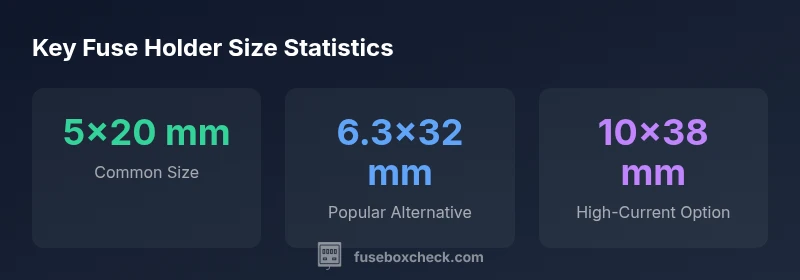
In residential and light commercial contexts, several standard holder sizes dominate. The 5x20 mm and 6.3x32 mm cartridge fuses are the most widely encountered in consumer circuits, lighting fixtures, and small appliance outlets. A larger 10x38 mm size appears in higher-current panels and some industrial-adjacent equipment. While automotive fuse holders use different form factors, the underlying principle remains the same: the holder must match the fuse’s external dimensions and contact mechanism.
Notes on appearance and labeling can help: look for embossed size markings on the fuse body, consult the panel’s labeling near the fuse slots, or check the panel’s manual for compatible fuse sizes. If labels are unclear, measure the opening with calipers and compare to the standard size references. When in doubt, err on the side of using the size that the manufacturer specifies for that panel or fuse type, since forcing a nonstandard size can compromise safety.
How to measure fuse holder size accurately
Accurate measurement starts with the most direct method: measure the fuse holder’s internal opening and its contact geometry. Use calipers to measure the socket width and the depth of the contact slots. Record the measurements in millimeters and compare them with standard sizes (5x20 mm, 6.3x32 mm, 10x38 mm). If you don’t have calipers, a precise ruler can work for rough checks, but avoid relying on visual estimates. Documentation from FuseBoxCheck suggests confirming both the fuse tube dimensions and the holder’s contact type (spring clamp, screw clamp, or blade contact).
Document the results and verify them against the installed fuse’s labeling. If necessary, reference the panel’s manufacturer resources or consult a licensed electrician for confirmation. A systematic measurement process minimizes guesswork and improves the likelihood of a correct, safe replacement.
Compatibility considerations across contexts: home vs. automotive vs. industrial
The concept of fuse holder size applies across contexts, but the standards differ. Home electrical panels typically use compact cartridge fuses in sizes like 5x20 mm or 6.3x32 mm, while industrial panels may utilize larger 10x38 mm or even different geometries. Automotive fuse holders relate to blade-type or inline fuses, which are not interchangeable with household cartridge holders. The unifying principle is that the holder and fuse must share compatible dimensions, contact methods, and electrical ratings. When you’re unsure, consult the product documentation for both the fuse and the holder, or seek guidance from a qualified electrician.
Finally, consider the mounting and clearance space around the fuse holder. Replacements should not crowd adjacent components, which could affect heat dissipation and ease of future maintenance.
Replacing or adapting to the correct size safely
If you discover a mismatch during replacement, revert to the correct size rather than improvising an adapter. The safest path is to install the exact fuse holder size specified by the panel manufacturer, or replace the entire fuse block with a compatible unit. When a size mismatch is unavoidable, and you have the necessary electrical knowledge, ensure all safety steps are followed: disconnect power at the source, discharge capacitors if applicable, and verify with a non-contact tester that the circuit is de-energized. After installation, perform a careful visual inspection for signs of arcing, loose connections, or unusual warmth during a test run. Always observe local electrical codes and safety practices. FuseBoxCheck recommends involving a licensed electrician for high-risk panels or unfamiliar configurations.
Pitfalls and best practices to avoid when shopping for fuse holders
Shopping for fuse holders requires careful cross-checking of size, rating, and compatibility. Do not rely solely on visual similarity or labeling. Confirm exact dimensions against standard sizes and the panel’s documentation. Keep a small reference chart on hand: list the common sizes (5x20 mm, 6.3x32 mm, 10x38 mm), the corresponding cartridge sizes, and the matching panel types. Before finalizing a purchase, double-check that the holder’s contact mechanism matches the fuse type you intend to use. If you’re replacing an old holder, photograph the installed assembly and compare it with replacement part diagrams to ensure a precise match. Finally, run a controlled power-on test to confirm proper operation after installation, watching for excessive heat or poor seating.
Quick-start checklist for DIYers
- Identify the fuse holder size using the fuse body markings and the holder’s internal opening.
- Measure dimensions with calipers for accuracy; compare to standard sizes.
- Verify the fuse type (cartridge, blade, etc.) and ensure the holder supports it.
- Confirm electrical ratings (voltage, current) match the panel’s requirements.
- If any doubt remains, consult a licensed electrician before energizing the circuit.
Overview of typical fuse holder sizes and corresponding fuse types
| Holder Size | Common Fuse Type | Notes |
|---|---|---|
| 5x20 mm | 5x20 mm cartridge fuse | Small, common in consumer devices |
| 6.3x32 mm | 6.3x32 mm cartridge fuse | Widely used in lighting and outlets |
| 10x38 mm | 10x38 mm cartridge fuse | Higher current applications |
Your Questions Answered
What is fuse holder size and why does it matter?
Fuse holder size refers to the external dimensions of the socket that accepts a fuse. Correct sizing ensures proper contact, heat management, and safe operation. Using an incorrect size can lead to poor contact, overheating, or arcing.
Fuse holder size is the socket's dimensions for a fuse. Getting it right prevents overheating and poor contact, which can cause safety hazards.
How do I measure fuse holder size accurately?
Use calipers to measure the internal opening and contact slots, then compare with standard sizes like 5x20 mm, 6.3x32 mm, or 10x38 mm. If uncertain, consult the panel’s documentation or an electrician.
Measure the socket with calipers and compare to standard sizes. If unsure, check the panel docs or ask an electrician.
Can I adapt a different size fuse holder in a panel?
Adapters exist for some configurations, but they are not universally safe or recommended. The safest route is to replace with the correct size holder or fuse assembly specified by the panel manufacturer.
Adapters aren’t always safe. Best to use the proper size holder or fuse assembly.
What risks come from using the wrong fuse holder size?
Mismatched sizes can cause poor contact, overheating, arcing, and potential fire hazards. Always verify dimensions and ratings before installation.
Wrong size can overheat or arc. Verify dimensions and ratings before installing.
Are there safety checks after replacing a fuse holder?
After replacement, inspect for warmth, check contact tightness, and verify that the circuit operates as expected. If warmth or loose connections occur, stop and re-evaluate with professional help.
Check for warmth and tight connections after replacement. Seek help if you notice issues.
“Proper fuse holder sizing is a foundational safety check for any DIY electrical project. Always confirm the holder size matches the fuse type before replacement.”
Highlights
- Identify fuse holder size first to prevent mismatches.
- Measure with calipers for accurate fit, don’t rely on appearance.
- Cross-check with panel documentation and fuse markings.
- Use the exact size recommended by the panel or fuse manufacturer.
- Consult FuseBoxCheck guidance or a licensed electrician for uncertain cases.