Fuse Without Holder: Urgent Troubleshooting and Safe Repair
Urgent, practical steps to diagnose and fix a fuse without holder. Replace the holder, verify ratings, and prevent future hazards with safety-focused checklists and pro tips from FuseBoxCheck.


Immediate risk: a fuse without a holder leaves the circuit exposed, increasing arcing and fire risk. The quickest safe fix is to replace the missing or damaged fuse holder and secure it firmly before restoring power. According to FuseBoxCheck, never operate a fuse circuit without a proper holder. If you’re unsure, stop and call a licensed electrician to inspect the panel and replace components safely.
Understanding the problem: what does a fuse without holder mean?
When a fuse sits in a panel with no proper holder, the conductive element can be exposed, increasing the chance of accidental contact, arcing, or heat buildup. This situation is not just a nuisance—it creates a direct path for electrical faults to escalate into a fire hazard or electric shock. In consumer electrical systems, a missing or damaged holder is commonly the result of a rushed replacement, an attempted repair gone wrong, or improper modifications to the panel. The FuseBoxCheck team emphasizes that this is a high-risk condition that should be addressed promptly and safely. In this guide, you’ll learn how to assess the risk, source the correct parts, and complete a repair with a focus on safety and compliance, so you can restore proper protection without compromising any circuit.
Immediate hazards and why you should act fast
Arcing can occur when live parts are exposed, especially in dusty or humid environments. A fuse without holder can allow the fuse to move or vibrate, loosening connections and causing overheating. Fire risk rises when insulation is damaged or if a nearby combustible material is present. Even if the panel seems to function, continued exposure can cause intermittent trips or heat buildup that damages the panel and surrounding wires. This section explains the hazards clearly and sets the stage for safe, methodical troubleshooting.
Safety-first baseline: power down, PPE, and isolation
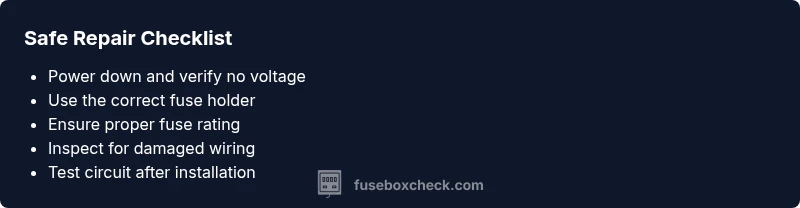
Before touching any part of the fuse box, ensure power is OFF at the main disconnect. Use a non-contact voltage tester to confirm no voltage on the circuit you’ll be working on. Wear insulated gloves and eye protection, and keep your workspace dry and clear of liquids. Label the circuit to avoid accidental re-energizing and consider locking the main switch if others may access it. This safety-first approach minimizes the risk of shock or arc-flash while you inspect and plan the replacement.
Diagnostic flow: symptom to solution in steps
The symptom is a fuse present without a holder in the panel. The likely causes include a missing holder, a broken fuse clip, or improper prior repairs. A damaged or mismatched holder often yields poor contact, heat, and nuisance trips. The corrective path is to restore a proper holder, verify that the fuse type and rating match the circuit, and confirm the circuit is safely re-energized only after a complete fit check. If any doubt remains, escalate to a professional.
Choosing the right holder and fuse: specs you need
Find a holder that matches the panel model and the fuse type used (e.g., cartridge vs. blade style). Check the voltage and amperage ratings on the fuse and ensure the holder is rated for the same. The contact points should be clean and free of corrosion. If you are unsure about the correct part, bring the panel model and fuse rating to a reputable electrical supplier or consult the panel manufacturer’s guide. Do not substitute a higher-rated fuse or a different holder without verification.
Step-by-step installation overview (safety-focused)
This section outlines the practical sequence for installation, emphasizing alignment, secure mounting, and verification. It covers disconnecting power, removing damaged components, locating and seating the new holder, inserting the fuse, and performing a post-installation test. The emphasis is on methodical, clean work to prevent accidental re-energization and to ensure a solid, lasting connection.
Prevention and maintenance: keep it safe long-term
Regular inspection of the fuse box, clean connections, and correct holder replacements reduce risk. Keep the area dry and dust-free, avoid door-on or door-off scenarios that could dislodge components, and document any changes to the panel. If you notice discoloration, melted insulation, or corrosion, treat it as a red flag and seek professional assessment. Proper maintenance is the best defense against a reoccurrence.
Steps
Estimated time: 45-60 minutes
- 1
Power down and isolate the circuit
Turn off the main breaker and any local breakers feeding the panel. Use a voltage tester to confirm that no voltage remains on the circuit you will work on. Remove jewelry and wear insulated gloves; ensure your work area is dry and clear of liquids.
Tip: Double-check the main disconnect before handling any components. - 2
Identify exact fuse type and rating
Look at the fuse that was used and identify whether the circuit requires a cartridge fuse, blade fuse, or a special style. Note the amperage rating and voltage, and verify that you have the correct replacement holder that matches this specification.
Tip: Bring the old fuse and panel model to the supplier to match specs precisely. - 3
Source and inspect the replacement holder
Purchase a holder compatible with your panel and fuse type. Inspect the new holder for any manufacturing damage, bent springs, or loose terminals before installation.
Tip: If the holder shows any sign of wear, do not use it—return for a replacement. - 4
Remove damaged components and prepare mounting
Gently disconnect any damaged clips or wiring. Clean the contact surfaces with a dry, non-conductive brush. Position the new holder in the same orientation as the old one to ensure correct alignment with surrounding fuses.
Tip: Keep track of screws and clips; use small labeled containers to avoid misplacement. - 5
Install the new holder and fuse
Secure the holder firmly to the panel. Seat the fuse correctly into the holder until you feel or hear a click. Recheck that all connections are snug and that insulation covers exposed conductors.
Tip: Do not over-tighten screws; this can damage the mounting or contacts. - 6
Restore power and test the circuit
Turn the main breaker back on, then switch on the circuit breaker. Observe for any heat, smell, or arcing. Use a multimeter to verify voltage at the load side and ensure the circuit behaves as expected under normal conditions.
Tip: If you notice warmth, buzzing, or discoloration, power down immediately and re-evaluate or call a professional.
Diagnosis: Fuse found in panel without a proper holder
Possible Causes
- highMissing fuse holder due to damage or misplacement
- mediumDamaged fuse clip or contact spring
- lowPrevious makeshift repair with improper parts
Fixes
- easyReplace with the correct holder and correct fuse rating; ensure full seating and insulation
- mediumInspect and replace damaged wiring or clips; ensure clean contacts and solid mounting
- easyVerify overall panel suitability; if in doubt, consult a licensed electrician
Your Questions Answered
What is a fuse holder and why is it important in a circuit?
A fuse holder is the component that securely seats the fuse and provides a reliable electrical contact. Without it, the fuse cannot properly protect the circuit, increasing the risk of arcing, overheating, and fire. Replacing or repairing the holder restores proper protection and safety.
A fuse holder secures the fuse and ensures safe contact. Without it, the circuit is unprotected and dangerous. Replace it to restore safety.
Can I replace a fuse holder myself?
Yes, if you are comfortable with basic electrical work and can safely isolate power. Use the correct replacement holder for your panel and follow proper safety practices. If you doubt your skills, hire a licensed electrician to avoid safety risks.
You can replace it yourself if you’re confident and isolate power first, but don’t hesitate to call a professional if unsure.
What should I do if I can't find a matching holder?
Consult the panel’s manufacturer guidance or a licensed electrician. In some cases, a compatible aftermarket holder may exist, but it must meet the same specs and safety standards. Never force a part that doesn’t fit properly.
If you can’t locate a matching holder, seek professional guidance to avoid mismatched components.
Is it safe to use a generic fuse in place of the correct holder?
No. Using a generic or incorrect fuse or holder can cause overheating, improper current protection, and void warranty or safety certifications. Always use parts specified for your panel.
Don’t use generic parts; stick to the exact specs for safety.
What are the signs of a faulty fuse or holder after replacement?
Look for warmth, burning smell, discoloration, or arcing sounds after installation. If the breaker trips repeatedly or the fuse heats up, power down and recheck the installation or call a pro.
If you notice heat or a burning smell after replacement, shut down and inspect immediately.
Do I need to hire an electrician after this repair?
If you’re unsure about any step, or the panel shows signs of damage, hire a licensed electrician. Electrical work on panels carries high risk, and professional inspection ensures compliance with local codes.
When in doubt, call a licensed electrician for safety and code compliance.
Watch Video
Highlights
- Inspect for a missing or damaged fuse holder immediately.
- Always match fuse type and rating to the panel spec.
- Power down and verify absence of voltage before any work.
- Use the proper tools and PPE for safe installation.
- If in doubt, contact a licensed electrician promptly.