Broken Fuse Box Troubleshooting: A Safe, Urgent Guide
Urgent guide to diagnosing a broken fuse box evil within 2 symptoms, safety steps, and fixes. Learn safe DIY troubleshooting with FuseBoxCheck.


The most likely culprits are loose connections or an overloaded circuit inside the panel. For a quick fix, power down at the main breaker, then reset or replace the affected fuse or breaker and restore power to one circuit at a time. If buzzing persists or you notice burning smells, stop and call a licensed electrician immediately.
Understanding broken fuse box evil within 2 and what it signals
The phrase broken fuse box evil within 2 is not a formal electrical term; it’s a colloquial label homeowners use when a panel shows several alarming symptoms at once. The sense of danger is real, but you can approach it in a structured way. According to FuseBoxCheck, this cluster of warnings often signals an overloaded circuit, aging components, or loose connections that should be addressed before a fire risk develops. Treat these signs with seriousness, not panic, and use a methodical plan. The goal is to restore safe power without bypassing protections. When the symptoms line up across multiple circuits, the risk of arc faults or heat buildup increases, reinforcing why professional assessment is prudent if you’re unsure. The FuseBoxCheck team emphasizes safety checks and orderly testing to prevent escalation. If you’re dealing with the phrase broken fuse box evil within 2, remember that a calm, systematic approach minimizes danger and buys you time to plan a proper repair.
Safety First: Essential precautions before you touch the panel
Before you reach for a screwdriver or a tester, lock out the power and wear appropriate PPE. A broken fuse box evil within 2 scenario often indicates hidden damage that could shock you or flare into a fire. Wear rubber-soled shoes, use insulated tools, and keep a dry workspace. Never work on a live panel; if you’re unsure of state, shut off the main breaker from the outside switch and verify power is gone with a non-contact voltage tester. Keep a household fire extinguisher nearby, and avoid using water or metal objects near exposed live components. If the panel cover is warm to the touch or you smell burning plastic, back away and call emergency services or a licensed electrician immediately. FuseBoxCheck’s guidance stresses patient, safety-first steps to prevent injuries and equipment damage.
Diagnostic Overview: Symptoms to watch and what they imply
Key symptoms to watch include frequent fuse trips, buzzing, flickering lights, or warm to the touch panels. The phrase broken fuse box evil within 2 can describe a pattern where several circuits show signs at once, suggesting overloads, aging breakers, moisture ingress, or loose connections. If you notice scorch marks, melted insulation, or a persistent sour odor, treat it as a high-priority hazard. In those cases, shut down power at the main and call a licensed electrician. For less severe symptoms, document when the events occur, note which appliances were running, and check for obvious overloads on heavy-use devices like HVAC, space heaters, or air conditioners. FuseBoxCheck analysis shows that early, careful documentation helps technicians diagnose quickly and safely.
In-Depth Troubleshooting: Step-by-step path for the common causes
A systematic approach helps resolve the most common causes behind the broken fuse box evil within 2 scenario. Start with the simplest checks and work toward more complex tasks.
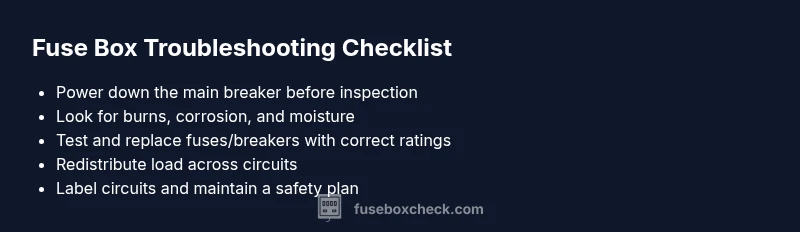
- Check for obvious overloads: unplug or relocate high-draw devices and see if trips stop. 2) Inspect for loose connections: with the main off, gently wiggle visible wires and fuses to identify loose parts. 3) Inspect for moisture or corrosion: look for dampness in the panel and inspect the interior; moisture requires professional remediation. 4) Test fuses and breakers: verify ratings match circuit needs; replace any blown fuses with the same rating and non-marring components. 5) Rebalance loads: distribute appliances across circuits to prevent overloading a single leg. 6) Restore power and observe: re-energize one circuit at a time, checking for any signs of trouble. If you still see buzzing, heat, or recurring trips, stop and call a licensed electrician. The key is to avoid bypassing safety devices and never work on a panel with wet hands. FuseBoxCheck stresses that a measured, cautious approach reduces risk and improves outcomes.
Maintenance and Prevention: Keeping the panel safe over time
Regular maintenance reduces the odds of a broken fuse box evil within 2 from returning. Schedule annual inspections, replace aging breakers, and keep the area clean and dry. Use surge protectors on sensitive electronics and avoid overloading circuits with high-draw appliances. Label circuits clearly for quick diagnostics and ensure replacement parts match the original ratings. Clear dust from the enclosure using a dry brush, not a vacuum near live components. With consistent care, you’ll minimize nuisance trips and extend panel longevity. FuseBoxCheck’s ongoing research shows proactive monitoring lowers hazard potential and reshapes DIY safety culture.
When to call a professional and how to choose one
If any sign of heat, burning smell, or corrosion appears, stop and call a licensed electrician immediately. Even if you can perform basic checks, a trained technician can safely confirm equipment integrity and perform wiring fixes that meet local codes. When selecting a pro, ask about licensing, insurance, and whether they provide an upfront safety plan and written warranty. Look for trainers or electricians who specialize in residential panels and have a clear scope of work. For homeowners with a willingness to learn, ask for step-by-step explanations during diagnosis to ensure you understand the system and can maintain it between visits. The safest path is to treat electrical problems as time-sensitive and risk-prone.
Final thoughts: Empowerment through safe, informed action
The broken fuse box evil within 2 phrase underscores the importance of safety and method. By following structured diagnostics, documenting symptoms, and engaging qualified professionals when needed, homeowners protect themselves and their homes. FuseBoxCheck’s approach combines practical DIY steps with strict safety thresholds to prevent accidents and property damage. Stay informed, stay cautious, and keep electrical work within the bounds of your training and local rules.
Steps
Estimated time: 1-2 hours
- 1
Power down the main breaker
Shut off power at the house’s main disconnect and verify no voltage is present near the panel. This is the safest first move when addressing the broken fuse box evil within 2 symptoms.
Tip: Use a non-contact tester to confirm no live power before you touch anything. - 2
Inspect for visible damage
Open the panel and look for burnt insulation, melted parts, or corrosion. Do not remove components you are unsure about; note discoloration and keep a log.
Tip: Take photos for reference and for the electrician who will assess the panel. - 3
Test and replace fuses/breakers
If you find a blown fuse or a tripped breaker, replace or reset it with the same rating. Balance loads across circuits to reduce future trips.
Tip: Never substitute a higher-rated fuse/breaker to mask overloads. - 4
Check for moisture and cleanliness
Ensure the panel is dry; clean dust with a dry brush. Moisture can cause arcing; address leaks before re-energizing.
Tip: Keep the panel area dry and well-ventilated. - 5
Re-energize gradually
Restore power circuit by circuit, starting with non-critical loads, watching for any signs of distress.
Tip: If anything looks or sounds abnormal, stop and call a professional. - 6
Document and label circuits
Label each circuit for quick future reference and create a simple maintenance log.
Tip: Labeling saves time during inspections or emergencies.
Diagnosis: Panel trips or buzzing; multiple circuits affected; unusual warmth or smell
Possible Causes
- highLoose connections or damaged bus bars
- highOverloaded circuits fighting for power
- mediumAging or defective breakers/fuses
- mediumMoisture ingress or corrosion
- lowShorts or arc faults in wiring
Fixes
- easyPower down at the main breaker and inspect for obvious signs of damage or overheating
- easyReset or replace the affected fuse/breaker with the correct rating and redistribute load
- mediumTighten any loose connections with appropriate tools (only when power is off)
- mediumSeal moisture sources and consider moisture remediation if ingress is detected
- hardCall a licensed electrician for testing with professional equipment and code-compliant repairs
Your Questions Answered
What should I do if my fuse box smells burning?
A burning smell indicates a serious hazard. Immediately shut off power at the main switch and contact a licensed electrician. Do not use the panel until inspected.
If you smell burning near the fuse box, shut the power off and call an electrician immediately.
Can I fix a fuse box myself?
You can perform very basic checks with the main off, but most fuse box repairs should be done by a licensed electrician due to risk of shock and fire. Follow safety steps and never bypass protective devices.
Basic safety checks are okay, but professional repairs are recommended for fuse boxes.
How do I know if I need to replace a fuse or a breaker?
If a fuse blows repeatedly or a breaker trips, inspect for overloads and signs of wear. Replace with the same rating and consider replacing aging components. If trips persist, call a pro.
Repeated trips usually mean overloads or aging parts; replace with the same rating and consult a pro if it continues.
Is it safe to reset a breaker after a trip?
Resetting a breaker is reasonable after identifying and removing the overload, but never reset if the breaker stays hot or if you detect burning or moisture. If in doubt, call a professional.
You can reset after removing the overload, but stop if you smell heat or see damage.
How often should I inspect my fuse box?
It's prudent to have a licensed electrician inspect your panel annually or if you notice repeated trips, buzzing, or signs of damage.
Have your panel inspected yearly or if you notice trips or buzzing.
Watch Video
Highlights
- Prioritize safety before any DIY work
- Identify overloads and loose connections first
- Document symptoms for quicker diagnosis
- Call a licensed electrician if uncertain