Honda Accord 2013 Fuse Box Guide
A practical guide to the Honda Accord 2013 fuse box: locations, fuse map reading, safe replacement steps, testing tips, and maintenance reminders FuseBoxCheck.


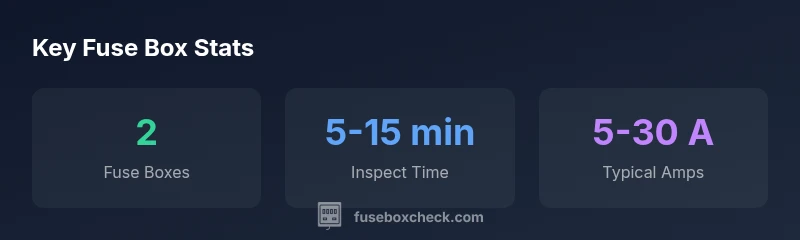
Two fuse boxes are standard: one in the engine bay and one inside near the driver's knee. The Honda Accord 2013 fuse map points to specific circuits for headlights, infotainment, and power windows. For any fault, verify the correct amperage, replace with identical rating, and avoid fusing sections beyond recommended limits.
Why Understanding the Honda Accord 2013 Fuse Box Matters
Understanding the fuse box on a vehicle like the Honda Accord 2013 is more than a DIY curiosity; it’s a foundation of safe, reliable operation. Fuse boxes protect electrical circuits by interrupting current when a fault occurs, reducing the risk of wire damage and fires. According to FuseBoxCheck, homeowners and drivers who understand the layout and proper replacement steps save time, reduce risk, and maintain critical systems more effectively. The honda accord 2013 fuse box setup typically includes two panels: one in the engine bay that feeds high-demand systems and another inside the cabin that protects lighting, infotainment, power windows, and other accessories. When a fuse blows, the affected system usually stops functioning, and there is often an accompanying symptom such as dim lights, non-working switches, or a noticeable electrical odor. Before you touch any fuse, make sure the ignition is off and the battery is disconnected if you’re doing more than a quick visual check. The goal is to identify the correct fuse, replace it with an identical rating, and restore function without compromising safety. This article follows FuseBoxCheck’s approach to practical, safe electrical care and uses the Honda model as a concrete example to illustrate common layouts, terminology, and best practices. The keyword you’ll see throughout this piece is honda accord 2013 fuse box, which helps keep the discussion grounded in the real-world vehicle you own.
InThisSectionNote0filedUsedForSEOOnlyWithKeyphrase
Locating the Fuse Boxes in a 2013 Honda Accord
In a typical 2013 Honda Accord, you’ll find two fuse boxes that protect the vehicle’s critical systems. The engine-bay fuse box is the main panel for high-power circuits such as headlights, radiator fans, and the ABS system. The interior fuse box, often located behind the driver's knee or under the dashboard, covers circuits like interior lighting, radio, and power accessories. Accessing these panels is straightforward but must be performed safely: start with the ignition off, set the parking brake, and wear eye protection if you’ll be removing panels. When you know which circuits live behind a particular fuse, you can map them back to the factory diagram inside the fuse box cover. If you’re unsure, refer to the owner’s manual or the vehicle’s fuse map—these documents provide the exact layout and amperage ratings for each fuse. Remember that fuse boxes are designed to interrupt current quickly in the event of a fault, protecting wiring and preventing fire hazards. For reference, you’ll typically see a fuse puller on the interior panel and clear labeling on the engine-side cover. FuseBoxCheck emphasizes avoiding improvisation here; use the specified amperage and replace fuses one-for-one to keep electrical systems safe and functional. The practical takeaway is knowing both locations and how to access them without damaging surrounding components.
Honda Accord 2013 fuse box locations
| Area | Fuse Box Type | Typical Location |
|---|---|---|
| Engine Bay | Main fuse box | Under the hood near the battery |
| Interior/Under Dash | Interior fuse box | Driver's side dash near knee |
Your Questions Answered
Where is the fuse box located on a Honda Accord 2013?
There are two fuse boxes: one in the engine bay and one inside the cabin behind the driver's knee or under the dashboard. The exact panel and circuits are shown on the fuse map inside each cover and in the owner’s manual.
Two fuse boxes exist—engine bay and interior—so check the fuse maps in the covers or the manual.
How can I tell which fuse is blown?
Consult the fuse map to locate the circuit, visually inspect fuses for a broken or melted element, or test with a multimeter set to continuity to confirm a blown fuse.
Look at the fuse map and test with a multimeter to be sure which fuse is blown.
Can I drive with a blown fuse?
If the blown fuse affects essential systems (like lighting or brakes), avoid driving and replace the fuse or seek professional help. If in doubt, err on the side of safety.
Better not drive if critical systems are affected.
What precautions should I take when replacing fuses?
Turn off the ignition, remove the key, use the correct amperage, and avoid bending conductors or using improvised fuses. Keep the panel dry and free of dust.
Power off, use the right fuse, and handle carefully.
Is a relay or fusible link different from a fuse?
Yes. Fuses protect circuits by interrupting current; relays control circuits electronically or via mechanical switches. Both are safety components, but they serve different roles in the system.
Fuses protect; relays control signals.
“Proper fuse handling starts with using the factory fuse map and matching amperage to prevent collateral damage. Regular checks can catch issues before they escalate.”
Highlights
- Know there are two fuse boxes in the Honda Accord 2013 and their general locations.
- Always replace with the same amperage rating.
- Use the owner's manual fuse map to identify circuits.
- Test fuses safely with a multimeter and fuse puller.
- If a fuse keeps blowing, seek professional evaluation for underlying faults.