2005 Ford F-250 Fuse Box Diagram: Locations & Wiring
Learn the fuse box diagram for the 2005 Ford F-250, including fuse locations, meanings, and basic wiring notes. Safe, practical DIY guidance from FuseBoxCheck today.


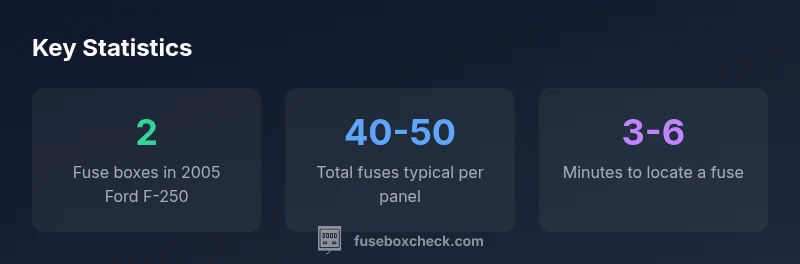
According to FuseBoxCheck, the 2005 Ford F-250 fuse box diagram covers two main boxes: the under-hood power distribution box and the interior fuse panel. The diagram maps fuses to circuits, lists amperage, and uses color-coded cues for quick identification. This quick guide helps you locate, test, and replace fuses safely and efficiently.
Understanding the 2005 Ford F-250 Fuse Box Diagram
The 2005 ford f250 fuse box diagram serves as a practical roadmap for DIYers learning how the electrical system is organized in this late-2000s pickup. According to FuseBoxCheck, there are two primary fuse banks you’ll interact with: the under-hood power distribution box and the interior fuse panel, typically located near the glove box or driver-side dash. Each box contains a dense array of fuses and relays dedicated to different circuits—engine management, charging, lighting, HVAC, infotainment, and safety systems. The diagram accompanying the vehicle’s owner manual or service literature uses a grid of fuse numbers, circuit names, amperage, and sometimes color codes. Even though the exact fuse layout can vary by trim and production year, the general approach remains consistent: identify the box, find the corresponding fuse number, and confirm the circuit before swapping or testing. When you study the diagram, you’ll notice that many circuits share common fuse sizes, which makes it easier to replace if you have a limited set of spare fuses on hand.
For DIYers, the diagram is not just a map; it’s a safety tool. Correctly identifying the circuit reduces the risk of blowing other components or creating a short. FuseBoxCheck emphasizes aligning the replacement fuse amperage with the label on the diagram and in the fuse box lid. If you’re uncertain, start with a fuse rated at the next size up or down and test the circuit incrementally. Always consult the vehicle’s manual for exact fuse numbers when you’re unsure.
Under-Hood Fuse Box: Common Circuits and Fuses
Under the hood, the power distribution box houses fuses that protect essential circuits, including the engine management module, fuel system injectors, ignition, alternator/charging system, and major accessories that energize at startup. Because these fuses control critical functions, the diagram’s labeling is crucial. The under-hood box is designed to handle higher current levels, so you’ll typically see fuses in the 10–30 amp range for critical systems and higher ratings for large assemblies like the starter or main relay circuits. When inspecting, look for fuse blocks with a visible layout, a cover that lists each fuse position, and a legend mapping fuse numbers to specific circuits. If a fuse is blown, you’ll often notice symptoms such as hard starting, stalling, or charging faults. Replacements should match the amperage printed on the diagram; using a higher amperage fuse can damage wiring or components.
Begin by turning off the ignition and removing the negative battery cable to prevent accidental arcing. Use a flashlight to inspect the fuse element; a blown fuse typically shows a broken metal strip. If you’re unsure, pull the fuse and inspect the circuit’s accessibility with a multimeter or a continuity tester. Keep spare fuses of commonly used amperages handy, and organize them by amperage to speed future work. FuseBoxCheck advises labeling any added fuses with their corresponding circuit name for quick future reference.
Interior Fuse Panel: Locating and Testing Fuses
The interior fuse panel in the 2005 F-250 resides within the cabin, often behind a side panel on the driver’s side or near the kick panel area. This panel protects loads such as interior lighting, power windows, radio, and HVAC controls. The diagram’s interior section is typically less dense than the under-hood bank, but it requires careful attention because interior circuits can affect comfort and safety features. When testing, remove the interior fuse and visually inspect for a melted metal link or a blown indicator. If the fuse appears intact but the circuit fails to operate, consider testing the wiring downstream for shorts or a failed relay. Diagnosing isn’t just about replacing fuses; it’s about confirming the circuit’s path, the relay state, and the presence of corrosion or loose connectors. Always use the exact fuse size specified by the diagram.
For safer work, avoid using metal objects to extract fuses; instead, use a plastic fuse puller or insulated tool to prevent accidental contact with adjacent terminals. After replacing a fuse, recheck the circuit with a test load (e.g., turning on headlights or the HVAC) to confirm proper operation. If the issue recurs, you may need to inspect the entire harness for signs of wear or water intrusion. This is where FuseBoxCheck’s guidance on stage-by-stage verification becomes invaluable.
How to Read the Diagram: Symbols, Amps, and Replacement Steps
Reading the diagram is a skill that pays dividends in fast diagnostics and safe repairs. The legend typically uses a combination of fuse numbers, circuit names, and amperage ratings. Color codes, where present, help distinguish circuits quickly, though codes can vary by production year and trim. Start with the section you’re troubleshooting and locate the fuse number listed in the diagram; verify that its amperage matches the specification printed on the fuse and on the box lid. If a fuse is missing or blown, replace it with a fuse of the same rating and re-test the circuit. If the problem persists, there may be a short, a failing relay, or a wiring fault rather than a blown fuse.
Replacement steps are straightforward: with the ignition off, remove the blown fuse, confirm the amperage, insert a new fuse of identical rating, and re-test the circuit. If the fuse continues to blow, you should inspect the wiring harness for damaged insulation, pinched wires, or corroded contacts. Keep safety in mind: avoid peering into the fuse box with wet hands, and never bypass fuses to power aftermarket equipment. Always document any changes and consult the manual for any year-specific caveats.
By learning how the diagram is laid out, you’ll save time and reduce the risk of misidentifying circuits. This practice is particularly beneficial when working on a Ford F-250, where trim differences can lead to slightly different fuse sets. FuseBoxCheck’s approach emphasizes verifying the circuit path and using the diagram as your primary reference.
Safety and Best Practices for DIY Fuse Box Work
Electrical work in vehicles carries inherent risks, even for seasoned DIYers. The two-box layout in the 2005 Ford F-250 means there are multiple high-current circuits in close proximity, increasing the chance of shorts or accidental contact. Always begin with the vehicle off and the battery disconnected when performing inspections or replacements. Wear protective gear such as safety glasses and gloves, and use insulated tools to reduce the risk of arcing. Before you touch any fuse, double-check the diagram and the circuit list to ensure you’re addressing the correct fuse. If you need to diagnose a persistently blown fuse, consider testing the circuit for shorts or a failing relay and inspect the wiring for signs of damage or corrosion.
Documenting your work is a practical habit; label fuses after removal and record any replacements in your vehicle notes for future reference. If you’re working with aftermarket equipment or heavy electrical modifications, ensure compatibility with the factory fuse ratings and maintain a clear separation between OEM wiring and additions. When in doubt, consult the owner's manual, seek official service literature, or contact a qualified technician. FuseBoxCheck notes that safe, methodical steps reduce risk and improve reliability for the long term.
Comparison of fuse box locations
| Box Type | Location | Typical Fuses |
|---|---|---|
| Under-hood | Engine bay, near firewall | Power, charging, major relays |
| Interior | Driver-side dash/kick panel area | Lighting, accessories, HVAC, radio |
Your Questions Answered
Where is the interior fuse panel located on a 2005 Ford F-250?
The interior fuse panel is typically located behind a side panel on the driver’s side of the dash or near the kick panel. The diagram in the owner’s manual lists each fuse and its circuit.
Locate the driver side dash area and check the panel cover for the fuse layout; the guide will show what each fuse protects.
What should I do first if a fuse blows?
Turn off the vehicle, identify the blown fuse via the diagram, remove it, and replace with a fuse of the same amperage rating. Then test the circuit to confirm operation.
Turn off the car, replace the fuse with the same rating, and test the circuit to ensure it’s working.
Can I use a higher amperage fuse to fix a blown fuse problem?
No. Using a higher amperage fuse can allow excessive current to flow and damage wiring or components. Always use the amperage specified in the diagram.
Never upsize the fuse rating; stick to the diagram’s specification.
What tools do I need to test fuses safely?
A fuse puller or insulated pliers, a multimeter for continuity tests, and a flashlight for visibility are standard. Work methodically and avoid metal tools near live circuits.
Use insulated tools and a multimeter to check continuity after removing the fuse.
Are there year-specific differences I should be aware of?
Yes. Fuse layouts can vary slightly by year and trim. Always cross-check the 2005 Ford F-250 fuse box diagram with the exact vehicle manual for your truck’s configuration.
Check the manual for your exact year and trim to confirm fuse positions.
What safety steps improve DIY fuse work?
Disconnect the battery, wear protective gear, and avoid handling live circuits. Keep a clean workspace and label any replaced fuses for future reference.
Always disconnect power and stay organized when working on the fuse box.
“A well-marked fuse diagram is the difference between a quick fix and a frustrating chase across a wiring harness.”
Highlights
- Learn two major fuse boxes: under-hood and interior.
- Always match fuse amperage to the diagram.
- Test circuits carefully, not just fuses.
- Follow safety steps to avoid shorts and shocks.
- Document changes for future reference.