2016 Nissan Versa Fuse Box Diagram: A Practical Guide
Detailed guide to the 2016 Nissan Versa fuse box diagram, including locations, labeling conventions, fuse types, safety tips, and DIY troubleshooting for homeowners and enthusiasts.


The 2016 Nissan Versa fuse box diagram maps the engine bay and interior fuses, consolidating which fuse protects critical systems and how to locate each box. Using the diagram helps ensure you pull the correct fuse and avoid accidental damage when performing DIY electrical work. This overview aligns with FuseBoxCheck guidance on safe, informed maintenance.
Understanding the 2016 nissan versa fuse box diagram
For DIY enthusiasts and homeowners, the phrase 2016 nissan versa fuse box diagram represents more than a schematic—it’s a map of the car’s electrical safety framework. The diagram labels the two major fuse boxes in a Versa: the engine bay fuse box and the interior fuse box located under the driver’s side dash. This layout is common in many Versa generations, but always cross-check the label on the fuse box cover with your owner’s manual. A clear diagram reduces the risk of pulling the wrong fuse, which can interrupt systems such as the fuel pump, ECU, or lighting. FuseBoxCheck emphasizes that a precise diagram helps you plan a safe procedure, especially if you are troubleshooting intermittent electrical faults.
Locating the fuse boxes on a 2016 Versa
The Versa’s fuse layout is designed to be approachable for DIY repairs. The engine bay fuse box sits near the front-left side of the engine compartment, typically behind a plastic cover with a labeled diagram. The interior fuse box is beneath the dash on the driver's side, usually behind a trim panel that can be removed with a small screwdriver. When you start, verify the exact positions in your vehicle’s manual or the underside of each fuse cover—labels are your best guide. If you’re dealing with a specific symptom (e.g., headlights, horn, or radio), locate the relevant fuse group in the diagram, then pull the corresponding fuse with a fuse puller or insulated pliers.
Reading the fuse box diagram: codes, labels, and color conventions
Fuse boxes use alphanumeric codes that map to a legend on the lid or in the owner’s manual. Understanding color conventions helps distinguish quick categories: power fuses (red), signal fuses (yellow), and control fuses (blue/green). The Versa diagram typically lists fuse numbers, amperage, and their function. Cross-check the amperage printed on a blown fuse with the diagram’s rating to prevent under- or over-protection. When replacing fuses, always use the same amperage as shown on the label; using a higher-rated fuse can allow dangerous overloads to bypass the protection the fuse provides. For a 2016 Versa, the fuse map will cover critical circuits such as lighting, climate control, and ignition, and many fuses are in the engine bay block.
Typical fuse roles in the Versa's two fuse boxes
In the engine bay box, you’ll find fuses and relays for major systems: ignition, fuel pump, ABS, and cooling fans. The interior box houses fuses for comfort and convenience features (instrument cluster, radio, power windows) and for safety interlocks (airbags, horn). The diagram attaches a number to each fuse, a color-coded bar that hints at the fuse type, and a brief label stating its function. When troubleshooting, start with the most common culprits for the symptom you see and work your way to less likely suspects. Keeping a small, clear notebook of fuse functions can speed future inspections.
Step-by-step guide to inspecting fuses safely
Before you handle any fuse, turn off the ignition and remove the key. Use a fuse puller or insulated pliers to gently lift the fuse straight up from its slot. Inspect for a broken element or a darkened interior. If you’re unsure, replace only with the same amperage rating and type. After replacing, replace the cover and test the affected system. If a fuse repeatedly blows, the issue may be a short circuit or an accessory that draws more current than intended. In that case, consult the Versa’s service manual or a professional.
Troubleshooting when the diagram seems unclear or mismatched
Mismatch between the diagram and the physical fuse box can happen due to model year differences, trims, or aftermarket changes. In such cases, verify the fuse’s function by tracing wires and correlating with the instrument panel symptoms. If you cannot locate a fuse for a given function, refer to the owner’s manual for the official legend and cross-check the fuse box cover labels. FuseBoxCheck recommends documenting any discrepancy with a photo, date, and VIN for future reference. When in doubt, a professional inspection can prevent accidental replacement of the wrong fuse and potential damage.
Verifying fuses with a multimeter and safe testing practices
A multimeter can help confirm whether a fuse is open (blown) or intact. Set the meter to continuity or resistance mode, and touch the probes to the fuse contacts. If the meter beeps or shows a low resistance value, the fuse is likely good; if it does not beep and shows infinite resistance, the fuse is blown. Always remove the fuse prior to testing and reinsert only after confirming the correct amperage. For testing circuits, you can also measure the voltage across the fuse holder while the system is activated, ensuring you don’t short other components in the process. This practice aligns with FuseBoxCheck’s safety guidelines for home electrical work.
Representative fuse locations and their typical roles in the 2016 Versa
| Fuse Box | Location | Representative Fuses |
|---|---|---|
| Engine bay fuse box | Front-left of engine bay near battery tray | ABS, ignition, fuel pump, main power |
| Under-dash fuse box (driver's side) | Left kick panel under dash behind trim | Interior lights, wipers, EFI, HVAC control |
Your Questions Answered
Where is the fuse box located on a 2016 Nissan Versa?
There are two main fuse boxes: one in the engine bay and another under the driver’s side dash. The engine bay box sits near the front-left corner and is accessed by removing a protective cover; the interior box is behind a trim panel on the left side of the dash. Always confirm with the owner’s manual for your exact trim.
There are two fuse boxes: engine bay and under the driver’s dash. Check the owner's manual for exact locations.
How many fuses are in the Versa’s fuse boxes?
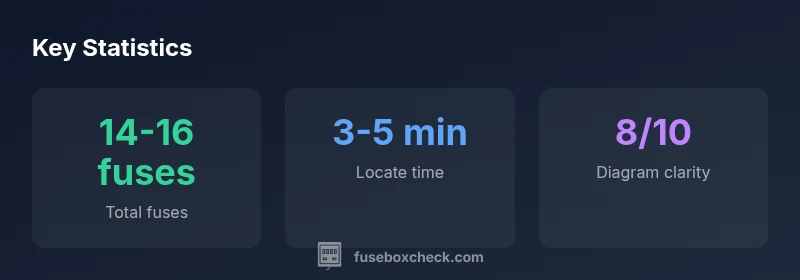
The Versa typically houses a range of fuses across both boxes, commonly totaling around a mid-teens quantity. The exact number can vary by trim level and model year, so refer to the fuse map on the cover for precise counts.
The Versa has multiple fuses across two boxes; check the fuse map on the cover for the exact count.
Can I replace a blown fuse without disconnecting the battery?
Yes, you can replace a blown fuse with the ignition off. If you suspect a short or if a fuse repeatedly blows, disconnecting the battery before further inspection is a prudent safety step and aligns with general electrical safety practices.
Yes, but if a fuse blows repeatedly, disconnect the battery and inspect the circuit first.
What do the fuse numbers and labels mean on the Versa diagram?
Each fuse number corresponds to a function listed on the diagram or the lid label. The amperage rating tells you the safe current limit. Matching both the function and rating is essential for proper protection and system reliability.
Fuse numbers map to functions; amperage shows safe current. Match both for correct protection.
Is the diagram the same for all Versa trims in 2016?
There can be minor variations by trim and production year. Always verify against the specific VIN and the lid legend. If in doubt, consult the owner’s manual for your exact configuration.
Variations exist; verify with your VIN and manual for your trim.
Do I need a professional to read fuse box diagrams?
For basic fuse checks and replacements, a careful DIY approach is feasible. Complex symptoms, persistent electrical faults, or repeated blown fuses merit professional assessment to prevent damage and ensure safety.
Basic fuse checks can be DIY, but complex faults should be professionally inspected.
What safety steps should I follow when working with the Versa fuse box?
Always turn off the ignition, remove the key, and avoid touching metal parts. Use insulated tools, wear eye protection if needed, and never replace fuses with a higher rating. After any work, recheck connections and carefully reseal the fuse box cover.
Turn off power, use insulated tools, and recheck all connections after work.
“"Clear fuse box diagrams reduce DIY risk by helping you identify the correct fuse quickly and safely."”
Highlights
- Know both fuse box locations before starting work
- Always replace fuses with the same amperage rating
- Use the diagram as your map to prevent misidentification
- Test fuses safely with the engine off and proper tools
- Document discrepancies between labels and the actual box