ezgo golf cart fuse box diagram: A practical DIY guide
Master the ezgo golf cart fuse box diagram: locate fuses, test circuits with a multimeter, and safely replace components on EZGO models with this practical DIY guide today.


Ezgo golf cart fuse box diagram is a practical map of fuses and circuits for EZGO models, showing locations, ratings, and connections to key systems. It helps DIYers identify the correct fuse, understand the impact of a blown fuse, and guide safe testing and replacement. Following the diagram reduces guesswork and speeds troubleshooting for under-seat fuse boxes.
ezgo golf cart fuse box diagram
The ezgo golf cart fuse box diagram is not just a static image; it is a map of how power flows from the battery to critical systems such as the motor, lights, controllers, and accessories. A clear diagram helps you quickly identify which fuse protects which circuit, estimate the impact of a blown fuse, and avoid charging through wrong paths. For DIY enthusiasts, understanding this diagram reduces guesswork and speeds basic troubleshooting. The FuseBoxCheck team emphasizes reading the diagram in conjunction with your cart's owner manual because model variations exist across EZGO lines, including TXT, RXV, and Freedom series. In practice, the diagram typically lists fuse numbers, amp ratings, and corresponding circuits, often color-coded for quick recognition. When you start, locate the fuse box location first, then compare the actual box to the diagram. If yours lacks a visible diagram, you should seek the closest model diagram from EZGO's official resources or use a model-specific service manual. Always approach the fuse box with safety in mind, especially around the battery pack.
EZGO fuse box locations: where to look
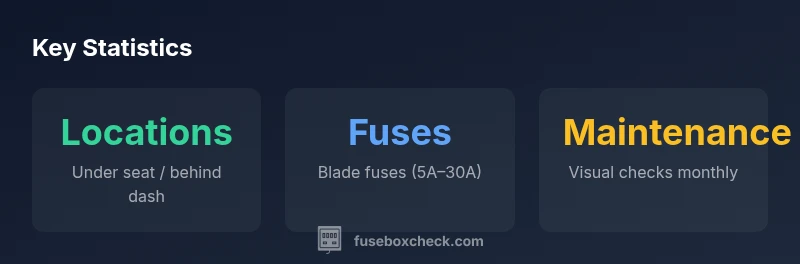
Most EZGO models place the fuse box under the seat or behind the dash near the steering column. Access may require removing a trim panel or seat latch. The exact placement differs by model year and configuration (gas vs. electric, with or without lights). For example, TXT models often tuck the box near the battery tray, while RXV units may route the box behind the console. Before you open any cover, disconnect the main battery ground to minimize the risk of short circuits. When you locate the box, check for a label or engraved diagram on the lid; many boxes have a small folder or card stored inside that contains model-specific fuse assignments. If you cannot find a diagram, consult EZGO's customer resources or a shop manual. Remember that environmental factors like heat and moisture can degrade connections, so inspect the fuse holder and adjacent wiring as part of your location check.
Reading the diagram: symbols, colors, and fuse ratings
Diagrams use standardized symbols for fuses, relays, and power feeds. A fuse icon typically represents a blade fuse, with a line showing the circuit path. Color coding often matches the wire insulation or fuse color. Amp ratings (like 5A or 15A) tell you the maximum current the fuse will allow before it opens. If the diagram lists circuit names (lights, horn, motor, controller), you can trace which fuse connects to each function. Note that EZGO diagrams vary by model; some diagrams list only reference numbers, not circuit names. In that case, cross-check the numbers with the model manual or EZGO's online diagram library. As you study, annotate the diagram with your own notes or sticky labels on the fuse box to improve future readability.
Step-by-step testing with a multimeter
To verify a fuse or a circuit, a basic digital multimeter is enough for most DIY checks. Begin by removing the fuse and inspecting the metal element for a clean break or a cloudy, melted appearance. If the fuse looks intact, test for continuity across the terminals with the multimeter set to the continuity or resistance mode. A good fuse should show low resistance or beep in continuity mode. If there is no continuity, replace with a fuse of the same rating. For circuits that run hot or show signs of intermittent behavior, probe the feed and return wires with the multimeter while the cart is in the on position, ensuring you follow safety steps and keep hands away from moving parts. Always reset and recheck after replacement. If you lack a service manual, you can compare your readings to a similar EZGO model diagram to confirm expected results.
What to do when a fuse blows: a systematic approach
When a fuse blows, start with the simplest, most likely cause: a short in a wire, a loose connection, or an external load (such as aftermarket lights). First, remove the load and inspect the fuse holder for corrosion or bent blades. Replace only with the same rating and type (blade vs micro fuse). If the new fuse blows again, isolate segments of the circuit by disconnecting suspected loads and retesting. Document what you disconnect so you can rebuild a correct circuit map. If you have ongoing electrical faults, consider upgrading harness crimps or re-seating connectors to reduce resistance. Do not bypass a fuse to restore operation; bypassing hides underlying issues and can cause wiring damage or fire risk.
Replacing fuses safely: step-by-step and best practices
Begin by turning off the cart and removing the key. Use insulated tools and wear eye protection. Locate the fuse box, pull the blown fuse straight out, and inspect the fuse rating printed on the fuse strip. Replace with a fuse of the same amperage and the same type. Reinsert gently, then reinstall any panel covers you removed. After replacement, recheck the circuit with a voltmeter or the cart’s diagnostic light if present. Keep a small labeled spare-fuse kit with common values (5A, 7.5A, 10A, 15A) for future service. Finally, record the replacement date and fuse rating in your service notebook so you can track wear over time and identify recurring faults before a breakdown.
Model-specific diagrams matter: avoid one-size-fits-all assumptions
EZGO has multiple generations, and the fuse box diagram can vary significantly between TXT, RXV, Freedom, and other configurations. A diagram from one model may not accurately map to another. Always verify against the exact model year and motor type before testing. If you are unsure, contact a certified technician or consult the official EZGO diagram library. For homeowners, building a quick reference binder with model-specific pages helps prevent cross-model errors during maintenance.
Preventive maintenance and safety basics for fuse boxes
Regular visual checks for corrosion, loose connections, and brittle insulation are inexpensive but essential. Schedule a brief monthly inspection, especially after rough terrain, water exposure, or battery replacements. Use a proper fuse puller if available and avoid metal tools that could bridge contacts. Keep the area around the fuse box clean and dry; moisture can accelerate corrosion. When in doubt, pause work, review the diagram again, and seek professional help.
Quick-reference checklist before any DIY work
Before touching the fuse box, verify the model and locate the diagram; confirm that you have the right fuse values; disconnect the battery ground; use insulated tools; test circuits with a multimeter; replace fuses with the proper rating; reassemble panels; then run a diagnostic test and check for error codes if your cart supports it. Keep a labeled fuse kit and your service notes handy.
Typical fuse box configurations across common EZGO models
| Model/Scope | Fuse Box Location | Common Fuses | Notes |
|---|---|---|---|
| EZGO TXT (Gas) | Under passenger seat near battery tray | 5A, 7.5A, 10A blade fuses | Model-specific wiring varies by year |
| EZGO RXV (Electric) | Behind dash near steering column | 5A, 15A, 20A blade fuses | Check for additional accessory fuses |
Your Questions Answered
What is the ezgo golf cart fuse box diagram?
A schematic map of fuses and circuits for EZGO carts, linking each fuse to its protected function.
It's a diagram that shows which fuse protects which part.
Where is the fuse box located on most EZGO models?
Typically under the seat or behind the dash; check model-specific manual.
Usually under the seat, or behind the dash.
Which fuses are most likely to blow on EZGO carts?
Fuses protecting motor, lights, and controller circuits tend to blow first.
Motor and lights fuses blow most often.
Can I bypass a fuse to diagnose issues?
No. Bypassing hides faults and risks fire; diagnose using the diagram.
Don’t bypass fuses; it’s dangerous.
Do I need a multimeter to work on EZGO fuse boxes?
A multimeter helps test circuits and continuity; not strictly required but very useful.
Yes, a multimeter is very helpful.
Where can I find model-specific fuse diagrams?
EZGO official diagram library or the cart's service manual.
Check EZGO manuals or official diagram library.
“A clear ezgo golf cart fuse box diagram is the backbone of safe, DIY electrical work on golf carts.”
Highlights
- Know where to find the fuse diagram first.
- Always disconnect the main battery before work.
- Replace fuses with exact ratings and types.
- Verify diagram accuracy against model year.
- Use a multimeter to verify continuity and feeds.