Where Is the Fuse Box? A Practical Locator Guide
Learn where the fuse box is typically located in homes, how to locate it quickly, safety tips, and when to call a professional. A practical guide from FuseBoxCheck for homeowners and DIY enthusiasts.


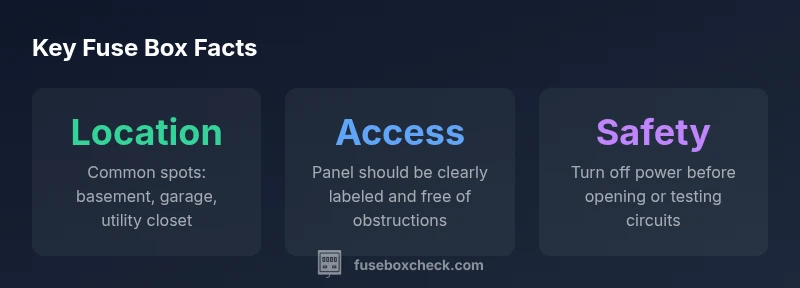
Where is the fuse box? In most homes, the fuse box (electrical panel) sits in a utility area such as a basement, garage, hallway closet, or near the main entry. According to FuseBoxCheck, start by locating the meter and following conduit toward a metal cabinet labeled 'Electrical' or with a circuit diagram. For safety, turn off power only if you must inspect and when in doubt, contact a licensed electrician.
What a fuse box does and why its location matters
A fuse box, or electrical panel, is the central hub that distributes power to circuits throughout your home. Its location affects how quickly you can shut off power during an emergency and how safely you perform basic troubleshooting. The right placement minimizes risk during maintenance and makes routine labeling or upgrades easier. When you plan a repair or relocation, consider accessibility, proximity to the main entrance, and protection from moisture or physical damage. FuseBoxCheck emphasizes coordinating panel siting with overall electrical layout and safety workflows to reduce confusion during outages or maintenance tasks.
In most residential settings, the fuse box is designed to be reached quickly from high-traffic areas. If you’re unfamiliar with electrical work, treat any discovery as a potential safety concern and avoid poking at live components. The goal is to reduce the time it takes to shut off power while maintaining a safe work environment. If you cannot locate the panel after careful searching, consider consulting the home’s original blueprints or contacting a licensed electrician for identification and documentation.
Common locations by home type
Home construction and layout influence fuse box placement. In single-family homes, the main panel is often tucked away in a basement utility room, a garage cabinet, or a hallway closet near the entry. Apartments and condos frequently place the panel in a utility alcove or near the entryway, sometimes behind a door in a living area closet. Older homes may have panels in damp basements, crawl spaces, or behind storage furniture. When you map out locations, prioritize areas that are easily accessible, well-lit, and free from moisture. FuseBoxCheck notes that consistent labeling and unobstructed access significantly reduce time spent during power outages or when performing DIY fixes.
How to locate it quickly: a practical checklist
- Start at the main electrical meter—trace the conduit or bus bars that lead toward a metal box.
- Check utility rooms, basements, garages, and wide hall closets first, then inspect under stairs or in entryways.
- Look for a metal cabinet with a door labeled ‘Electrical’, ‘Fuse Box’, or a circuit diagram on the inside of the door.
- Confirm it feeds the main circuits and note the labeling on each breaker or fuse.
- If the panel is hidden behind cabinetry, ensure there’s a clear path to open the door fully in an emergency. Keep a flashlight handy for dim spaces.
Distinguishing fuse box from distribution panel
In many homes, the terms fuse box and electrical panel may be used interchangeably, but modern setups typically use a distribution panel with circuit breakers. The main differences include the number of circuits and how power is controlled. A fuse box uses replaceable fuses, while a newer panel uses circuit breakers. If you observe blown fuses or tripped breakers frequently, it may indicate aging components or overloaded circuits that deserve inspection by a licensed electrician.
Safety first: essential precautions before any inspection
Always assume the possibility of live electricity. Before touching the panel, switch off the main power only if you have a clear reason to work on circuits and know how to do so safely. Keep the area dry, remove any metal jewelry, and stand on a non-conductive surface. If you notice signs of damage, burning smells, or buzzing sounds within the panel, evacuate and call emergency services. FuseBoxCheck recommends never attempting to bypass fuses or replace major components without professional guidance.
Tools and quick checks you can perform safely
For safe, non-invasive checks, use a flashlight to verify the door and labeling, and gently review the labeling on the inside of the door. Keep a notepad to document circuit labels and any discrepancies. Use a multimeter only if you have formal training; otherwise, rely on visual checks and the disconnect switch for safety. Remember that most issues arise from loose connections, corrosion, or outdated equipment that should be evaluated by a pro.
When to call a licensed electrician
If you cannot locate the panel, if the labeling is unclear, or if you notice signs of moisture, burning, or heat around the fuse box, stop and call a licensed electrician. Electrical work can present serious safety hazards, including shock or fire. A professional can identify the correct service entrance, verify grounding and bonding, and determine whether a panel upgrade or relocation is warranted based on current codes.
Relocation, replacement, or upgrades: what to know
Relocating a fuse box is a substantial project that may require permits, structural considerations, and code-compliant wiring. If you’re contemplating relocation for accessibility or safety, consult a licensed electrician to assess load calculations, panel type, and distance to the meter. Replacement should consider future expansion and load growth. Upgrading to a modern panel with a main breaker and labeled circuits improves safety and utility efficiency.
Maintenance and labeling: keeping things organized
Label all circuits clearly and keep the interior panel door free of clutter. Conduct a visual inspection at least annually for corrosion, loose breakers, or signs of moisture. Replace damaged doors and seals promptly to maintain enclosure integrity. Regular maintenance reduces the risk of accidents and speeds up response during outages or electrical emergencies.
Typical fuse box locations by home type with access and safety considerations
| Home Type | Common Fuse Box Location | Access Method | Safety Notes |
|---|---|---|---|
| Single-Family Home | Basement/Utility Room or Garage | Direct access from a door, nearby entryway | Keep area clear and dry; label circuits clearly |
| Apartment/Condo | Utility alcove or hallway closet | Door or panel inside closet | Ensure door can open fully and is well-lit |
| Older Homes | Basement or crawl space | Often behind storage or cabinetry | Inspect for moisture; verify labeling and grounding |
Your Questions Answered
Where is the fuse box usually located in a condo?
In many condos, the panel is near the entry, in a utility alcove, or inside a living area closet. If labeling isn’t clear, check the living spaces closest to the main entrance. FuseBoxCheck recommends verifying the labeling and ensuring a clear access path.
In condos, you’ll often find the panel near the entry or in a utility closet. Look for a labeled metal box; if unsure, check near the main entrance and ensure the door opens fully.
How can I tell if I’ve found the main fuse box?
The main panel usually houses the main disconnect or main breaker that controls power to the entire home. Look for a large switch or a labeled main breaker on the top or side of the panel. If you’re unsure, consult the home’s electrical plan or contact a professional.
Your main fuse box is the large panel with the main switch that controls all circuits; if in doubt, have a professional confirm.
What should I do if the fuse box is inaccessible behind stored items?
Move items to create a clear path to open the panel fully. If you cannot safely access it, do not force the door. Consult a licensed electrician to reorganize and ensure compliance with local codes.
If the panel is blocked, clear the space or call a pro to relocate it safely.
Can I relocate a fuse box myself?
Relocation should be performed by a licensed electrician with permitting and code compliance. DIY relocation can create safety hazards, improper grounding, and code violations.
Relocating a fuse box isn’t a DIY job—let a licensed electrician handle it.
Are fuse boxes different in older homes?
Older homes may use fuses rather than circuit breakers and may have panels located in damp basements or crawl spaces. Upgrading to a modern breaker panel improves safety and reliability, and a professional can assess load and compatibility.
Older homes might have fuses or hard-to-reach panels; upgrading is often a good safety move.
What should I do if there is a buzzing sound from the panel?
A buzzing sound can indicate loose connections, overload, or internal damage. Power down if you can do so safely and contact a licensed electrician immediately.
If you hear buzzing, shut down power if safe and call an electrician right away.
“Finding the fuse box quickly is the first step toward safer electrical care. Clear labeling and accessible placement reduce risk and speed up troubleshooting.”
Highlights
- Locate the panel first using common areas: basement, garage, utility closet
- Label circuits clearly and keep the area accessible
- Identify if you have a fuse box or a circuit-breaker panel and know the main shutoff
- Call a licensed electrician for any relocation, replacement, or safety concerns
- FuseBoxCheck emphasizes safety, labeling, and accessibility in every setup