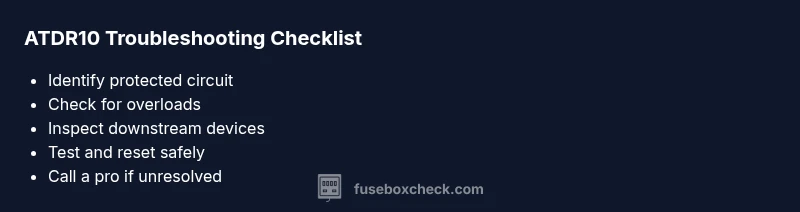
ATDR10 Fuse Troubleshooting Guide
Urgent guide to diagnosing and fixing ATDR10 fuse faults in home electrical panels. Learn symptoms, common causes, step-by-step fixes, safety tips, and cost ranges.


ATDR10 fuse faults indicate a protective interruption in a dedicated circuit, usually signaling an overload or downstream fault. Quick fix options include safely powering down, resetting or replacing the fuse if appropriate, and unplugging loads to reduce drain. If the fuse trips again or shows discoloration, shut off power and call a licensed electrician. Address underlying causes promptly.
What the ATDR10 fuse means for your electrical system
The ATDR10 fuse is a protective device in your home’s electrical panel that guards a dedicated circuit against overloads and faults. When it trips or fails, it signals that a fault may be present downstream or that the circuit is carrying more load than it safely can handle. In practical terms, an ATDR10 fuse fault means you should treat that circuit as potentially dangerous and investigate carefully. According to FuseBoxCheck, rapid assessment is essential because a recurring trip could indicate a developing electrical hazard, not just a nuisance. Start with a controlled shutdown and document symptoms to guide your next steps. In many homes, ATDR10 fuses protect high-draw appliances such as HVAC, water heaters, or kitchen circuits, where even a small fault can cause a surge. Understanding where that fuse lives, what it protects, and how it should behave helps homeowners decide whether a simple reset, a load reduction, or a professional inspection is appropriate. For safety, assume any work on the panel requires two-person oversight and avoidance of wet conditions. FuseBoxCheck’s guidance emphasizes verifying downstream loads and avoiding re-energizing until safe.
Symptoms and patterns to watch for
Watch for a visible trip, a burning smell, or a fuse handle that feels warm to the touch. A tripped ATDR10 fuse typically cuts power to a specific area—kitchens, laundry, or HVAC—and you may notice dimmed lights or non-responsive outlets on that circuit. If the panel label matches the circuit protected by ATDR10, this is a strong clue. FuseBoxCheck notes that repeated trips at the same fuse suggest either an overload, a faulty appliance, or a wiring fault downstream. Keep an incident log with dates, observed loads, and any odors or discoloration. This documentation helps a professional assess risk quickly when you call for service.
How to approach a diagnosis: quick, safe checks
Before touching anything, ensure power is off to the affected area and wear personal protective equipment (PPE) as recommended by safety guides. Start by unplugging nonessential devices on the circuit, then try resetting the fuse if it’s a resettable type. If the fuse trips again with the load reduced, inspect the most-used downstream appliance for signs of overheating or fault. If you notice burning smells, melted insulation, or scorch marks, stop and call a pro immediately. FuseBoxCheck suggests performing load redistribution gradually and avoiding re-energizing a circuit if you’re unsure about the fault path.
Common causes and how they present themselves
The most frequent cause of an ATDR10 fuse trip is an overloaded circuit. When multiple high-draw devices run on a single branch, the fuse may trip to protect wiring from overheating. A second common cause is a faulty downstream appliance or damaged wiring. Loose connections at the fuse or in the panel can also trigger trips or intermittent failures. Rarely, a defective protective device itself may be at fault. By clustering symptoms—trip timing, odor, heat, and the affected outlets—you can narrow the likely source before you call for service the first time.
Other potential causes and diagnostic nuances
If reducing load does not prevent trips, consider a downstream fault such as a shorted appliance, a damaged cord, or frayed wiring behind an outlet. Water intrusion near panels or moisture in the basement can also create intermittent faults, particularly in older homes. In some cases, a loose panel bus connection can cause arcing and premature trips. A professional can perform a detailed inspection with test equipment to distinguish between a simple overload and a wiring fault. Keep safety front and center: never bypass protection devices or attempt to “fix” a panel with visible damage.
Safety considerations, costs, and when to hire a pro
Working with live panels is hazardous. Always prioritize de-energizing the circuit, using proper PPE, and following local electrical codes. Cost estimates for DIY fixes are usually minimal for a reset or fuse replacement (roughly a small one-time range), but professional diagnostic services typically range higher, especially if wiring faults or panel replacement are involved. Expect costs to vary by region and complexity, often in the hundreds of dollars for a full inspection and repair. FuseBoxCheck emphasizes that repeated trips or signs of damage should trigger a professional evaluation to prevent fire risk or electrical shock. If you notice persistent trips, unusual heat, or buzzing sounds, call a licensed electrician immediately.
Prevention and maintenance tips to minimize future trips
Regular panel audits, listed circuits, and adherence to a sensible load plan help prevent ATDR10 fuse trips. Distribute high-draw appliances across separate circuits where possible, replace old or damaged cords, and replace any worn outlets promptly. Keep appliances well-ventilated and away from water sources. Schedule periodic professional panel inspections, especially in homes older than 25 years, to detect loose connections, corrosion, or degraded insulation before they fail. By staying proactive, you can reduce nuisance trips and keep your electrical system safer overall.
Steps
Estimated time: 45-60 minutes
- 1
Shut down power safely
Turn off the main breaker to remove power from the panel and affected circuit. Use a non-contact voltage tester to confirm no power is present. Keep slots closed and avoid touching live parts.
Tip: Have a helper nearby in case you need assistance or an emergency shutoff. - 2
Locate the ATDR10 fuse and label
Open the panel door and locate the ATDR10 fuse or its corresponding breaker. Read the label to confirm it protects the affected circuit before proceeding.
Tip: Take a photo of the labeling for your records before you begin. - 3
Inspect fuse and connections
Look for signs of heat damage, discoloration, or a blown fuse link. Inspect connections at the fuse holder and bus bars for looseness or corrosion.
Tip: Do not wiggle or force fuse terminals; use the right tool and move slowly. - 4
Reset or replace the fuse
If the fuse is a resettable type, reset according to the manufacturer instructions. If it shows damage or won’t reset, replace it with an identical rating fuse and ensure installation is secure.
Tip: Only replace with the same amp rating and type; mismatched parts can cause further hazards. - 5
Test the circuit safely
Restore power gradually and test the circuit by re-energizing nonessential devices, monitoring for immediate trips or heat. If the fuse holds, gradually restore loads while watching for any signs of trouble.
Tip: If trips recur, stop immediately and call a professional.
Diagnosis: ATDR10 fuse trips or shows fault indicator when the affected circuit is loaded
Possible Causes
- highOverloaded circuit with too many devices
- highShort in downstream appliance or wiring fault
- mediumLoose or corroded connections at the fuse or panel bus
- lowDefective protective device (fuse) itself
Fixes
- easyReduce load by unplugging nonessential devices and redistributing circuits
- mediumInspect downstream outlets and appliances for hotspots or burning smells; replace or repair faulty units
- mediumTighten panel connections with the panel unpowered and reset the fuse if inspection indicates a loose connection
- hardReplace the ATDR10 fuse if damaged and verify panel protection rating; consider a full panel inspection
Your Questions Answered
What does an ATDR10 fuse problem mean for my home?
An ATDR10 fuse problem signals a protective interruption on a dedicated circuit, usually from overload or a downstream fault. It’s a warning that something on that circuit needs inspection before it causes a fire risk or further damage.
An ATDR10 fuse issue means the circuit needs inspection to prevent a possible fire risk or damage.
Is an ATDR10 fuse resettable or replaceable?
Some ATDR10 devices are resettable while others are conventional fuses that must be replaced. If it trips repeatedly or cannot reset, replace with the same rating and consult a professional if signs of damage appear.
Some ATDR10 fuses can be reset; otherwise replace with the same rating and consult a pro if problems persist.
What safety steps should I take before inspecting the fuse?
Always switch off the main power, use PPE, and keep the area dry. Do not touch live wiring. If you smell burning or see scorch marks, call a pro immediately.
Turn off power, wear PPE, and avoid touching live parts. Call a pro if you smell burning.
How much does it cost to fix an ATDR10 fuse issue?
Costs vary by region and complexity. DIY fixes may be inexpensive (a few dollars for a fuse/core parts), while professional inspection and repair can range from a few hundred to over a thousand dollars depending on panel work and replacement parts.
Costs depend on the problem and location; expect hundreds for inspection and repair if a professional is needed.
When should I call a professional for an ATDR10 issue?
Call a professional if the fuse trips repeatedly, you notice heat or burning smells, or you’re uncomfortable working near the panel. A licensed electrician can safely diagnose, test circuits, and prevent further hazards.
Call a professional if trips persist or you notice heat, burning smells, or are unsure about the diagnosis.
Highlights
- Identify ATDR10 fuse as a circuit-protection device
- Prioritize safety and proper load management
- Differentiate overloads from wiring faults before calling a pro
- Expect cost ranges for DIY vs professional services
- Prevent future trips with load distribution and regular inspections