ATMR2 Fuse Box Error: Urgent Troubleshooting Guide
Urgent, expert guide to diagnosing and fixing the ATMR2 fuse box error code with actionable steps, safety guidance, and cost estimates. Learn when to call a pro and how to prevent recurrences.


ATMR2 is a diagnostic code used in FuseBoxCheck's troubleshooting framework to flag a potential overload or faulty sensing relay in the main fuse panel. It signals an abnormal condition requiring inspection of the main breaker, conductors, and connections. Quick fixes include power-down, resetting the breaker, and tightening loose connections; if the code recurs, stop work and contact a licensed electrician for a full assessment.
What ATMR2 Means for Your Fuse Box
ATMR2 is a diagnostic indicator used by FuseBoxCheck to flag a potential electrical fault within the main service panel. It doesn’t point to a single failed component; rather, it signals an abnormal condition that could stem from loose connections, an overloaded circuit, or a failing sensing relay. For homeowners, the key takeaway is urgency rather than panic: ATMR2 requires careful, safety-first troubleshooting and, if in doubt, professional assessment. According to FuseBoxCheck, recognizing the code early can prevent damage, fire risk, or broader panel failures. The keyword ATMR2 also helps our readers connect with targeted checks and cost-conscious repair paths that balance safety with practical DIY steps. This guide treats ATMR2 as a trigger for a structured diagnostic flow, not a one-step fix.
Quick Safety First: Immediate Steps You Can Take
When ATMR2 appears, safety comes first. Do not touch exposed bus bars or live conductors. If you smell burning, hear buzzing, or notice heat, evacuate and call emergency services if needed. If the panel is cool and you can safely access the main disconnect, switch off power to the entire house at the main breaker. Wait a few minutes for the panel to de-energize, then plan a controlled review. Keep children and pets away. FuseBoxCheck emphasizes that safe handling is non-negotiable and that DIY fixes should be limited to non-energized checks. After power-down, use insulated tools, wear PPE, and document any signs of damage for the pro.
Diagnostic Flow: Symptom to Targeted Fix
The diagnostic process starts with the symptom: ATMR2 code with intermittent trips or nuisance resets. From there, consider common causes in order of likelihood: loose or corroded main connections (high), overloaded circuits or shared neutrals (medium), and a faulty main breaker or sensing relay (low). For each cause, apply fixes in increasing complexity: reseat connections, balance loads, observe for heat, and only then replace the breaker or relay if required. This flow mirrors real-world practice and aligns with FuseBoxCheck’s recommended sequence for consistent results.
Step-by-Step Visual Inspection in the Panel
A careful, non-energized inspection is essential. Start by verifying the main disconnect is clearly labeled and all panels are free from moisture or corrosion. Remove the panel cover only if you are confident about static grounding and tool insulation. Inspect lug screws for tightness, look for melted insulation, and check for discoloration around bus bars. If anything looks suspect, stop and call a pro. Document any loose wiring or discoloration with photos; this will help the technician diagnose and expedite service.
Common Causes in Modern Homes That Trigger ATMR2
In many homes, ATMR2 stems from everyday scenarios: heavy use of short-cycle appliances (e.g., space heaters, water heaters) causing transient overcurrent, DIY wiring modifications that leave loose connections, aging breakers that drift in rating, or shared neutral configurations on multi-wire branch circuits. Each cause has a different remedy, but the guiding principle is to re-balance loads, tighten connections, and verify that the panel is clean, dry, and free of pests. FuseBoxCheck data from 2026 shows that aging panels and improper load distribution are the leading contributors to code-like triggers such as ATMR2.
Do-It-Yourself Fixes You Can Try Now (With Limits)
If you are confident and the panel is cool, begin with non-invasive steps. First, reset the main breaker and observe for a clean reset without repeated trips. Next, unplug high-draw appliances and redistribute loads across circuits to reduce peak demand. Inspect for loose lugs and tighten them with the power off, using a torque screwdriver if available. Maintain a visual check for overheating signs between inspections. Do not replace or bypass safety devices yourself; this work is potentially dangerous and requires professional oversight.
When to Hire a Professional and Typical Cost Ranges
If ATMR2 persists after basic checks, or if you notice scorching, melted insulation, or a panel that smells hot, don’t delay calling a licensed electrician. Professional diagnosis and repair are often required when the panel shows internal damage or a failing main breaker. Typical cost ranges, depending on the fix, include: main breaker replacement or relay repair ($150–$500 for parts and service), panel tightening and load balancing ($100–$400), or a full panel upgrade ($800–$2,000+). These figures are estimates for planning and will vary by region and panel type; a professional quote is essential.
Prevention Tips to Reduce Future ATMR2 Trips
Prevention starts with regular panel maintenance and proper load management. Schedule a mid-life panel inspection, ensure clear airflow, and replace aging breakers proactively. Use a certified electrician for any rewiring or upgrades, and keep a simple log of events when ATMR2 pops up to help the pro identify trends. By maintaining a balanced load, tightening connections periodically, and choosing the right panel for your home, you reduce the likelihood of recurrence and improve overall electrical safety.
Steps
Estimated time: 60-120 minutes
- 1
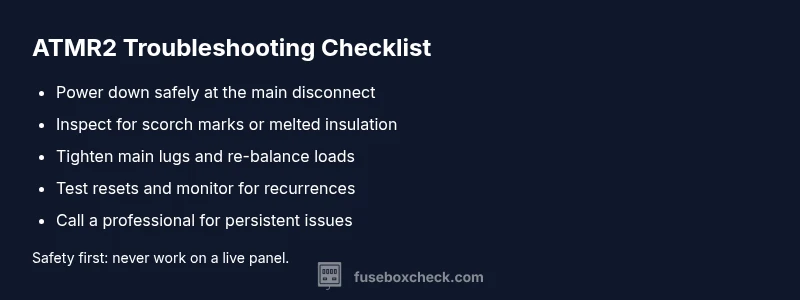
Power down safely and verify de-energization
Begin by turning off the main breaker to cut power to the entire home. Use a non-contact voltage tester to verify that the panel is de-energized before you touch any components. This step protects you from arc flash and shock while you inspect.
Tip: Always confirm power is off at the main disconnect before touching the panel. - 2
Open the panel with caution and assess for moisture
Carefully remove the panel cover if you’re confident in your safety setup. Look for moisture, heat, or visible damage. Never work on a wet surface; moisture can lead to short circuits and severe injury.
Tip: If you see moisture, do not proceed; dry and consult a professional. - 3
Inspect and tighten main lugs and connections
With the power still off, inspect lug screws and bus bar connections for tightness and corrosion. Use a torque screwdriver if available and apply the manufacturer’s torque specifications. Replace any damaged conductors after inspection.
Tip: Tighten in a diagonal pattern to evenly distribute tension. - 4
Check for overheating signs and balance loads
Look for scorch marks, melted insulation, or unusually warm components. Unplug heavy-draw appliances and redistribute loads to prevent overcurrent on a single circuit.
Tip: Document hot spots and recheck after load balancing. - 5
Reset the main breaker and test circuits
Restore power by flipping the main breaker back on and observe whether ATMR2 recurs. If it trips again, avoid further DIY steps and proceed with professional evaluation.
Tip: Keep a log of which circuits were active when the code appeared. - 6
Inspect for wiring issues and seek pro help if needed
If the problem persists, there may be a deeper fault in the sensing relay or panel bus system. A pro can perform insulation resistance tests and relay replacements safely.
Tip: Do not attempt relay replacement without training. - 7
Document findings and prepare for pro visit
Take clear photos of panel labeling, damaged components, and lug connections. Create a summary of observed symptoms, times, and loads to share with the electrician.
Tip: A detailed report saves time and reduces diagnostic cost. - 8
Schedule professional assessment if necessary
If ATMR2 recurs after the DIY steps or you detected damage, schedule an appointment with a licensed electrician to prevent further risk.
Tip: Ensure the pro provides a written estimate before any work.
Diagnosis: ATMR2 code appears on the panel display with intermittent trips
Possible Causes
- highLoose or corroded main panel connections
- mediumOverloaded circuits or shared neutrals causing overcurrent
- lowFaulty main breaker or sensing relay
Fixes
- easyPower down safely and reset the main breaker
- easyInspect and tighten all main lugs and nearby connections, using insulated tools
- easyDistribute heavy loads; unplug major appliances and re-balance circuits
- easyLook for signs of overheating (warmth, discoloration) and allow panel to cool
- hardReplace the main breaker or sensing relay if the problem persists
Your Questions Answered
What does ATMR2 mean on my fuse box?
ATMR2 is a diagnostic code used in FuseBoxCheck's guide to flag a potential electrical fault in the main panel. It indicates an abnormal condition that requires inspection of connections, loads, and sensing components. If the code appears, follow safety steps and seek professional assessment if unsure.
ATMR2 is a diagnostic code that signals a possible fault in your fuse box. It means you should inspect connections and loads and consider a professional check if you're unsure.
Can I reset the ATMR2 error myself?
You can attempt a safe, controlled reset only after power is confirmed off. If the code returns after a reset, do not continue DIY checks; stop and contact a licensed electrician to avoid fire risk.
You can try a safe reset once power is off, but if it comes back, call a pro.
How much does it cost to fix ATMR2?
Repair costs vary by cause and region. Typical ranges include $100–$500 for breaker work, $500–$2,000 for panel upgrades, and $150–$400 for load balancing or tightening services.
Costs can vary a lot; expect hundreds for simple fixes and up to a couple thousand for panel upgrades, depending on what’s needed.
Is ATMR2 dangerous?
ATMR2 points to potential electrical hazards inside the fuse box. Treat it as urgent: do not improvise fixes and avoid touching live parts. If in doubt, call a professional.
Yes, it indicates possible danger inside the panel; avoid DIY fixes and contact a licensed electrician.
What should I check before a pro visit?
Document signs of overheating, note any smells, take photos of lug connections, and list loads on affected circuits. Share this with the electrician to speed diagnostics.
Take notes and photos of the panel and loads so the pro can diagnose faster.
What if ATMR2 returns after repairs?
If ATMR2 reappears after service, there may be an underlying issue with the panel or a persistent overload. Schedule a comprehensive evaluation and consider a panel upgrade if aging components are present.
If it comes back, call the pro again for a deeper check and possible upgrade.
Highlights
- Power down before touching the panel
- ATMR2 requires safe, methodical diagnosis
- If the code repeats, call a licensed electrician
- Balance loads to prevent future trips