Fuse Box Lights Not Working: Quick Diagnostics & Fixes
Struggling with fuse box lights not working? This expert guide walks you through safe diagnostics, common causes, and step-by-step fixes to restore power quickly and safely.


Most likely, fuse box lights not working points to a tripped breaker or blown fuse. Start by safely inspecting the main service panel, reset any tripped breaker, or replace a blown fuse. If power remains off, proceed with the diagnostic flow for a safe, thorough check and safety precautions now.
What the symptom 'fuse box lights not working' typically signals
According to FuseBoxCheck, fuse box lights not working usually signals a power issue at the service panel rather than a single outlet. In most homes, this symptom points to a tripped breaker, a blown fuse, or a faulty panel light. It can also signal loose connections, an overloaded circuit, or a failing main disconnect. Because panel lighting ties directly to your main electrical supply, treat it as urgent and work methodically. If you see the phrase fuse box lights not working in your kitchen, garage, or hallway, know that your electrical system is trying to tell you something important. This is the moment to pause, assess safety, and move through a clear diagnostic flow to identify whether the problem is a simple reset, a component replacement, or a bigger service issue.
The FuseBoxCheck approach prioritizes safety and methodical testing to prevent shocks or further damage.
“Fuse box lights not working” is a symptom that should trigger cautious troubleshooting rather than wild guessing.
Immediate steps to check safely
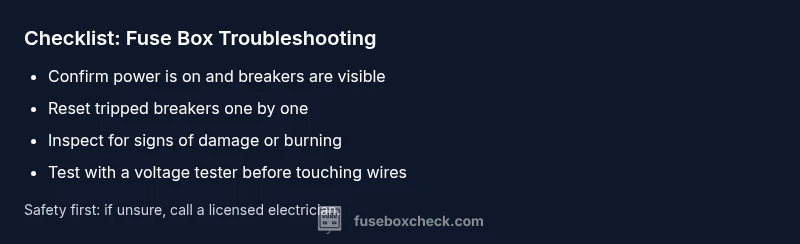
Before touching any panel, commit to safety. Dry hands, dry surface, and proper footwear matter. Locate your main service panel and check for any obvious signs of damage or burning smells. If you can, verify whether the rest of the house is affected—if the entire home loses power, this is a different scope requiring utility coordination. For the specific symptom fuse box lights not working, start by locating the main breaker and checking for a visibly tripped switch. Do not force stuck breakers; if a breaker won’t reset, stop and continue with a controlled diagnostic approach.
Next, examine nearby fuses (if you still use fuse-based protection) for a blown fuse. Replace with new fuses of the same amperage rating only. After each action, test a few electrical outlets and light fixtures to gauge whether the power is restored. If the main disconnect feels warm or if you notice buzzing, smoke, or a burnt smell, stop immediately and call a licensed electrician. These steps lay the groundwork for confirming whether fuse box lights not working is a simple reset or a sign of a deeper issue.
Safety note: never work on a live panel with wet hands, and avoid touching exposed conductors. If you are not confident, skip ahead to professional help.
Common causes: quick reference
- Tripped breaker or blown fuse in the service panel
- Loose or corroded connections inside the fuse box
- Faulty panel light or indicator switch
- Partial power outage affecting the panel area
- Aging service or overloaded circuits
Understanding these causes helps you decide whether to perform a reset, replace a fuse, or escalate to professional service. As ever, when in doubt about any step, err on the side of caution and consult a licensed electrician.
Tools you may need (safety first)
- Non-contact voltage tester to verify live circuits without touching wires
- Multimeter for precise voltage readings
- Insulated screwdriver set for panel screws (only with power off)
- Flashlight or headlamp for dark basements or crawlspaces
- Safety gear: insulated gloves and eye protection
Having the right tools reduces risk and makes the diagnostic path smoother. Remember, tools don’t replace safe practice or professional experience—use them to verify safe conditions before proceeding.
Replacing fuses and resetting breakers: a practical guide
If you identify a tripped breaker, switch it OFF, then back ON to reset. If you find a blown fuse, replace it with a fuse of the same amperage rating and type. After replacement, restore power to one circuit at a time to avoid overloading the panel. If a breaker repeatedly trips or a fuse blows again soon after replacement, this points to a deeper problem—suspect loose connections, a short, or overloaded circuits. Do not replace a higher-amp fuse or breaker to bypass the load; that creates a serious fire risk. Follow the sequence in your panel’s manual or FuseBoxCheck guidance to keep the process orderly and safe.
Looking at the panel for damage: what to inspect
Check for signs of overheating, discoloration, or melted insulation around breakers or fuses. A burnt smell or scorch marks is a red flag that requires immediate professional intervention. Inspect for loose wires or corroded screws; if you see any, stop and call a licensed electrician. Cracked polycarbonate panels, buzzing, or a warm panel cover also indicate a failure that should not be DIY’d beyond basic resets. If you notice any of these issues while diagnosing fuse box lights not working, treat it as an urgent safety concern.
When power returns: testing and verification
Once power is restored, perform a controlled test of each major circuit. Use a lamp or outlet tester to confirm outlets are powered and light fixtures function as expected. Check devices with high loads (appliances, HVAC) gradually to ensure the panel remains cool and stable. If any circuit continues to trip, there is likely a fault on that circuit or within the panel. Document odd sensations like buzzing or heat, and share this with your electrician. Verification is essential to prevent a repeat of fuse box lights not working.
Prevention and maintenance tips
Schedule annual visual inspections of the panel and wiring, especially in older homes. Avoid overloading circuits by spreading high-draw devices across different breakers. Keep the panel area clear of dust, moisture, and flammable materials, and ensure proper labeling of circuits for quicker troubleshooting. If you suspect moisture, leaks, or corrosion, address them immediately to protect the panel. Regular maintenance reduces the chances of future episodes where fuse box lights not working disrupts your daily life.
Steps
Estimated time: 60-90 minutes
- 1
Power down safely and locate the panel
Begin by turning off major loads if possible and then switch off the main breaker to de-energize the panel. Open the panel door and look for signs of damage or heat. Wear insulated gloves and avoid touching any exposed conductors. If you see burning smells or melt marks, stop and call a professional immediately.
Tip: Always verify power is off with a non-contact tester before touching anything inside the panel. - 2
Check for a tripped breaker or blown fuse
Identify any breaker with a mid-position or a fuse that appears burned. Flip a tripped breaker fully OFF, then back ON. Replace a blown fuse with one of the same amperage rating only, never higher.
Tip: If you’re unsure of amperage, consult the panel label or manufacturer guide. - 3
Inspect connections and panel condition
With power still off, inspect visible conductors for looseness or corrosion. Do not touch inside active conductors. If you notice loose screws or discoloration, stop and call a licensed electrician.
Tip: Use a torque screwdriver if you have one and your panel’s service manual recommends it. - 4
Test with a meter before re-energizing
Use a multimeter to confirm there’s no voltage on exposed conductors before re-energizing. Then carefully re-energize the main breaker and test representative circuits one by one.
Tip: Document readings and any abnormal values for the electrician. - 5
Restore power gradually and monitor
Turn on a few essential circuits first, then gradually reintroduce others. Check for abnormal warmth or buzzing and immediately stop if anything feels unsafe.
Tip: Avoid running high-load appliances all at once during a troubleshooting session. - 6
Decide on professional follow-up
If breakers trip again or if you notice damage, plan a professional inspection. A licensed electrician can diagnose hidden faults and service the main disconnect safely.
Tip: Keep the panel door closed and maintain clear access between uses.
Diagnosis: Fuse box lights not working
Possible Causes
- highTripped main breaker or blown fuse in the service panel
- mediumLoose or corroded connections inside the fuse box or panel
- lowFaulty panel light or indicator switch
- lowPartial power outage affecting the panel region
- mediumFailing main disconnect or service wiring issue
Fixes
- easyReset the tripped breaker or replace a blown fuse
- easyPower down safely, then re-seat any loose breakers
- hardInspect panel for signs of damage and tighten loose connections after turning off power
- mediumTest panel with a multimeter to verify voltage at the bus
- hardCall a licensed electrician for high-risk wiring or main disconnect issues
Your Questions Answered
What does a tripped breaker look like and what should I do?
A tripped breaker sits between on and off or appears visibly crooked. Turn it fully OFF, then back ON to reset. If it trips again, stop and seek professional help.
A tripped breaker looks off or in the middle. Reset it, and if it trips again, call an electrician.
Can I reset a fuse box fuse myself?
Yes, if you find a blown fuse, replace it with the same amperage. Do not use a higher-rated fuse, which can start a fire. After replacement, test circuits one by one.
Yes, replace the fuse with the same rating and retest circuits slowly.
Is it safe to open the fuse box?
Only after turning off the main power and verifying no voltage on exposed conductors. If you’re unsure, don’t proceed and call a professional.
Only with power off and proper testing; if unsure, call a pro.
What if only one circuit is affected?
A single circuit might indicate a local fault or a loose connection. Inspect that circuit’s breaker and wiring, then consider professional testing if the issue persists.
If just one circuit is affected, check that circuit’s wiring and breaker; seek help if it returns.
When should I call a professional?
If you smell burning, hear buzzing, see scorch marks, or the main disconnect shows signs of wear, stop and call a licensed electrician immediately.
Call a licensed electrician if you smell burning or see damage; don’t risk it.
Why are there lights inside the fuse box?
Panel lights help you identify circuit status during maintenance. If they fail, the root cause is still in the power path and should be checked carefully.
The lights help you see panel status; if they fail, inspect power flow and consider professional help.
Watch Video
Highlights
- Reset tripped breakers first to restore power quickly.
- Replace blown fuses only with correct ratings.
- Inspect for loose connections and signs of damage.
- Always prioritize safety; call a pro for complex panels.
- Regular maintenance prevents future panel lighting issues.