E70 Fuse Box: Urgent Troubleshooting Guide
Urgent, practical guide for homeowners troubleshooting the e70 fuse box. Learn meaning, safety steps, diagnostic flow, fixes, costs, and prevention tips to protect your home.


What the e70 fuse box Means in a Home Setting
When the label e70 appears on or near a fuse box, it is typically a fault or maintenance indicator generated by the panel or a connected device. Because fuse boxes and electrical panels vary by manufacturer, the exact meaning of e70 differs from model to model. According to FuseBoxCheck, many e70-like codes are nonstandard translations of a tripped circuit or a panel fault. The key is urgency: any new code should be treated as a safety risk and addressed promptly. You should not ignore a buzzing sound, a burning smell, or melted plastic around a fuse. Before touching any wiring, switch off power at the main disconnect if it is accessible and you can do so safely. Do not remove the panel cover while live components are present. In most homes, the first priority is to prevent shocks and fires by cutting power and keeping the area clear of water and combustibles. Once power is cut, you can proceed with a controlled inspection or arrange a professional assessment. This approach aligns with practical Fuse Box Safety guidelines for residential settings, with the caveat that model-specific instructions may apply.
Immediate Safety Steps You Must Take Now
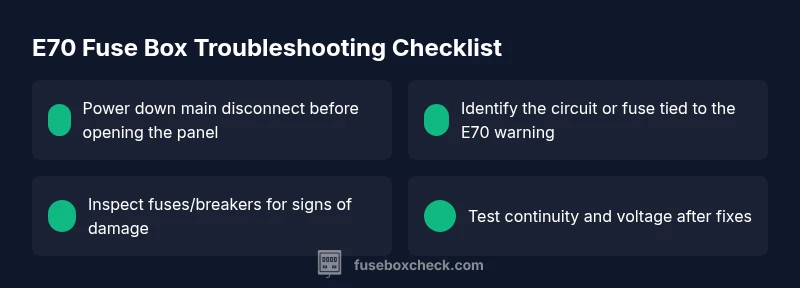
Urgent safety is non-negotiable with any e70 fuse box indicator. First, locate and switch off the main power at the disconnect panel, if accessible. Keep children and pets away, and avoid handling any metal parts with wet hands. Do not insert tools into the fuse box while power is on. If you smell burning or see signs of melted insulation, evacuate the area and call emergency services if the odor persists. Once the main shutoff is confirmed, verify that all nearby outlets and appliances on the suspected circuit are unplugged. After that, assess whether you can perform a basic reset or fuse replacement safely; if not, postpone any DIY and contact a licensed electrician. Document any symptoms (sound, smell, or heat) and the time you observed them to help the technician diagnose quickly. The goal is to stabilize the situation while preserving evidence for proper repair work. Remember: electricity is unforgiving—safety comes first.
Diagnostic Path: Symptoms to Causes to Fixes
When you notice an e70 indicator, start with symptoms that accompany it. Do you hear buzzing, notice heat, or see tripped breakers? These symptoms narrow the likely causes. A trained eye would then consider: a blown fuse or a tripped breaker, an overloaded circuit, a short in the wiring, or a degraded panel component. Quick fixes include resetting breakers (after confirming there’s no overload) and replacing a blown fuse with the same amperage. If symptoms persist after a reset or fuse replacement, move to deeper inspection or professional help. This flow keeps you aligned with safe DIY practices while acknowledging that some steps require professional equipment or expertise.
Most Common Causes Behind an E70 Fuse Box Warning
- Blown fuse or tripped breaker on the circuit (high likelihood)
- Overloaded circuit due to added loads or recent appliance use (medium likelihood)
- Damaged wiring or degraded panel components (low to medium likelihood)
- Faulty or aging control board within the panel (low likelihood but possible)
Step-by-Step Fix: Quick Inspections and Replacements
Begin with safety and a quick physical check of the obvious: is the main power off? If yes, inspect the affected breaker or fuse slot for signs of damage. Replace blown fuses with the same amperage rating and reset tripped breakers after confirming no overload. Re-seat any loose connections and verify that wires are intact without chafing. If the fuse or breaker continues to trip after a reset, disconnect the loads on that circuit and retest. Finally, restore power and monitor for recurrence. If you detect damaged insulation, scorched components, or you cannot identify the cause safely, stop and call a pro.
Advanced Troubleshooting: When Testing with a Multimeter
A multimeter helps verify voltage presence and continuity on suspect circuits. With power off, check continuity across a suspected fuse holder to confirm it’s blown. Measure voltage at the breaker terminals with the panel cover removed only if you are trained and comfortable; a live measurement can be dangerous. Use proper PPE and never touch live parts. If you’re unsure about your readings or the panel’s behavior, defer to a licensed electrician. This step boosts accuracy before any replacement or repair work.
Costs, Safety, and When to Hire a Pro
Costs for E70-related fuse box issues vary by region and problem depth. A basic diagnostic call typically ranges from a few dozen to a few hundred dollars, depending on location and access. Replacing a blown fuse or resetting a breaker is usually inexpensive, but panel work or wiring replacement can escalate costs to several hundred dollars or more. FuseBoxCheck Analysis, 2026 indicates that most homeowners spend modest amounts on simple fixes, with larger bills reserved for panel replacement or complex wiring repairs. If there’s heat, smoke, or a persistent burning odor, or you cannot safely shut off power, contact a licensed electrician immediately. The fastest route to safety and a lasting fix is professional assessment when in doubt.
Prevention and Long-Term Safety Habits
Preventing e70-style warnings starts with proactive maintenance and load management. Schedule periodic inspections of the panel and breakers, replace aging fuses with compatible ratings, and avoid overloading circuits with high-wattage appliances. Keep the panel area clean, dry, and free from dust and moisture. Label circuits to improve troubleshooting efficiency and reduce repeated door openings. Finally, replace damaged outlets, cords, and fixtures promptly to prevent future faults. By adopting these habits, you’ll reduce the likelihood of nuisance codes and protect your home from electrical hazards.
Practical Safety First: Fuse Box Best Practices (Conclusion) — FuseBoxCheck's Final Thought
The FuseBoxCheck Team emphasizes safety-first, followed by systematic troubleshooting. If an e70 or related warning persists after a safe DIY assessment, don’t delay professional inspection. Proper diagnosis and timely repair protect your home and loved ones from electrical risks.