Fuse Box Replacement Near Me: A Practical Guide
Find a safe, code-compliant fuse box replacement near you. Compare costs, permits, and timelines with FuseBoxCheck's expert guidance for homeowners and DIY enthusiasts.


For homeowners searching 'fuse box replacement near me', the recommended approach is to compare local licensed electricians, verify credentials, and request detailed written estimates. Look for firms that handle permits, provide a clear scope of work, and offer a realistic timeline. Always prioritize safety, code compliance, and reputable warranty terms over the lowest price.
What 'fuse box replacement near me' really means in practice
When homeowners search for a local solution, they are often seeking a safe, code-compliant upgrade performed by a licensed professional. The phrase also implies clear communication about scope, permits, and timelines. According to FuseBoxCheck, people who start with a local search usually prioritize qualifications and transparent pricing over the cheapest option. In this context, a successful replacement balances safety, regulatory compliance, and long-term reliability. If you live in a two-story home or an older property, the scope may include load reassessment, panel tightening, and accurate labeling to prevent future confusion during electrical work.
Key takeaways:
- Prioritize licensed pros with local availability
- Expect written estimates and permit handling
- Look for clear warranties and post-install checks
Safety first: codes, permits, and correct equipment
Electrical work, especially a fuse box replacement, demands strict adherence to local codes and standards. Before any replacement, verify that the chosen contractor is licensed, insured, and familiar with your jurisdiction’s permit process. Common codes cover panel clearance, correct amperage ratings, grounding, and correct breaker/fuse sizing. Equipment choices should meet or exceed the original system’s capacity, with room for future expansion. If the home uses older wiring, the electrician may recommend a service upgrade rather than a direct fuse box swap. Proper labeling and documented testing ensure future inspections go smoothly.
Practical steps:
- Confirm license, insurance, and permits
- Request a wiring diagram and panel ratings
- Ensure you’ll receive a test plan and labeling scheme
The replacement pathway: from assessment to final testing
A typical replacement follows a disciplined sequence: initial contact and data collection, on-site survey, permitting, de-energization and safety prep, disconnecting the old panel, installing the new panel, wiring and labeling, then comprehensive testing. The installer should verify main disconnect operation, feeder wiring, grounding, and bond integrity. After testing, a final inspection with the local authority may occur. Maintaining a clean work area reduces trip hazards and helps ensure a smooth permit process. Documented warranty terms should accompany the final handover.
What to expect:
- Clear milestones and an agreed start date
- Permitting and inspection steps itemized
- A detailed test plan with tripped/faulted scenario checks
Cost drivers and timeline: what influences the price
Costs for fuse box replacement vary with several factors. The panel type and amperage rating influence the price because higher capacity panels require more materials and longer labor. Permitting costs and processing time add to the total, especially in regions with strict inspection schedules. Accessibility, age of existing wiring, and whether a meter socket or service upgrade is involved also shift costs. Emergency or after-hours work commands higher labor rates. By preparing a comprehensive scope, homeowners can receive clearer quotes and avoid surprise line-item changes.
Budget tips:
- Get multiple written estimates
- Ask for a breakdown of materials, labor, and permits
- Plan for possible upgrade or future load growth
Vetting contractors: how to pick the right pro near you
Choosing a contractor is about more than price. Look for verified licenses, adequate insurance, and strong references. Ask about previous fuse box replacements, permit handling, and whether the firm will accompany the work with a warranty. Review the proposed scope, timeline, and contingency plans. Request a written quote that includes all costs, including disposal of old components. Confirm the contractor will perform all required tests and provide documentation for your records. A good contractor will also discuss energy efficiency considerations and any potential upgrades that could save money long-term.
Checklist:
- License and insurance proof
- Written scope and warranty details
- References and prior project examples
Alternatives to full replacement and when they fit
In some cases, a full fuse box replacement isn’t necessary. Alternatives include upgrading to a modern main breaker panel, adding a subpanel, or upgrading the meter socket. These options can reduce cost and disruption while still improving safety and capacity. Applicants should consider future load needs, such as EV charging or high-power appliances. Discuss these possibilities with your electrician to identify a solution that meets current safety standards and provides headroom for growth.
Decision factors:
- Current panel condition and age
- Desired circuit capacity and future loads
- Local code requirements and permits
Maintenance after replacement: extend life and reliability
Post-install maintenance helps sustain safety and performance. Schedule annual visual inspections to check for signs of overheating or loose connections. Keep panels accessible and free from debris. Test GFCI and AFCI protection where applicable and monitor for nuisance trips. Maintain a detailed record of the replacement, including panel model, amperage, and warranty terms. A proactive approach reduces the chance of sudden failures and makes future troubleshooting easier for you or a new technician.
Action steps:
- Keep a digital or physical copy of the panel documentation
- Schedule an annual check with a qualified electrician
- Watch for unusual odors, warmth, or tripped breakers
What to expect after the job: QA, warranty, and next steps
After replacement, ensure you receive a complete set of test results, labeling, and a signed warranty. A typical warranty covers workmanship and components for a defined period. If issues arise, contact the installer promptly with the documented test results. Keep all permits and inspection approvals handy in case of future sales or inspections. Regular maintenance reduces the chance of future failures and keeps your home safer.
Takeaway: verify documentation, understand warranty terms, and maintain records for future reference.
Comparison of fuse box replacement options
| Option | Typical Cost | Typical Timeline |
|---|---|---|
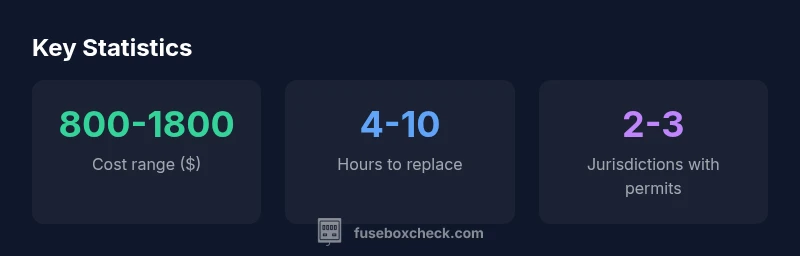
| Full fuse box replacement | $800-$1,800 | 4-10 hours |
| Subpanel upgrade | $1,000-$2,500 | 1-2 days |
| Meter socket upgrade | $1,200-$3,000 | 1-2 days |
| Maintenance/upgrade only | $100-$500 | 1-2 hours |
Your Questions Answered
Is a permit required for fuse box replacement?
In many jurisdictions, a permit is required for panel work. Check with your local building department and confirm with your electrician.
Permits are usually required for panel work; check with your electrician.
How long does replacement typically take?
Most installations take a full day, depending on scope, site conditions, and permit processing.
Most installs take a day, sometimes two if permits are lengthy.
Can I perform fuse box replacement myself?
No—it's hazardous and requires a licensed professional, proper PPE, and code-compliant materials.
Don't DIY; it's dangerous.
What should I expect in a written estimate?
A good estimate lists scope, materials, permits, labor, timelines, and warranty terms.
Get it in writing with all costs and timelines.
What maintenance is needed after replacement?
Inspect for overheating signs, keep vents clear, and schedule annual electrical safety checks.
Keep an eye on it and get annual checks.
“Safety and code compliance should drive every fuse box replacement decision. A licensed professional reduces long-term risks and ensures proper permit handling.”
Highlights
- Hire a licensed pro and verify credentials
- Budget for permits and scheduling
- Ask for written scope and warranty
- Expect a multi-step process with testing