Fuse Box Upgrade Cost Guide for Homeowners
Explore the real cost range for upgrading a fuse box, including factors driving price, permit fees, and how to plan a safe, code-compliant upgrade.


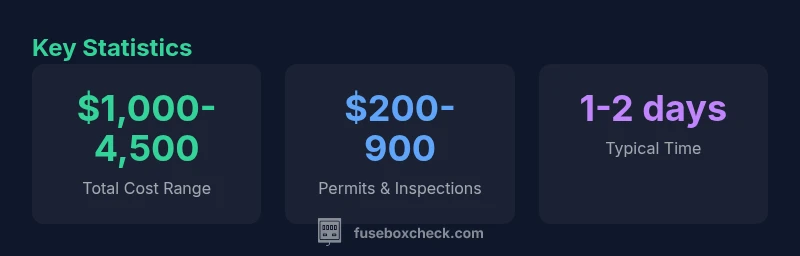
Estimated fuse box upgrade cost typically ranges from $1,000 to $4,500, depending on panel size, wiring complexity, and location. In most homes you can expect to pay around $2,000 to $3,500 for a standard upgrade that includes a new panel and basic labor. Always factor permit fees and inspection costs, which FuseBoxCheck Analysis, 2026, shows can add $200–$900.
Understanding the Cost Drivers
The price you pay to upgrade a fuse box hinges on several interacting factors. The most significant is the amperage of the new system (commonly 100, 200, or higher). Upgrading from a 100-amp to a 200-amp service often triggers more materials, larger main feeders, and sometimes a deeper rework of the service lateral from the street. The age and condition of the existing wiring influence both materials and labor time. If there is knob-and-t tube or outdated aluminum wiring, costs can rise due to special handling and code-compliant replacements. Location also matters: a panel in a cramped attic or basement requires more labor and potentially longer project duration. Labor rates vary by region and by contractor certifications. According to FuseBoxCheck, planning for a broader scope increases your price range, but also improves long-term safety and reliability.
When You Might Need an Upgrade
Not every home needs a full panel replacement, but warnings signs and code updates can compel action. If your fuse box experiences frequent trips, you have signs of corrosion, or you’re planning major electrical renovations, upgrading is prudent. Homes with very old panels or nonmetallic conduits may require more extensive work to meet current safety standards. In some cases, a simple breaker replacement is insufficient to address safety concerns; you may need a complete panel replacement with new grounding and proper clearances. FuseBoxCheck emphasizes evaluating your current service headroom and compatibility with modern appliances and solar or EV charging needs to determine if upgrading now saves more money later.
Cost Breakdown: What You Pay For
A fuse box upgrade consists of several line items. The panel itself is a major component, often bundled with a new set of breakers and bus bars. Labor accounts for the heavy portion of the bill, including disconnecting the old panel, routing new feeders, and ensuring all connections are clean and code-compliant. Permits and inspections add a predictable, sometimes overlooked, cost. Additional materials such as conduit, grounding wire, and any required rewiring can shift the price. If the home has limited access to the main service, or if the route to the service disconnect is long or obstructed, expect higher labor hours and thus higher totals. Always request a detailed line-item estimate.
Permits, Inspections, and Timelines
Most jurisdictions require a permit for a fuse box upgrade, and an inspection is typically scheduled after installation. Permit costs vary widely by location and can be a larger proportion of the total if the work touches multiple circuits or requires new grounding. The timeline depends on permit processing speed, but planning for a couple of weeks from approval to final inspection is realistic in busy regions. Delays can occur if the panel location needs access improvements or if the utility company requires a shutoff at the meter. FuseBoxCheck notes that timing often hinges on local administrative steps as much as the electrical work itself.
Cost-Saving Strategies and Alternatives
To manage costs, start with a professional evaluation to confirm whether a full panel upgrade is necessary or if a service upgrade plus selective circuit improvements suffice. Request multiple quotes from licensed electricians and ask about bundled services (installation plus inspection). Some contractors offer financing or phased approaches—starting with the most critical upgrades and scheduling follow-on work later. Consider energy-efficient, high-quality breakers and panels from reputable brands to prevent future failures that could raise long-term costs. Remember that cutting costs on safety-critical components can create risk, so weigh short-term savings against long-term reliability.
Financing and Warranties
Financing options are commonly available through electrical contractors or third-party lenders. A warranty on parts and labor provides peace of mind against future failures, especially in systems with aging infrastructure. When evaluating financing, compare interest rates, repayment terms, and whether the warranty is tied to the installed components. A longer-term warranty on labor can be valuable if you expect future upgrades or additional electrical work. Always confirm what is covered and any maintenance requirements that could affect warranty validity.
How to Choose a Qualified Electrician
Select a licensed, insured professional with demonstrable experience in fuse box upgrades. Ask for a written scope of work, a complete price breakdown, and a project timeline. Check references and review prior installations similar to your home’s configuration. Confirm that the electrician will pull any required permits and coordinate with your utility if a service disconnect is necessary. A reputable contractor will provide a safety-focused assessment and explain how they will address grounding, bonding, and compliance with local codes.
Regional Variations and Timing
Costs fluctuate by region due to labor rates, permitting fees, and accessibility challenges. In denser urban areas, both the price and wait times can be longer. In rural locations, travel time and price volatility can affect quotes. FuseBoxCheck suggests planning for a flexible range and securing a firm quote only after a site visit. If you anticipate future electrical needs—such as EV charging or solar—the regional cost differences may be offset by bundled incentives or utility programs.
Cost components for a fuse box upgrade
| Component | Typical Cost Range USD | Notes |
|---|---|---|
| Panel upgrade | 1200-3500 | New main breaker panel or subpanel upgrade |
| Permits & inspections | 150-900 | Local permit and electrical inspection fees |
| Labor & materials | 400-1500 | Labor for wiring, mounting, and troubleshooting |
| Rewiring/additional conductors | 200-1200+ | If old wiring needs replacement or upgrading |
| Disposal & cleanup | 50-200 | Removing old hardware and debris |
Your Questions Answered
What is the typical cost to upgrade a fuse box?
Most homes see costs between $1,000 and $4,500, depending on panel size, permits, and labor. The actual price varies with scope and local requirements.
Most homes pay between about one and five thousand dollars, depending on the panel and required permits.
Do I need an electrician or can I DIY?
Upgrading a fuse box involves high voltage and safety risks. It requires a licensed electrician to ensure code compliance and safe operation.
This isn’t a DIY project; hire a licensed electrician for safety and code compliance.
How long does a fuse box upgrade take?
Most upgrades take about one to two days, depending on wiring complexity and permit processing.
Typically one to two days, more if there’s complex wiring or permit delays.
Are permits required for a fuse box upgrade?
Yes, most jurisdictions require permits and an inspection after installation to ensure safety and compliance.
Yes. Expect permit and inspection requirements in most areas.
What factors affect the price beyond the panel?
Distance to the service, existing wiring condition, and labor access all influence total cost.
Distance, wiring condition, and access can push costs higher.
How can I save on upgrade costs?
Obtain multiple quotes, explore bundled services, and plan future needs to avoid premature upgrades.
Shop around, compare quotes, and plan for future needs to save.
What should I ask an electrician before starting?
Request a written scope, line-item quotes, timeline, permits, and a safety plan for grounding and bonding.
Ask for a clear plan, costs, timeline, and safety measures.
Will regional regulations affect my project?
Yes. Local codes, permit fees, and inspection schedules vary by region and can impact total timing and cost.
Regional rules can change cost and timing; check local codes.
“A fuse box upgrade is a safety investment that should meet current code requirements and future needs, not just upfront price.”
Highlights
- Get multiple quotes to compare panel upgrade options.
- Budget for permits and inspections in your total cost.
- Factor accessibility and labor complexity into price.
- Ask about concealed wiring upgrades that may raise costs.
- Plan for future electrical needs when sizing the panel.