How Much Does It Cost to Move a Fuse Box? A Practical Guide
A practical, data-driven guide to moving a fuse box, covering cost ranges, factors, permits, and budgeting tips for homeowners and DIY enthusiasts.


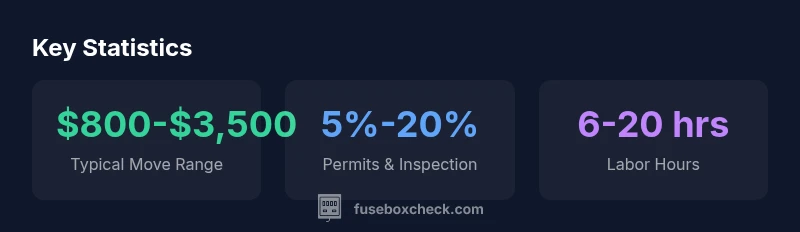
The typical cost to move a fuse box ranges from about $800 to $3,500, depending on distance, panel type, required permits, and whether rewiring is needed. In some cases, complex relocations or upgrades can push costs higher, approaching $5,000. Always request a detailed, itemized quote to understand labor, materials, and permit fees.
Understanding the cost range and key variables
When homeowners ask how much does it cost to move a fuse box, the answer hinges on scope and location. According to FuseBoxCheck, most projects fall within a broad range because of differences in distance, panel type, and required rewiring. The FuseBoxCheck team found that simpler relocations near the existing service panel are far cheaper than full panel upgrades or long-distance moves. Your final number reflects labor rates, materials, permit fees, and any circuit work that must be redone to meet safety standards. In practice, you should expect a baseline cost plus variable add-ons depending on your home's layout and local codes. The start point is a general range that can guide budgeting, but the actual quote will come after an on-site assessment. The question should be framed around scope: are you just relocating an existing panel, or upgrading to a newer, higher-capacity unit?
What drives cost: distance, panel type, and permits
The most visible factors are distance (local vs. cross-town relocation), the panel’s type and capacity, and whether rewiring is required. A local move typically costs less because labor hours and setup are reduced. Moving to a larger main breaker or a modern dual/three-phase panel raises material costs and may trigger higher labor rates. Permits and inspections can add to the total, and may be mandatory in some jurisdictions. If the relocation requires new wiring routes, conduit, or ground-fault protection upgrades, expect the bill to rise significantly. Accessibility also matters: cramped spaces, tight crawlspaces, or wall removals add complexity. These drivers combine with regional labor markets to determine final pricing. See sources such as Energy.gov and NFPA for safety and compliance guidelines.
Permits, inspections, and local codes
Permits are a core cost driver because they enforce safety compliance and documentation of changes to your electrical system. Permit fees vary widely by state, county, and city, and some areas require inspections at multiple stages. Even if a permit isn’t strictly required, a local inspector may review the work as part of a final connection. Budget for potential plan checks, meter reconfigurations, or service-panel labeling. Federal and state guidance emphasize safe, code-compliant installations, so engaging a licensed electrician who understands local codes reduces risk and saves time in the long run. For additional context, refer to Energy.gov and NFPA guidelines.
Hidden costs and upgrades
Relocating a fuse box isn’t just about moving the box. Hidden costs can include upgrading wiring to meet current codes, replacing aging cables, upgrading to a more robust enclosure, upgrading grounding, and replacing outdated fuses with breakers. If the project requires a panel upgrade, the cost can be substantial and may involve a service upgrade from the utility. Consider potential structural work, drywall repair, and repainting. Don’t forget about disposal of old equipment and possible temporary power shutoffs. Planning for these contingencies reduces the risk of budget overruns and delays.
Planning a move: steps to get an accurate estimate
- Define scope clearly: will you relocate within the same panel location or upgrade the service? 2) Gather existing panel details (model, amperage, age) to share with electricians. 3) Obtain at least three written estimates with itemized line items. 4) Ask for a permitting plan and timeline. 5) Confirm access windows and any required shutoffs. 6) Request a breakdown of labor, materials, disposal, and contingency buffers. 7) Check references and confirm electrician licenses and insurance. The more detail you gather, the more accurate the estimate will be.
DIY vs hiring a licensed pro: safety implications
Moving a fuse box is a high-risk task that requires professional electrical knowledge. DIY approaches can result in dangerous wiring, fire hazards, and invalid insurance coverage. A licensed electrician will perform an on-site assessment, ensure grounding and bonding are correct, and verify compatibility with your service drop and meter. They will also document work for permit approvals and coordinate any utility or inspector visits. For safety and peace of mind, prioritise professional involvement and ensure all work complies with local codes and standards.
Regional differences and typical time frames
Costs and timelines vary by region due to labor markets, permitting rules, and utility policies. In some areas, a straightforward move can be completed in 1–2 days, while more complex relocations or upgrades may span several weeks. Weather, scheduling with the utility, and the need for trenching or wall work can extend timelines. Being mindful of your region’s specific requirements helps you set realistic expectations. For reference, consult national safety standards and regional building guidelines.
How to compare quotes and budgeting tips
- Request a formal, itemized written estimate from licensed electricians only. - Ask for an upfront assessment fee that can be credited to the job if hired. - Compare the base labor rate, material costs, permit fees, and potential contingency allowances. - Check whether the quote includes testing, inspection coordination, and final labeling. - Factor in possible utility coordination and meter reconfigurations. - Build in a 10–20% contingency for unexpected rewiring or code upgrades. - Review the contractor’s insurance and warranty terms. A thorough comparison helps you see true cost and value beyond the bottom-line price.
Cost scenarios for moving a fuse box
| Scenario | Estimated Cost Range | Notes |
|---|---|---|
| Local move within same neighborhood | $800-$2,000 | Most common relocations with minimal rewiring |
| Long-distance relocation | $1,500-$3,500 | Includes disconnection and reinstallation with permits |
| Panel upgrade during move | $2,000-$5,000 | Upgrades or new service may raise costs |
Your Questions Answered
What factors most influence the cost to move a fuse box?
The cost is driven by distance, panel type, permits, rewiring needs, and regional labor rates. Having a detailed scope review helps capture all variables in the estimate.
The big cost drivers are distance, panel type, and permits; get a clear scope to compare quotes.
Do permits add to the cost of moving a fuse box?
Yes. Permits and inspections add to the total and vary by jurisdiction. Expect permit fees and possible plan checks.
Permits add time and money, so plan for them in your budget.
Can I move a fuse box myself?
Moving a fuse box safely requires licensed electrical work. DIY attempts risk fire, shock, and insurance denial. Hire a professional.
This is not DIY-friendly; hire a pro for safety and code compliance.
How long does a typical fuse box relocation take?
Typical relocations take from a day or two for simple moves to several weeks for complex upgrades or regional permitting. Timelines vary by scope and access.
Most moves are a few days to a couple of weeks, depending on complexity.
What should I look for in a quote?
Look for a clear scope, line-item costs, permit handling, testing/inspection, warranties, and a defined timeline. Ask about contingencies.
Make sure the quote breaks down labor, parts, and permits.
Are there cost-saving strategies for fuse box relocations?
Simplify scope to reduce rewiring, plan a local move first, and compare multiple quotes. Negotiating timing and avoiding rush work can help.
Ask about staged work or bundled services to save money.
“Relocating a fuse box is a high-skill job that requires proper planning, code adherence, and a licensed electrician to ensure safety and reliability.”
Highlights
- Budget broadly and plan for contingencies.
- Get multiple, itemized quotes from licensed electricians.
- Factor permits and local codes into your estimate.
- Prioritize safety and code compliance over price.
- Ask for a detailed timeline and scope in writing.