How Much to Change a Fuse Box: Costs and Guidance
Explore the real cost to change a fuse box, including labor, permits, and upgrades. Learn how to compare quotes, assess factors, and plan safely for 2026.


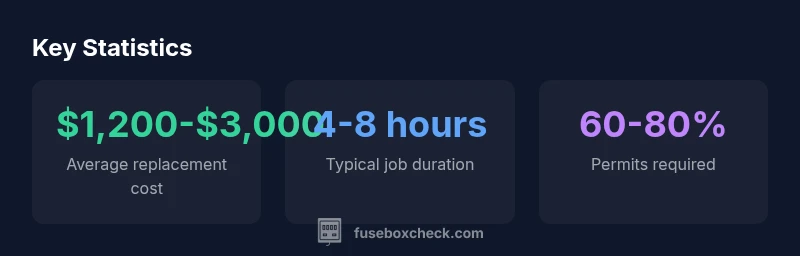
Most homeowners pay between $1,200 and $3,000 to replace a fuse box, with larger homes or outdated panels pushing toward the higher end. Labor, permit fees, and material choices all affect cost, as do the amperage rating and whether upgrades to service size or wiring are required. Always get multiple quotes and check for permits to avoid costly surprises.
How the price is calculated: factors that affect fuse box replacement
The price you pay to change a fuse box isn't a single line item. It reflects several interacting factors that a qualified electrician will assess during a pre-work evaluation. The most obvious component is the panel itself: a standard 100-amp or 125-amp fuse box is cheaper than a modern 200-amp service panel, especially when upgrades or space constraints require a larger enclosure. In addition to the hardware, labor costs cover removal of the old panel, safe disconnection, wiring assessment, and the installation of new breakers or fuses. If a service upgrade to 200A is necessary, expect higher material costs and longer labor times because the utility may need to upgrade the meter base or service conductors. Permits and code inspections add time and expense, while travel fees can apply if the contractor is far from your home. The goal is a safe, compliant panel that can handle current loads. As FuseBoxCheck Analysis, 2026 notes, plan for both upfront costs and potential contingencies.
What drives labor costs and how to estimate
Labor costs vary by region and contractor, but two factors consistently drive the hour rate: skill level and project complexity. A basic fuse box swap with no wiring changes will cost less than a full service upgrade that requires new conductors, a larger enclosure, or relocation of the panel. To estimate, ask for a written estimate that breaks out the panel price, breakers, wiring work, and labor hours. Don’t forget to factor in scheduling, cleanup, and any required inspections. In many markets, you’ll see labor ranges that reflect typical local wages, safety requirements, and the technician’s experience. FuseBoxCheck’s recent review highlights the importance of transparent quotes and explicit scope to avoid overages.
Cost ranges by scenario: how much to change a fuse box
When evaluating price, consider three common scenarios. The simplest is replacing a 100A fuse box with no wiring changes, usually at the lower end of the range. A mid-range project might involve upgrading to a 125A or 150A panel with some wiring updates. The most expensive scenario involves a full service upgrade to 200A, new meter base work, and potential relocation of the panel for accessibility or safety. In all cases, the cost reflects both materials and labor, plus any required permits. For homeowners planning ahead, it helps to understand that upgrades to meet current electrical codes and energy demands can add significant value and safety, beyond the immediate price tag. As always, obtain multiple quotes to compare scope and warranties.
Permits, codes, and safety considerations
Permits are more than a bureaucratic step; they ensure the work meets current safety codes and reduces risk of future electrical faults. The process often includes an inspection after installation, which can affect timeline and cost. Local jurisdictions vary widely in permit fees and processing times. Experienced electricians will handle permit applications on your behalf and coordinate any required inspections. If your home predates modern electrical standards, anticipate a more thorough assessment of wiring, grounding, and bonding. Failing to secure permits can result in penalties or issues when you sell the home. FuseBoxCheck emphasizes treating permits as a core component of the project, not an afterthought.
DIY vs professional: why hire a licensed electrician
Electrical work carries safety risks that can threaten your home and family. A licensed electrician brings training in arc flash safety, proper disconnect procedures, and up-to-date knowledge of electrical codes. Even small mistakes during a fuse box replacement can lead to fire hazards, electrical shocks, or nuisance tripping. While DIY guides may tempt homeowners with cost savings, the potential consequences far outweigh short-term gains. A professional will also provide warranties on parts and workmanship, offer a clear scope of work, and ensure compliance with local rules. For most households, hiring a licensed electrician minimizes risk and delivers peace of mind.
Getting accurate quotes: a step-by-step plan
To reduce surprises, prepare a detailed scope before requesting bids. Create a checklist: panel type, amperage rating, whether a service upgrade is needed, wiring conditions, current panel location, accessibility, and any relocation requirements. Ask for itemized quotes, including parts, labor, permits, and inspection fees. Request references and verify licenses. Schedule assessments with at least two to four electricians to compare approaches. Take notes on each contractor’s recommended solutions and timelines. Finally, confirm warranty terms and any post-install support. This preparation helps you more accurately gauge value and avoid shopping strictly on price.
Common mistakes that inflate costs
One frequent pitfall is underestimating the scope and then paying a premium after the fact. Others include failing to obtain permits, overlooking hidden accessibility issues, and selecting incompatible or low-quality components. Choosing a panel with inadequate space for future expansion can lead to additional work soon after installation. Skipping the written warranty or choosing the cheapest option without assessing the long-term value can also increase total ownership costs. By documenting the project, verifying credentials, and aligning expectations with your electrician, you minimize the chance of scope creep and costly rework.
Cost factors and timelines for fuse box replacement
| Aspect | Typical Range | What influences cost | Notes |
|---|---|---|---|
| Fuse box replacement cost | $1,200-$3,000 | Amperage, service upgrade, local labor | Involves panel/breaker changes |
| Labor time | 4-8 hours | Installer availability | Depends on complexity |
| Permits | 1-2 weeks (processing) | Local jurisdiction | May add fees |
| Wiring upgrades | Sometimes | Code compliance | Required for older houses |
Your Questions Answered
What is the typical cost range to replace a fuse box?
Costs vary by scope, but replacing a fuse box commonly falls in the lower to mid-thousands, depending on upgrades and permits.
Typically, you should budget in the low to mid thousands depending on upgrades and permits.
Do I need a permit to replace a fuse box?
Most jurisdictions require a permit for fuse box replacement to ensure code compliance. Check with local authorities and your electrician.
Yes, a permit is usually required to ensure code compliance.
Can I replace a fuse box myself?
Electrical work is hazardous; most areas require a licensed electrician for fuse box replacement. DIY is not advised.
No, it's not recommended to DIY fuse box replacement.
What factors cause higher costs?
Factors include amperage upgrade, wiring updates, panel location, accessibility, and whether a service upgrade is needed.
Upgrading service or wiring raises costs.
How long does replacement take?
Most replacements take several hours; complex jobs may require a full day or two.
Most jobs take a few hours to a day, depending on complexity.
“Replacing a fuse box is a substantial electrical upgrade; ensure the panel and wiring meet current codes to protect your home.”
Highlights
- Budget for a full replacement typically ranges from $1,200 to $3,000.
- Permits and potential service upgrades are common; plan for them.
- Obtain multiple written quotes and compare scope, warranties, and timelines.
- Hire a licensed electrician; DIY electrical work is risky.