How Much Does It Cost to Replace a Fuse Box with Circuit Breakers?
Discover the cost range to replace a fuse box with circuit breakers, including parts, labor, permits, and contingencies, with data-backed guidance from FuseBoxCheck Analysis, 2026.


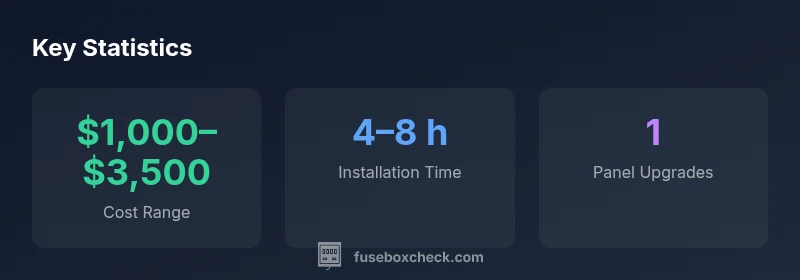
According to FuseBoxCheck Analysis, 2026, replacing a fuse box with a modern circuit-breaker panel typically costs between $1,000 and $3,500 in many markets. Factors shaping the price include panel size, labor rates, permit fees, material quality, and whether upgrades to wiring or service entrance are required. Complex installations in older homes can push prices toward the higher end.
Cost Overview
For homeowners researching how much does it cost to replace a fuse box with circuit breakers, the short answer is that price depends on several variables. Part and labor costs combine to form the bulk of the bill, with permits and potential electrical-service upgrades adding more. In practice, you’ll see a wide range: from about $1,000 to $3,500 for most standard homes, with higher figures in older houses that require wiring upgrades, relocation of the panel, or work in hard-to-reach locations. The exact cost begins with the panel’s amperage rating and the number of circuits; upgrading from a smaller 60- or 100-amp fuse box to a 200-amp circuit-breaker panel typically triggers additional cabling, a larger service entrance, and perhaps a new meter socket. In addition, the distance of the panel from the main service disconnect, accessibility issues, and the need to restore or upgrade grounding can shift the total upward. Throughout this guide, we’ll break down the components, explain how to get reliable quotes, and outline what to expect during installation.
Key Cost Drivers
Several core factors drive the cost when replacing a fuse box with circuit breakers. First is the panel amperage and the number of circuits. A higher-amp, 200-amp panel with many spaces for circuits demands larger feeder wiring, a sturdier enclosure, and more labor. Second, the type and brand of breakers and the panel enclosure influence price; premium panels or slimline enclosures cost more than basic models. Third, location matters. Panels in cramped, hard-to-reach, or weather-exposed areas require more labor, safety gear, and time. Fourth, wiring condition plays a role: if the existing wiring is outdated, damaged, or not up to current codes, upgrades to wiring and grounding may be necessary. Fifth, accessibility and relocation needs—if the panel has to be moved to a more convenient spot or requires a separate meter socket—can add both materials and labor. Finally, labor rates vary by region and contractor experience, which can push the final total up or down from the initial estimate.
Permits, Codes, and Local Variations
As with any electrical upgrade, permits and code compliance affect price and timing. In many jurisdictions, replacing a fuse box with circuit breakers triggers an electrical permit review to verify conductor sizing, grounding, and panel rating. The 2026 edition of the National Electrical Code (NEC) introduces updated requirements for grounding, bonding, and arc-fault protection in some living spaces, which can influence scope and cost. Permit fees vary widely by city or county, sometimes appearing as a flat fee, a percentage of the job, or a per-breaker charge. Local inspections are typically required after work is completed, and any code-required corrections can add additional labor. Your electrician will usually handle the permitting process, but it’s wise to confirm what’s included in the estimate. If you’re in a rural area or a region with simplified permits, costs may be lower; metropolitan areas tend to be higher due to inspector time and permit processing.
Material and Labor Breakdown
From the moment a project starts, most of the budget is consumed by three buckets: materials (panel and breakers), labor (installers and helpers), and ancillary costs (permits, disposal, new wiring). Materials include a new circuit-breaker panel sized for your home and the appropriate breakers, bus bars, and a new cover. Labor covers disconnection of the old panel, routing of new cables, panel relocation if needed, and reconnecting neutrals and grounds. Ancillary costs include permit fees, potential upgrade of service entrance cables, old wiring replacement, and disposal of old equipment. A typical installation involves panel removal, mounting, grounding checks, and a test of all branches. If the existing cable gauge or insulation is degraded, upgrading feeders can be a significant portion of the bill. In short, even with a modest panel upgrade, don’t be surprised by costs that reflect the complexity of the electrical system and the building’s age.
Should You Upgrade Wiring or Service?
Deciding whether to upgrade wiring or service depends on several signals. If your home is older than 40 years, has aluminum wiring, frequent circuit trips, or indicator symptoms of under-sizing, upgrading wiring or the service panel is prudent. A move from 60- or 100-amp service to 200-amp service commonly requires heavier service conductors from the utility, a larger meter socket, and possibly a new service drop. While not every upgrade is essential, future-proofing your home against modern electrical loads (air conditioning, EV charging, hot tubs) often justifies the upfront cost. Your licensed electrician can perform a load calculation to determine if a larger service is needed, and you can compare quotes that include the scope of wiring upgrades and any required service-entrance upgrades.
Hidden Costs and Contingencies
Even well-planned projects have surprises. Hidden costs can include upgrading grounding and bonding to meet code, relocating the panel to a more accessible area, and installing a new meter socket or service entrance cable. Debris disposal, temporary power during the outage window, and updated labeling for circuits add modest charges. If the old wiring is degraded or concealed behind walls, discovery during the job can slow progress, and additional wall openings, framing, or drywall work may be required. Finally, if the contractor provides a warranty, make sure it covers parts and labor for a defined period; some warranties require regular maintenance visits. Budget a contingency of 5–15% to cover unforeseen complications, especially in older homes.
Financing, Warranties, and Long-Term Value
Many homeowners consider financing options to spread the investment. Some electricians offer bundled warranties on panels and breakers, often covering parts for 5–10 years and labor for a shorter window. The long-term value of upgrading to a circuit-breaker panel includes improved safety, more reliable operation, and compatibility with modern electrical loads. While the upfront cost is higher, a well-installed panel reduces nuisance trips and potential fire risks, and may help insurance and resale value in some markets. Be sure to read warranty terms, understand what is covered, and confirm whether the warranty transfers if you sell the home.
How to Budget and Get Accurate Quotes
To budget accurately, obtain at least three written assessments from licensed electricians. Share details about the current panel, service rating, existing wiring, any signs of overheating, and accessibility. Ask for a line-item quote that breaks out panel costs, labor, permits, and any wiring upgrades; request a proposed schedule with milestones. Verify licensing and insurance, and check references. If possible, request a breakdown of additional contingencies in the estimate. Finally, use the data to compare apples-to-apples quotes and choose the option that balances cost, safety, and long-term reliability.
Installation Timeframes and Process
Most fuse box replacements with circuit breakers occur within a single workday when conditions are straightforward. A more complex upgrade, or one involving wiring replacements or relocation, can stretch to a couple of days. The process usually begins with a safety assessment, shutdown of power, removal of the old panel, and careful labeling of circuits. Next, the new panel is mounted, grounded, and wired; the main service disconnect is reconnected, and a test of all circuits is performed. Finally, the area is cleaned, and the permit is closed after inspection. Scheduling considerations include coordinating with the utility if service upgrades are needed, and securing a window where power is out. Communication with your electrician about milestones and potential interruptions helps keep the project on track.
Cost components overview
| Element | Typical Cost Range | Notes |
|---|---|---|
| Panel upgrade (200A) | $1,200–$2,500 | Depends on existing panel and wiring |
| Labor (electrician) | $500–$1,500 | Depends on complexity and region |
| Permits & inspections | $100–$400 | Jurisdiction dependent |
| Wiring upgrades (if needed) | $300–$2,000 | Varies with age and condition |
Your Questions Answered
Do I need a permit to replace a fuse box with circuit breakers?
In many jurisdictions, yes; permits ensure wiring meets code and safe operation. Your electrician will usually initiate the permit if required.
Yes, most places require a permit for this upgrade.
Can I replace a fuse box myself?
This work is dangerous and should only be done by a licensed electrician. Local codes generally prohibit DIY replacement for safety reasons.
Don't try this at home; hire a licensed pro.
What is the difference between a fuse box and a circuit-breaker panel?
A fuse box uses fuses that burn out and must be replaced; a circuit-breaker panel uses reusable breakers and is typically safer and more reliable.
Fuses burn out; breakers can be reset.
How long does replacement typically take?
Most installations take a few hours, with more complex upgrades stretching to a full day. Scheduling can depend on permits and workload.
Most jobs are completed in a day or less.
Will home insurance cover the cost?
Some policies may cover part of the upgrade if it improves safety or repairs a risk; check with your insurer for specifics.
Check with your insurer about coverage.
What should I look for when getting quotes?
Look for line-item detail: panel cost, labor, permits, wiring upgrades, and a clear schedule. Verify licensing and insurance.
Get it in writing and compare line items.
“Upgrading to a circuit-breaker panel is a prudent safety upgrade for most homes; ensure a licensed electrician handles all work.”
Highlights
- Get multiple written quotes from licensed electricians.
- Budget for permits and potential wiring upgrades.
- Consider panel placement and access to minimize costs.
- Upgrading improves safety and future-proofing for modern loads.
- Plan for contingencies and allow time for inspections.