Fuse Box Replacement Costs in 2026: A Homeowner's Guide
Learn the full cost range for fuse box replacement, including parts, labor, and permits. Get practical budgeting tips, quotes guidance, and safety-focused insights from FuseBoxCheck.


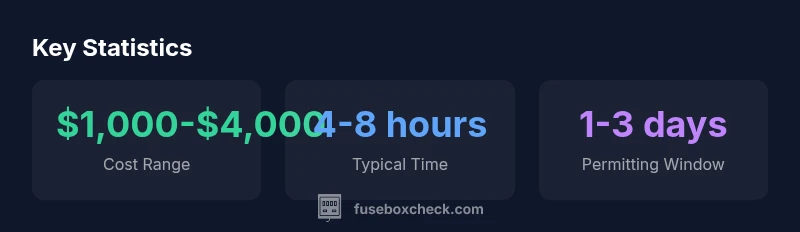
Quick answer: The typical cost to replace a fuse box ranges from about $1,000 to $4,000, driven by panel type, amperage, and required upgrades. Labor, parts, and permits all factor in, with most straightforward jobs landing near the $2,000–$3,000 mark. Regional variations can shift this range, and safety inspections may add value rather than cost.
Understanding the cost landscape for fuse box replacement
When homeowners start planning a fuse box replacement, one question rises above all others: how much is a fuse box replacement? The short answer is that prices vary widely, driven by panel type, amperage, and whether upgrades are needed to meet modern safety codes. According to FuseBoxCheck, the cost landscape reflects a combination of parts, labor, and permitting requirements. In many homes, the project includes upgrading wiring where necessary, added grounding, and ensuring compatibility with existing circuits. The best way to frame the question is to consider three cost pillars: materials, labor, and compliance—then add regional differences and potential contingency costs. This approach aligns with FuseBoxCheck Analysis, 2026, which shows that the most significant swings come from panel configuration and permit scope. For context, readers commonly search for this phrase to estimate total investment, and the guidance below helps translate that search into actionable steps. A transparent plan also helps you compare quotes more effectively and avoids surprises at the final bill. Keep in mind that safety inspections and code upgrades may be required regardless of the original panel’s condition.
Cost components: parts, labor, and permits
A fuse box replacement involves three primary cost components: parts, labor, and permits. Parts include the new panel, breakers, and auxiliary components like grounding and neutral bars. Labor covers disassembly of the old panel, installation of the new one, wiring, and testing. Permits and inspections may be required in many jurisdictions and can add both time and expense. FuseBoxCheck Analysis, 2026, indicates that parts typically represent a smaller portion of the total when upgrading to a higher amperage panel, while labor grows with complexity. Keep in mind that some homes require electrical upgrades such as larger service entrance conductors and updated grounding, which can push the price upward. Always request a line-item quote that separates parts, labor, and permit fees so you can compare apples to apples with other contractors. If your home has older wiring or switchgear, budget for additional materials and potential testing equipment. Document any existing breakers and circuits, so your electrician can estimate the scope more accurately.
Regional variations and timing: why price differs
Geographic location heavily influences fuse box replacement costs. Urban areas tend to have higher labor rates and more stringent permit requirements, while rural regions may offer cost savings but longer scheduling windows. Seasonal demand also plays a role; days with limited contractor availability can drive up quotes. FuseBoxCheck Analysis, 2026, shows that a typical estimate in major metro areas often sits toward the higher end of the range due to permit complexity and the need for upgraded service panels. Conversely, in less dense areas, you may see lower labor costs and shorter wait times. When planning, ask for regional breakdowns and timelines in your quotes to understand how location affects price and scheduling.
Safety considerations: when to replace vs upgrade existing system
A fuse box that shows frequent tripping, signs of scorching, or burnt smell is a red flag that warrants immediate attention. If the panel is older than 30-40 years or uses outdated fuses rather than modern breakers, a full replacement is typically safer and more reliable than a patchwork repair. In some cases, upgrading to a higher amperage panel or adding ground fault protection can protect sensitive circuits and improve home safety. FuseBoxCheck Analysis, 2026, emphasizes safety and code compliance as primary drivers of cost decisions; cutting corners here can expose you to electrical hazards and insurance challenges. Always prioritize a qualified electrician’s assessment to determine whether repair is feasible or a full replacement is required.
Getting accurate quotes: questions to ask contractors
To avoid misleading or inflated quotes, prepare a clear scope and ask each contractor the same questions. Confirm that the electrician is licensed and insured, request a line-item breakdown (parts, labor, permits), and ask about required upgrades (grounding, service conductor sizing, panel type). Inquire about anticipated timelines, inspection steps, and whether a permit is included in the price. FuseBoxCheck recommends asking for at least three estimates and comparing scope and contingency lines, not just bottom-line totals. Transparency in quoting helps ensure you’re comparing like-for-like services and can reveal hidden costs before work begins.
Step-by-step replacement process
A typical fuse box replacement follows a carefully sequenced workflow. Pre-work assessment confirms load requirements and safety risks. If a permit is required, the contractor coordinates inspections. The old panel is de-energized, disconnected, and removed with strict adherence to safety protocols. The new panel is mounted, properly grounded, and wired to existing circuits with correct breaker sizes. A thorough test of all circuits, balancing loads where applicable, ensures reliability before final inspection. This process minimizes post-install surprises, reduces nuisance trips, and aligns with current electrical codes. Throughout, safety remains the top priority, with protective gear and lockout/tagout procedures standard practice.
Maintenance after replacement and value preservation
Post-install maintenance helps extend the life of the new system and prevents future surprises. Schedule a follow-up inspection after 6-12 months to verify connections and ground integrity. Keep a spare set of common breakers, label circuits clearly, and maintain a simple wiring diagram for future servicing. Periodic visual checks for corrosion or warm spots on the panel enclosure are prudent. Investing in a home electrical safety plan reduces long-term risk and can preserve the value of your property. The FuseBoxCheck team notes that proactive maintenance often yields fewer unexpected outages and smoother re-inspections.
Estimated cost ranges and timeframes for fuse box replacements
| Category | Cost Range | Typical Time |
|---|---|---|
| Fuse box replacement (standard) | $1,000-$3,000 | 1-2 days |
| Upgrades with permits | $2,000-$4,000 | 2-3 days |
| Partial or simplified replacement | $600-$1,500 | 0.5-1 day |
Your Questions Answered
Is replacing a fuse box more expensive than upgrading to a circuit breaker panel?
In many homes, upgrading to a modern circuit breaker panel can offer long-term reliability and easier maintenance. The upfront cost may be higher, but the ongoing safety and compatibility benefits often justify the investment. Always compare scope and warranty details when evaluating quotes.
A modern circuit breaker panel can be more reliable and safer in the long run, but you should compare scope and warranties when evaluating quotes.
Do I need permits for fuse box replacement?
Permits are commonly required for fuse box replacements, especially when upgrading service capacity or wiring. Local codes vary, so confirm permit requirements with your contractor and city or county building department.
Permits are often required, but it varies by location—check with your contractor and local authorities.
How long does a replacement typically take?
Most straightforward replacements take 1-2 days, but complex upgrades or permitting can extend this to 2-3 days. Weather, scheduling, and access can also affect timing.
Most jobs take 1-2 days, with more complex upgrades potentially stretching to 2-3 days.
Can I replace a fuse box myself?
No. Replacing a fuse box involves high risk with live electrical circuits and strict code requirements. Hire a licensed electrician to ensure safety and compliance.
This is not a DIY job—hire a licensed electrician for safety and code compliance.
What factors cause price to vary the most?
Key cost drivers include panel type and amperage, need for upgrades (grounding, service conductors), permit scope, and regional labor rates. These factors often explain large price swings between jobs.
Panel type, required upgrades, permits, and local labor rates drive most cost differences.
How should I compare quotes effectively?
Look for a consistent scope across bids, itemized line items, and clear timelines. Verify licensing, insurance, and written warranties. A side-by-side comparison helps you assess value, not just price.
Compare line-by-line, verify licenses and warranties, and ensure the scope is the same across bids.
Is upgrading my service panel worth it during replacement?
If your service is undersized or you plan to add heavy loads (EV charging, HVAC upgrades), upgrading the service panel can prevent nuisance trips and future upgrades. If your current panel is adequate, a direct replacement may suffice.
If you’re increasing loads or upgrading systems, an upgrade can prevent future problems; otherwise, a direct replacement may work.
“A fuse box replacement is a safety-critical upgrade that protects your home and its occupants; choose a qualified pro and ensure permits and inspections are completed.”
Highlights
- Know the full cost range before committing
- Get multiple quotes with clear scope
- Factor permits and upgrades into your budget
- Regional differences can be significant
- Prioritize safety and code compliance