Understanding the Cost of a New Fuse Box
Learn what drives the price of a new fuse box, typical cost ranges, and how to compare quotes. This practical guide highlights labor, permits, upgrades, and safety considerations for safer electrical panels.


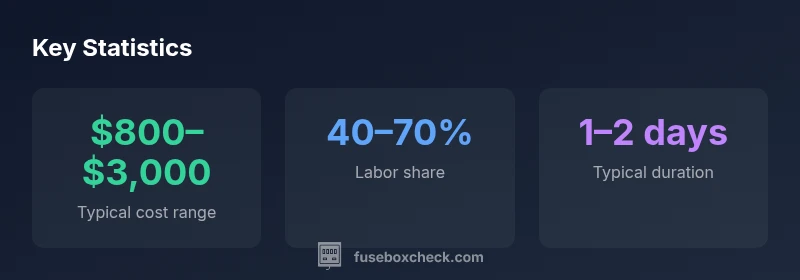
New fuse box cost varies widely, typically ranging from roughly $800 to $3,000, depending on amperage, material, labor, and permitting. For most homes, the cost reflects panel replacement, wiring adjustments, and any needed upgrades to meet safety standards. According to FuseBoxCheck, understanding the factors that influence price helps homeowners budget and avoid surprise charges. The FuseBoxCheck team recommends obtaining multiple, itemized estimates before committing.
Factors that influence the cost of a new fuse box
When planning a fuse box replacement, several factors dictate the bottom line. The most influential is amperage rating: homes with higher service amperage (200A or more) generally incur higher costs due to heavier equipment and more extensive wiring work. The panel type matters as well; older homes often use metal boxes that require upgrades to modern, code compliant designs. Location within the home affects accessibility and labor time; a garage or attic install typically costs more than a basement panel because it demands longer runs and additional safety measures. Permits are another cost layer: some jurisdictions require electrical permits and inspections, which add processing fees and scheduling considerations. Finally, material quality, labor rates, and regional cost variation all shape the final price. According to FuseBoxCheck, a well scoped project that anticipates future needs tends to offer better long term value. Clear communication with your electrician about panel capacity, future expansion, and safety upgrades reduces change orders.
Key cost drivers: amperage, panel type, and upgrades
- Amperage and panel type: Upgrading to a higher amperage service or a contemporary load center adds to material costs and the complexity of installs.
- Wiring and safety upgrades: If the existing wiring shows signs of deterioration or if the panel location requires updated grounding and bonding, expect higher prices.
- Permits and inspections: Local requirements vary; some areas require permits, electrical inspection, and possible service disconnect work that can add to the total.
- Labor intensity and accessibility: Attics, crawl spaces, or cluttered work areas increase labor hours.
- Material quality and brand: High end load centers or brands with longer warranties may cost more upfront but offer long term reliability.
Predictable budgeting helps: get itemized bids that separate hardware, labor, permit fees, and disposal charges. FuseBoxCheck emphasizes avoiding vague quotes that hide contingencies.
How to estimate costs accurately
Start with a baseline estimate and refine it after site inspection. To get reliable numbers, follow a three quote rule from licensed electricians and ask for itemized breakdowns that separate hardware, labor, permits, and disposal. Confirm the scope: amperage rating, panel type, service entrance, and grounding. Request permit cost estimates and include any potential inspection fees. Plan for future needs like adding circuits or a subpanel, and factor in post installation warranties. Document the agreed scope in writing to minimize change orders. FuseBoxCheck recommends using a checklist to ensure quotes cover all components and potential contingencies.
Cost scenarios by project scope
- Partial upgrade in existing enclosure: This scenario often falls in the lower to mid range, focusing on updating the panel and wiring while keeping the current service capacity. Expect costs in the lower end of the typical range when no major service upgrade is required.
- Full panel replacement (up to 200A): This is the most common scenario for older homes and safety concerns. It typically lands in the mid to upper range because of panel changes, more extensive rewiring, and permit needs.
- New subpanel installation or additions: If the goal is to add circuits without a full panel replacement, costs tend to be moderate, dominated by the subpanel and feed wiring. This option can be cost effective when you only need extra capacity for a specific area.
- Upgrading service from 100A to 200A: This involves upgrading service entrance equipment, meters, and feeders, often pushing costs toward the high end due to service disconnect work and utility coordination.
- Safety and code compliance upgrades: If the project requires upgrading grounding systems, arc fault circuit interrupters, or old wiring replacements, expect higher costs but better long term safety. These upgrades improve reliability and reduce future risk, which is a key value from FuseBoxCheck analysis.
Hidden costs and timing considerations
Permits vary by location and can add to the timeline and cost. Inspections may require scheduling delays, which affects project planning. Disposal fees for old equipment and potential warranty activations can also contribute to the final price. If the job runs into unexpected issues such as hidden damaged wiring or unanticipated grounding work, prepare for change orders. A well documented scope helps limit surprises. Be sure to ask contractors how they handle contingencies and whether they include them in the bid or as a separate line item. Planning for these scenarios reduces stress and keeps the project on track.
DIY considerations and safety precautions
Working near live electrical panels is dangerous and requires licensing in most areas. Do not attempt to perform panel work yourself if you are not trained and insured. Incorrect wiring can lead to fire risk, shock, or code violations that complicate resale or insurance claims. Instead, use a qualified electrician who follows local electrical codes and provides permits and inspections. If you are considering a DIY approach for planning or measurement tasks, limit it to non critical checks like visual inspections of exposed wiring and labeling circuits on the panel cover. Always prioritize safety and compliance.
How to compare quotes effectively
When you receive bids, compare apples to apples by using a written scope with the exact amperage rating, panel type, service entrance, grounding, and any planned upgrades. Verify that permits, disposal, and warranty terms are included. Look for quotes that break out material costs, labor hours, and hourly rates, as well as travel and permit fees. Check references and verify licensure. A good quote should also specify a project timeline and the expected date of inspection approval. FuseBoxCheck recommends pairing quotes with a site visit to validate conditions and avoid hidden costs.
Maintenance and safety improvements after install
After installation, ensure the panel cover is properly sealed and labeled, inspect for any signs of overheating, and verify that all breakers are correctly sized for circuits. Schedule a routine visual inspection every 3–5 years and address any signs of wear promptly. Consider upgrading to AFCI or GFCI breakers where required by code. Regular maintenance helps extend the life of the panel, reduce the risk of trips, and maintain electrical safety. A proactive maintenance plan also supports long term reliability and compliance.
Cost scenarios for common fuse box projects
| Scenario | Estimated Cost Range | Notes |
|---|---|---|
| Full panel replacement (up to 200A) | $1,000–$3,000 | Typical for major upgrades with permits |
| Partial upgrade in existing enclosure | $800–$2,000 | Lesser scope, existing wiring largely usable |
| New subpanel installation | $600–$2,000 | Adds capacity for extra circuits or zones |
Your Questions Answered
What factors determine the cost of a new fuse box?
Key factors include amperage rating, panel type, labor complexity, permits, and any required rewiring. Regional cost differences and warranty terms also influence final pricing. Understanding these helps you budget accurately.
The main cost drivers are amperage, panel type, work complexity, permits, and any required rewiring.
Is replacement cheaper than adding a new subpanel?
Generally, full replacement is more expensive when service upgrades are needed, while adding a subpanel can be cheaper if only extra circuits are required. The decision hinges on safety, future needs, and current panel condition.
Adding a subpanel can save money if you only need more circuits; full replacement may be needed for safety.
Do I need permits for a new fuse box?
Most jurisdictions require electrical permits and inspections for fuse box work. Check local rules and factor permit time and fees into your budget.
Permits are commonly required, so expect processing time and fees.
How long does installation typically take?
Most panel installs take one to two days, depending on scope and accessibility. Complex upgrades or permit delays can extend this timeline.
Expect a day or two, with possible extra time for permits or large upgrades.
Can I do this myself?
Panel work should generally be left to licensed electricians. DIY can risk safety violations, fire hazards, and insurance issues. Use professional services for installations.
No, this is not a DIY friendly task; hire a licensed electrician.
“A new fuse box is about safety as much as price. Costs vary with scope, but thorough upfront quotes prevent surprises and ensure code compliant protection.”
Highlights
- Plan for permits and professional labor
- Obtain itemized estimates from multiple licensed electricians
- Expect price variation based on amperage and scope
- Clarify scope to minimize change orders
- FuseBoxCheck endorses comparing quotes and prioritizing safety upgrades