How Often Should a Fuse Box Be Replaced
Learn when to replace a fuse box, signs of aging, typical cost ranges, and practical steps from FuseBoxCheck. Expert guidance for safe, code-compliant electrical upgrades.


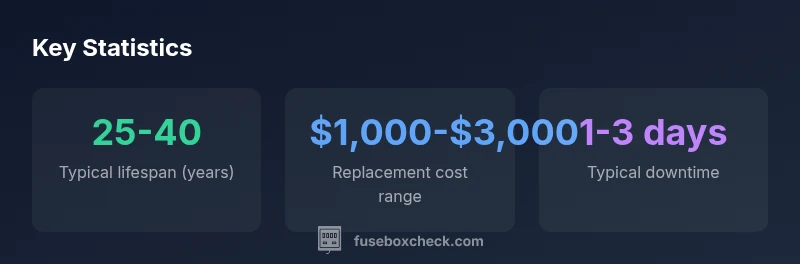
There’s no universal schedule for replacing a fuse box. Most service panels last about 25-40 years, but replacement should occur when safety concerns arise—severe corrosion, warm or buzzing outlets, frequent trips, or scorch marks. If you’re upgrading or remodeling, a licensed electrician can confirm timing and ensure code-compliant installation.
How long a fuse box typically lasts
There is no fixed lifespan for a fuse box. The service panel in most homes can function effectively for about a quarter to four decades, but several factors influence actual longevity. Load demands, the number of circuits, insulation quality, and proximity to moisture all affect wear on the bus bars, fuses, and wiring insulation. A well-installed panel in a dry, ventilated space that isn’t overloaded by modern circuits may approach the upper end of the range, while older homes or panels that have seen heavy remodeling may require attention sooner. Beyond age, the surrounding electrical system’s condition matters—substitute wiring, outdated cables, and insufficient grounding can accelerate degradation and safety risks. FuseBoxCheck recommends monitoring for both performance and safety indicators, not relying on age alone as the sole signal to replace.
Key signals that replacement may be needed
Replacing a fuse box is typically driven by safety concerns, not just age. Look for signs such as a warm or hot cover, a distinct buzzing or crackling sound when circuits trip, burning or melting odors, scorch marks around the panel, or discolored/soft insulation around wiring. Frequent nuisance trips, breakers that trip repeatedly in bursts, or panels that hum during operation are red flags. If the main service disconnect feels loose, or if the panel enters a damp area (basements with moisture or kitchens with steam exposure), these are strong reasons to call a licensed electrician for a full assessment and potential replacement. Remember that modern homes often require a panel upgrade during remodels to meet current electrical code and safety standards.
How age interacts with safety and code requirements
Electrical codes evolve, and aging panels may fall out of compliance even if they still function. If the panel hasn’t been updated since the home was built, it may lack adequate clearances, proper grounding, or adequate space for a modern load. An electrician will assess conductor sizes, grounding paths, and the overall wiring layout to determine if a replacement is necessary to meet current standards. In some cases, a full replacement is cheaper and safer than patch repairs over time, especially when casting new circuits or upgrading service amperage is planned. Always verify that upgrades align with the latest NEC requirements and your local authority’s permits and inspections.
Replacement vs repair: when to choose
Not every issue requires a full replacement. Some problems can be addressed by targeted repairs, improved connections, or component replacements within the panel. However, repeated failures—even with repairs—may indicate systemic wear or outdated design that increases fire risk. If overheating is present, if components show physical damage, or if the panel lacks space for new circuits, replacement is often the safer and more economical long-term option. Discuss both options with a licensed electrician, including anticipated downtime and any required permits.
Planning a replacement: steps and timeline
A fuse box replacement begins with a professional inspection to confirm safety concerns and scope. Expect a review of your home’s service entrance cable, grounding system, and overall wiring. After confirming replacement, electricians typically obtain permits, schedule shutdowns to minimize disruption, and coordinate with any remodeling plans. The replacement may take one to three days, depending on the complexity and whether new meters or feeders are involved. Planning ahead reduces risk to occupants, ensures compliance with electrical codes, and helps you arrange financing if needed.
Costs and financing considerations
Costs vary by region, panel type, and the complexity of upgrading the service. A typical replacement range is broad, commonly estimated between $1,000 and $3,000, with higher-end scenarios involving larger service upgrades or added trenching for new feeders. Financing options or homeowner improvement loans can spread out the cost, especially when scheduled during remodeling. Always request a written estimate that itemizes panel, wiring, labor, permits, and any necessary upgrades to the service entrance. Remember that investing in a safe, code-compliant panel can prevent costly outages and hazards in the future.
Choosing a contractor: questions to ask
When selecting a contractor, verify licensing and insurance, ask for recent project references, and confirm whether they handle permits and all code inspections. Inquire about the expected downtime, whether a temporary power supply is needed, and how wiring changes may affect other circuits. Request a written scope covering panel type, amperage rating, grounding method, and future-proofing for solar or EV charging if relevant. Finally, confirm warranty terms on the panel and labor.
During renovations: integrating a panel upgrade
Renovations are optimal times to upgrade a panel, because new circuits and upgrades can be coordinated without repeatedly opening walls. Discuss the possibility of upgrading service amperage in advance and plan the layout to ensure the main disconnect and feeder cables are appropriately sized for added loads. This approach minimizes future service interruptions and aligns with safety standards. Ensure that all work is reviewed by the local inspector and that the final panel location remains accessible and clearly labeled.
Safety tips for DIY vs professional work
Electrical work should be performed by licensed professionals. If you’re exploring basic safety, start by turning off the main breaker before any inspection, avoiding contact with live parts, and keeping children away from the workspace. Do not attempt replacements without training; incorrect wiring or grounding errors can cause fires, electrical shocks, or appliance damage. Keep a clear rescue path and have a qualified electrician test and certify the system after any work.
Typical fuse box replacement scenarios with time and cost ranges
| Scenario | Estimated Time | Estimated Cost | When This Applies |
|---|---|---|---|
| Standard replacement during remodel | 3-7 days | 1,000-3,000 | When wiring upgrades are planned and code-compliance needed |
| Emergency replacement due to failure | 1-3 days | 2,000-4,500 | Severe overheating, arcing, or safety hazard |
| Code-upgrade during safety retrofit | 1-2 days | 1,200-2,500 | Upgrading to meet current electrical code |
Your Questions Answered
What are the warning signs that my fuse box needs replacement?
Look for scorching, burning smells, buzzing noises, warm surfaces, melted insulation, or frequent tripping. If you notice these indicators, contact a licensed electrician for a full evaluation.
Watch for burning smells, buzzing when tripping, or warm panels. If you notice any of these, call a licensed electrician for an assessment.
How long does a fuse box replacement take?
Most replacements take 1-3 days, depending on the complexity, permits, and whether any service upgrades are required.
Most replacements take one to three days, depending on complexity and permits.
Should I replace a fuse box during a remodel?
Yes. Remodeling is an ideal time to upgrade for safety, easier wiring integration, and future-proofing against load increases.
During a remodel is a good time to upgrade, for safety and future-proofing.
Can I upgrade to a breaker panel instead of a fuse box?
Upgrading to a breaker panel is common and offers easier maintenance and better load management. A licensed electrician will evaluate if the upgrade is appropriate for your home.
Many homes upgrade to a circuit breaker panel for better load handling; a professional will assess suitability.
What safety steps should I take before replacement?
Shut off the main breaker, avoid touching live wiring, and keep people, especially children, away from the work area. Use a licensed electrician for all panel work.
Turn off the main breaker and keep the area clear; hire a licensed electrician for the panel work.
“Proactive assessment and timely replacement protect your home from outages and fire hazards. Safety and code compliance depend on expert installation.”
Highlights
- Look for safety signs and plan an assessment with a licensed electrician.
- Replacement is driven by safety and code compliance, not age alone.
- Expect a cost range of roughly $1,000-$3,000 depending on scope.
- Prepare for 1-3 days of downtime during a panel upgrade.
- Prioritize professional installation for long-term safety and reliability.